
Updating your news feed...
NEWS EXPRESS is Nigeria’s leading online newspaper. Published by Africa’s international award-winning journalist, Mr. Isaac Umunna, NEWS EXPRESS is Nigeria’s first truly professional online daily newspaper. It is published from Lagos, Nigeria’s economic and media hub, and has a provision for occasional special print editions. Thanks to our vast network of sources and dedicated team of professional journalists and contributors spread across Nigeria and overseas, NEWS EXPRESS has become synonymous with newsbreaks and exclusive stories from around the world.



















Loading banners
Loading banners...

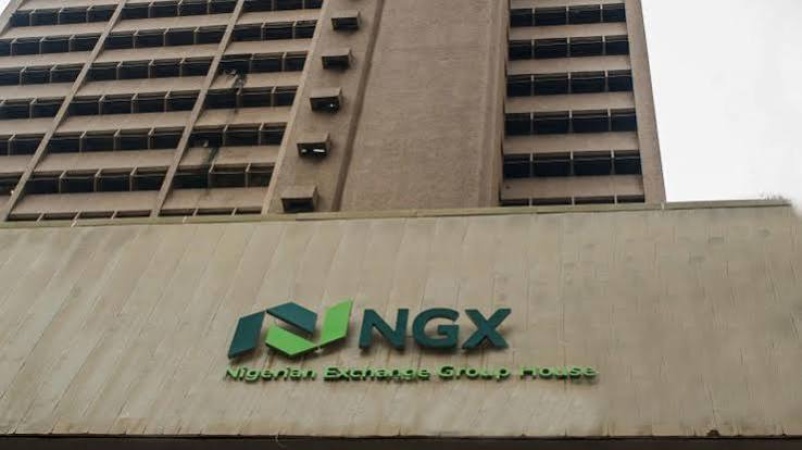
At least nine companies listed on the Nigerian Exchange Limited, NGX, are facing significant balance-sheet pressure, with shareholders’ funds turning negative and most of them recording poor or negative Returns on Equity, ROE. An analysis of financial data of these firms available to Vanguard shows that Premier Paints Plc, Omatek Ventures Plc, NCR Nigeria Plc, Caverton Offshore Support Group Plc, Nigerian Enamelware Plc, RT Briscoe Plc, SCOA Nigeria Plc, Tripple Gee & Company Plc and Union Dicon Salt Plc recorded negative shareholders’ funds. The negative shareholders’ funds positions ranged from N225.98 million to N15.5 billion, indicating that accumulated losses and other balance-sheet pressures have eroded shareholders’ capital to varying degrees. Caverton Offshore Support Group recorded the largest negative shareholders’ funds at N15.5 billion, followed by RT Briscoe with N4.86 billion, NCR Nigeria with N4.54 billion, Omatek Ventures with N2.73 billion, and Union Dicon Salt with N1.35 billion. Others are Nigerian Enamelware, N846.39 million; Tripple Gee & Company, N649.52 million; SCOA Nigeria, N563.76 million; and Premier Paints, N225.98 million. The development is significant because shareholders’ funds represent the residual interest of owners in a company after its liabilities have been deducted from its assets. As the figure becomes negative, it means the company’s liabilities exceed its assets on the balance sheet, indicating that accumulated losses and other charges have effectively wiped out the accounting value of shareholders’ equity. ROE exposes weak returns The balance-sheet pressure is also reflected in the Return on Equity of most of the companies. Using the Trailing Twelve Months, TTM, net income figures, Caverton Offshore Support Group recorded an ROE of -143.9 per cent, while RT Briscoe posted -69.1 per cent, despite recording a positive net income in the last 12 months. SCOA Nigeria recorded an ROE of -40.9 per cent, despite also posting a positive net income in the last 12 months. Tripple Gee & Company recorded an ROE of -22.2 per cent, although it recorded a positive net income of N144.22 million in the last 12 months. Union Dicon Salt recorded -5.9 per cent, Premier Paints -2.2 per cent, and Omatek Ventures -1.9 per cent. NCR Nigeria, however, recorded a negative ROE of -6.6 per cent, despite recording a positive net income of N294.92 million in the last 12 months. Analysts said NCR’s situation demonstrates why investors should not rely merely on ROE in isolation when assessing a company. Ordinarily, ROE measures the profit generated for each naira of shareholders’ equity. A positive ROE is generally regarded as an indication that management is generating returns from shareholders’ capital. However, where shareholders’ equity has been severely eroded or has turned negative, the interpretation of ROE becomes more complicated. An analyst said: “A positive ROE does not necessarily mean that the balance sheet is healthy. Investors have to examine the quality of the earnings, the size and direction of shareholders’ funds, cash flow and the company’s ability to meet its obligations.”
Nigerian Enamelware: A fresh warning The financial position of Nigerian Enamelware Plc provides a particularly important illustration of the pressure facing some listed companies. The company’s audited financial statements for the year ended April 30, 2026, filed with the NGX, show that shareholders’ funds fell to negative N808.88 million, from negative N728.77 million in 2025. The company also recorded a loss after tax of N80.11 million in 2026, compared with a profit of N15.48 million in the preceding year. Revenue declined by nine per cent to N1.302 billion, from N1.431 billion. Its net assets per share also deteriorated to negative N10.64, compared with negative N9.59 in 2025. The company did not recommend a dividend for the year. The deterioration followed a sharp decline in retained earnings. The 2026 accounts show retained earnings of about negative N1.053 billion, while the company’s total liabilities stood at about N3.698 billion, against total assets of approximately N2.925 billion.
Importantly, the company’s auditors issued an unqualified opinion on the financial statements, while the board stated that it had assessed the company as a going concern and had no reason to believe it would not remain a going concern in the year ahead. The Nigerian Enamelware figures therefore underline an important distinction: negative shareholders’ funds are a serious financial warning sign, but they do not automatically mean that a company has ceased operations or is immediately insolvent.
Analysts warn of capital erosion
Market analysts said persistent negative shareholders’ funds should be treated as an important warning signal by existing and prospective investors. One analyst said companies in this position would need to demonstrate a credible pathway towards rebuilding their capital base. “Once accumulated losses have wiped out shareholders’ equity, the focus should shift to how the company intends to restore profitability and rebuild its balance sheet. Investors should examine whether the problem is temporary or structural,” the analyst said.
Impact on dividends
The financial position of the companies could also affect their ability to reward shareholders through dividends. Companies with accumulated losses and weak cash flows generally have less room to distribute profits, particularly where management needs to conserve funds for working capital, debt obligations, capital expenditure or balance-sheet restructuring.
What investors should watch
For the affected companies, analysts said the key indicators to monitor include revenue growth, gross and operating margins, cash generated from operations, borrowings, interest expenses, retained earnings and changes in shareholders’ funds. They also advised investors to examine whether management has a credible recapitalisation or turnaround plan. A company with negative equity may require fresh equity injection, debt restructuring, asset sales, improved operational efficiency or a combination of these measures to restore its balance sheet.
Analysts/market operators’ views
Commenting on the development, Fiona Ahimie, President, Chartered Institute of Stockbrokers, CIS, said: “Negative shareholders’ funds should certainly be viewed as a warning sign, but the context behind the negative position is very important. She said: “For shareholders, negative equity means that accumulated losses have eroded the company’s net asset position and, if sustained, can limit the company’s ability to pay dividends and attract financing. However, investors should not look at the number in isolation. They need to understand whether the losses are structural or were driven by exceptional factors. “For instance, during the significant naira devaluation and foreign exchange volatility from 2023, a number of Nigerian consumer and manufacturing companies recorded substantial foreign exchange losses. In some cases, these losses significantly weakened shareholders’ funds even though the underlying operating businesses remained viable. Some companies subsequently explored equity injections or debt-to-equity conversions to strengthen their balance sheets. “The same consideration applies to relatively new businesses, where negative equity may reflect the initial investment and losses incurred while the company is still building scale. What matters is whether the business has a credible path to profitability and positive cash flow. ”On negative equity, Ahimie said: “For companies, however, a persistent negative equity position cannot be ignored. It can weaken the balance sheet and reduce investor confidence. Management therefore needs to demonstrate a credible plan to restore profitability, strengthen the balance sheet and manage its financial risks.” In his comment, David Adonri, Managing Director, Highcap Securities Limited, said: “Negative shareholders fund (Net Assets) means that the enterprise is insolvent and not viable or may not continue as a going concern. Shareholders may either re-capitalize or downsize to rescue the business from failure. “If the Return on Equity (ROE) is below the cost of funds or the average Internal Rate of Return (IRR) in the industry, it means that the company is not really competitive, profitable and viable. Shareholders are likely to exit their investment in such a company and migrate to other high yielding assets. Therefore, both negative shareholders fund and low ROE are clear threats of failure which must be addressed based on their root causes and tailor made remedial solutions.”
Commenting, Chief Operating Officer at InvestData Consulting Limited, Ambrose Omordion, noted that while the NGX has delivered strong gains in aggregate market capitalisation and the All-Share Index, individual companies can continue to experience severe financial stress. He advised investors not to allow the broader market rally to obscure company-specific risks. “Market performance is not the same thing as corporate financial health. A rising index can coexist with companies that are losing money or operating with negative equity. “For shareholders of the nine companies, the immediate concern is therefore not merely the direction of their share prices, but whether their respective businesses can restore profitability and rebuild shareholders’ funds,” Omordion added. (Vanguard)
.Use logos of Premier Paints Plc, Omatek Ventures Plc, Nigerian Enamelware Plc, RT Briscoe Plc, SCOA, Caverton Offshore, Tripple Gee and Union Dicon Salt Plc



