
Updating your news feed...
NEWS EXPRESS is Nigeria’s leading online newspaper. Published by Africa’s international award-winning journalist, Mr. Isaac Umunna, NEWS EXPRESS is Nigeria’s first truly professional online daily newspaper. It is published from Lagos, Nigeria’s economic and media hub, and has a provision for occasional special print editions. Thanks to our vast network of sources and dedicated team of professional journalists and contributors spread across Nigeria and overseas, NEWS EXPRESS has become synonymous with newsbreaks and exclusive stories from around the world.















Loading banners
Loading banners...

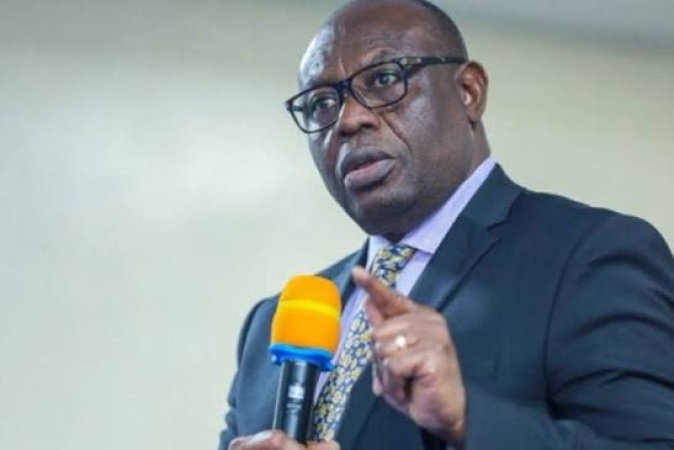
Dr Dakorinama Alabo George
More than two months after the Presidency announced the replacement of Dr Dakorinama Alabo George as Executive Director of the Border Communities Development Agency (BCDA), he has yet to vacate office as the head of the agency.
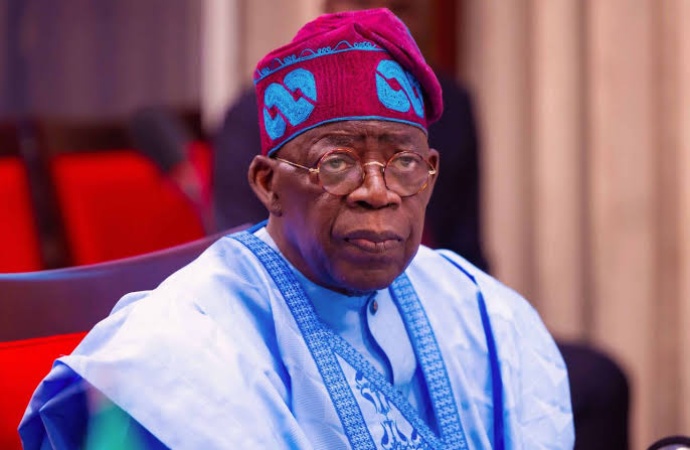
President Bola Ahmed Tinubu had replaced George with a former spokesperson of the House of Representatives, Abdulrazak Sa’ad Namdas, in June 2026.
One of our correspondents, who visited the BCDA corporate headquarters in Abuja on Friday, observed that George’s portrait remained conspicuously displayed at the reception area, alongside that of the president.
A staff member of the agency, who spoke on condition of anonymity, confirmed that George was still at the agency.
“Yes, Dr George is still here as DG,” the staff member said.
When contacted, Namdas explained that he had not resumed office because he was awaiting his appointment letter from the Office of the Secretary to the Government of the Federation (OSGF).
“You know when there is an appointment, you have to go to the SGF. When I went there, they asked me to hold on because they were carrying out some administrative procedures,” he said.
Calls to the Media Adviser to the Secretary to the Government of the Federation (SGF), Mr Yomi Odunuga, indicated his line was switched off. WhatsApp inquiries sent to him on Namdas’ appointment letter were delivered but not responded to at the time of filing this report.
Similarly, Christopher Ugwuegbulam, Head of Information and Public Relations at the OSGF, neither replied to a WhatsApp message sent to him nor answered calls to his phone.
President Tinubu had directed political appointees intending to contest elective positions in 2027 to resign on or before March 31, 2026. The directive was contained in a circular signed by the SGF, Senator George Akume, and issued by the Permanent Secretary, General Services Office, Dr Ibrahim Abubakar Kana.
George, who was appointed on March 15, 2024, allegedly resigned to contest the governorship primaries in Rivers alongside Governor Siminalayi Fubara, a member representing Obio/Akpor Federal Constituency in the House of Representatives, Kingsley Chinda and Tonye Cole.
Consequently, the Special Adviser to the President on Information and Strategy, Bayo Onanuga, in a statement dated June 26, announced Namdas as the new head of the agency with “immediate” effect.
However, George, who served as the Commissioner of Works in Rivers under the Wike and Fubara administrations, has refused to vacate the office.
Sources said though he left office to vie for the APC governorship ticket in Rivers, he did not hand over to anyone and discreetly retained control of the office properties.
He withdrew from the primaries at the last minute to pave the way for Chida, Wike’s anointed candidate, who emerged as the APC governorship standard bearer in Rivers.
A source had alleged that Dr George’s backers were working with some other powerful officials in the Presidency to ensure he remains in office without the President’s knowledge.
Onanuga had, in a terse response to Daily Trust in July, faulted George’s claim that he had been reappointed, insisting that “Namdas stays.”
But he has not responded to subsequent inquiries on why Namdas has not resumed and whether George has secured the president’s nod to remain in office.
George presides over procurement process
Findings by Daily Trust revealed that despite his replacement, George has continued to oversee key administrative activities of the BCDA, including procurement processes.
At least two downloadable procurement documents were uploaded to the agency’s website on September 10, 2026. The documents contained an “Invitation to Tender/Expression of Interest” for its 2026 Capital Projects and bidding for procurement of goods.
One of the documents stated that the BCDA “wishes to invite experienced and competent Contractors/Suppliers to submit bids for the underlisted 2026 Capital Projects,” citing compliance with the Public Procurement Act 2007 and extant federal government regulations on procurement.
The tender document was signed simply as “Executive Secretary, BCDA”, rather than identifying the signatory by name.
It also directed prospective contractors and suppliers to collect Standard Bidding Documents from the office of the Head of Procurement at the agency’s headquarters in Utako, Abuja, upon payment of a non-refundable N10,000 per lot.
Some of the listed procurement categories included supply of equipment, vehicles, training programmes, ICT projects and electricity works, alongside various zonal intervention and capital projects across the country.
The document set September 23, 2026 as the deadline for submission of technical and financial bids, with technical bids to be opened immediately after the deadline in the agency’s conference room in the presence of bidders or their representatives.
Recall that George had in July, after his replacement was announced, met with the Minister of Finance and the Coordinating Minister of the Economy, Mr Taiwo Oyedele, appealing for timely budget releases to the agency. Pictures of the meeting were posted on Facebook.
The Nation quoted George as saying during the courtesy visit that prompt funding would enable the agency to expand its efforts in delivering essential infrastructure and improving the living conditions of millions of Nigerians residing in border communities.
He appreciated President Tinubu for the N50 billion allocation to the BCDA in the 2026 budget, noting that the agency had embarked on cost-effective projects with adequate completion timelines.
Daily Trust cannot ascertain if any funds have been released to the agency.
Efforts to reach George for comment were unsuccessful. He did not respond to calls and WhatsApp messages to his two lines.
George’s previous comments
In a now-deleted WhatsApp response, George had directed our correspondent to the Presidency for clarification on his status at the agency, insisting he had never resigned.
“The Presidency through the office of the SGF will be in a better place to answer you pls. But just so you know, at no time did I resign. I never contested cos [because] I withdrew from the race before the primaries. Thanks and have a good day.
“An error was made and it was quickly corrected. That’s the much I can tell you,” he wrote, before deleting the text hours later.
After Daily Trust’s first publication on the matter, George reached out to one of our correspondents via WhatsApp, commenting on the report.
“I have my appointment letter to the office and no one else does, so there’s no dual leadership,” he wrote, adding a subtle threat. “Just be careful about your misleading stories so it doesn’t end in litigation.”
“This will be my last discussion with you on this subject matter,” he noted.
When asked if he resigned before he picked nomination forms for the governorship primaries, he said, “Don’t you know where to find out? Don’t chat me up again.”
A few minutes later, George sent another WhatsApp text, citing Section 88(1) of the Electoral Act, ostensibly to justify his stay in office despite the president’s directive.
“On a final note, just to educate you, let me help you with this: Section 88(1). Key Points on Resignation Timing: This provision effectively requires political appointees to resign before participating in primaries (as aspirants or delegates) to avoid violating the law. However, it does not mandate a specific timeline like ‘at least 30 days’ or ‘one day before,’” he wrote.
He further argued that legal interpretations — including from lawmakers — and expert commentary indicated that resignation can occur anytime before the primaries, “including potentially the day before or ensuring they are no longer in office on the day of the event.”
George said the law is particular about not holding the appointment during participation on the day of the primaries.
“So if you withdraw from contesting a day before the primaries, you don’t need to resign. But if you’re really contesting you must resign at least a day before the primaries. The law didn’t say resign before picking forms. The law is the law and anything outside the law (even a directive) does not stand.
“So technically there was no vacancy. Someone erroneously misinformed the Presidency that there was a directive and an announcement was made, but when they found out that there was no resignation, it was quickly corrected,” he stated.
But a Senior Advocate of Nigeria, Salman Jawondo, faulted George’s argument, saying that though Section 88(1) of the Electoral Act does not prescribe a specific timeline within which a political appointee must resign before seeking elective office, the president retains the constitutional power to appoint and remove his appointees at any time.
According to him, once the president appoints another person to the office, the tenure of the previous occupant automatically comes to an end, irrespective of whether the appointee had tendered a resignation.
‘An act of administrative confusion’
Reacting to the development, Professor Ata Pine of the Department of Political Science, Benue State University, described the situation as “an act of administrative confusion.”
He said the uncertainty surrounding the transition was undesirable for the administration, stressing that government institutions require clearly defined roles and responsibilities.
“It doesn’t show seriousness. I will put it straight that it is an act of administrative confusion,” he said.
Pine said such uncertainty could also affect how people outside government engage with public institutions, particularly those seeking to do business with the government.
According to him, there should be administrative clarity within government institutions to establish the hierarchy of authority and prevent uncertainty over who is responsible for what.
“So I feel there should be a political leadership. It is not good for a government machinery because roles and responsibilities are expected to be clearly delineated in any functional government,” he stated.
Pine said clearly defined authority was important not only for government officials but also for people seeking to engage with government institutions.
“So that both people coming to do business, outsiders and insiders, will be very clear with the hierarchy of authority,” he said.
He urged the president to intervene quickly and resolve the situation.
Controversy exposes gaps in pubic service – Ex-director
Musa Saleh, a Fellow of the War College, now the National Defence College, and former Director of Administration in the Federal Public Service, said the controversy surrounding George’s return despite the new appointment by the Presidency exposed gaps in the public service procedures.
Saleh said the controversy appeared to have arisen partly from the failure to conclusively process the resignation of the BCDA boss when he left office to pursue his political ambition.
“From the write-up that I had read, published in the newspapers, it would appear first that the issue of the resignation that ought to have been made by that executive secretary was not properly processed,” he said.
According to him, public service rules require an officer who intends to resign to give the prescribed notice, after which the resignation should be processed and formally accepted by the appropriate authority.
“When you tender your letter of resignation, the resignation is supposed to be processed. And when processed, appropriate reply would be given to the person that the government has accepted your resignation,” he added.
The retired director explained that the absence of such procedures could create a loophole for an appointee to return to office, particularly where there was no formal handover.
“In all the readings that I have made, it seems that there was that gap. Presently, if the matter goes to the court of law and the judge asks, where is the letter approving the resignation of this particular person, I don’t think such a letter can be produced,” Saleh said.
He said the situation was similar to previous instances involving public officials who left their positions to pursue political ambitions but returned after failing to secure their desired elective positions.
“When a letter of resignation has not reached the ultimate authority and gotten the approval, it is still possible for that letter to be withdrawn. And this is the loophole as far as this particular issue is concerned,” he said.
‘Presidency’s silence troubling’
Speaking further on the status of Namdas’ appointment, the retired director said the Presidency’s recent silence could be interpreted as tacit approval for George to remain in office, and urged the Presidency to clarify the situation and provide evidence of its position.
“They are silent, but we should know what is behind the silence. There must be a reason for that.
“In my opinion, it is just politics they are playing. Because once you dig deep enough, you may find out that some vested interests, top officials in government, have an interest in retaining or maintaining the status quo and allowing the present Executive Director to continue.”
He said the failure to release the appointment letter of the newly appointed executive director was itself a form of communication and had contributed to the uncertainty surrounding the leadership of the agency.
Refusal to issue or release the letter of appointment of the supposedly incoming executive director itself is a communication, and that is the real issue on the ground.
is only that appointment letter that can give him evidence or proof that he has been appointed to replace Mr George. Otherwise, there is no clear evidence of the change.”
The retired director reiterated that the Presidency’s silence should not be ignored, saying it could be interpreted as a position on the matter.
“Let me reiterate that silence is a communication, as the wise saying goes, and one needs to decode the interpretation from the silence.
“Things like this have happened before, and it is very unfortunate. We can recall similar things happening about 10 years ago, whereby some permanent secretary refused to leave after her tenure had ended and remained in office for about a year later.
“So, by implication, the Presidency’s silence is approval for Mr George to continue. But I don’t really know,” he said.
On whether a presidential announcement terminating an appointment or directing an appointee to relinquish office was sufficient, Saleh said such announcements must be followed by formal administrative action.
“Presidential announcements are political statements. And when they are made, they need to be followed up,” he said.
He, however, stressed that the president ultimately has the authority to remove an appointee, saying, “If President Tinubu today does not want this man to be the executive secretary of that place, tomorrow he will not be there because someone appointed you and someone can remove you.”
Saleh said the withholding of the appointment letter to Namdas further complicated the situation.
“If the appointment letter that we are looking at is being held by someone and is not released to that person, then you know there is a gap there,” he said.
He said the situation could give rise to competing claims of authority, particularly if the former office holder and the new appointee sought legal redress.
According to him, “At the end, Mr President has to come in. Either Mr President comes in or, most importantly, they go to court.”
Saleh said the Presidency could resolve the matter by clearly deciding whether the former official should remain in office or the newly appointed person should take over.
“If they genuinely want the new man to come, then they should enforce it. They should give him his letter. Now, if he doesn’t have that letter, what authority does he have?” He queried. (Daily Trust)




