
Updating your news feed...
NEWS EXPRESS is Nigeria’s leading online newspaper. Published by Africa’s international award-winning journalist, Mr. Isaac Umunna, NEWS EXPRESS is Nigeria’s first truly professional online daily newspaper. It is published from Lagos, Nigeria’s economic and media hub, and has a provision for occasional special print editions. Thanks to our vast network of sources and dedicated team of professional journalists and contributors spread across Nigeria and overseas, NEWS EXPRESS has become synonymous with newsbreaks and exclusive stories from around the world.













Loading banners
Loading banners...

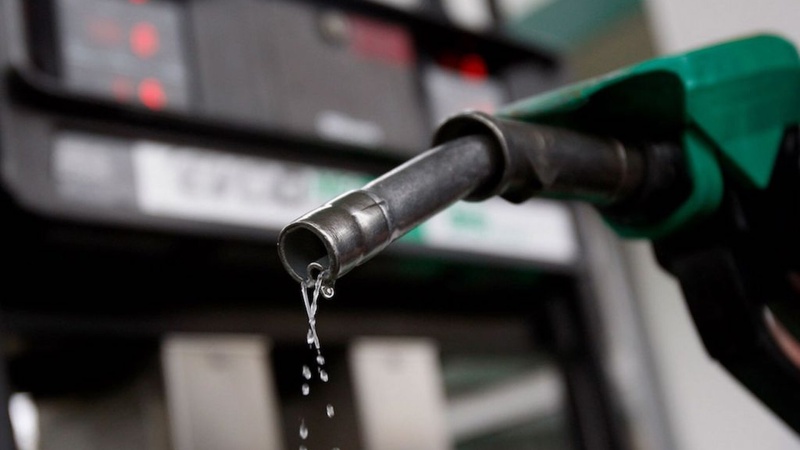
A litre of petrol sold for N20 in Nigeria in 1999. More than two decades later, petrol prices have crossed N1,000 per litre in several parts of the country, with prices varying according to location, marketer and prevailing market conditions.
The journey from N20 to more than N1,000 has been shaped by more than inflation.
Over the past 27 years, Nigeria’s petrol market has gone through government-controlled pricing, repeated subsidy reforms, foreign exchange pressures, fuel shortages, attempts at deregulation and, more recently, a transition towards market-driven pricing.
The history of petrol prices also mirrors the changing value of the naira and the growing cost of maintaining subsidised fuel prices.
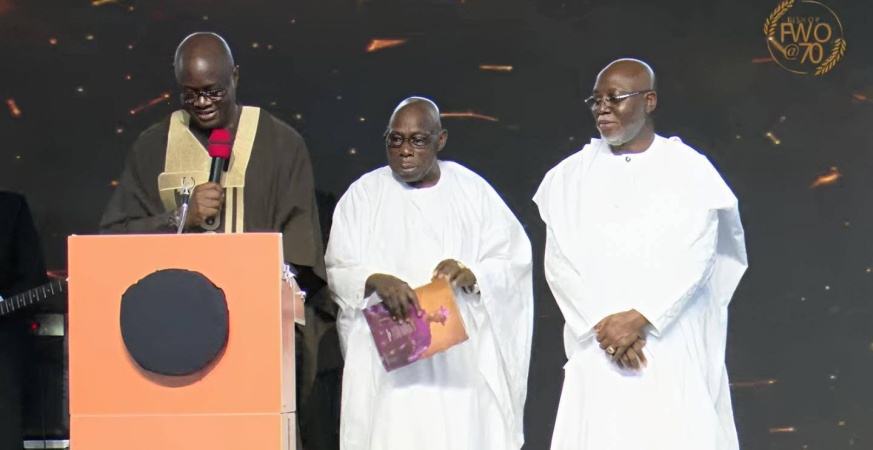
Obasanjo and the era of frequent price hikes (1999–2007)
When Olusegun Obasanjo assumed office in May 1999, petrol was selling for about N20 per litre.
The price soon became a major policy issue as the administration sought to reduce the cost of petroleum subsidies and move towards liberalisation of the downstream sector.
In June 2000, the government increased the pump price from N20 to N30 per litre. The decision triggered strong opposition and nationwide labour action, forcing the government to reduce the price to N22.
The price was subsequently increased to N26 in January 2002 and N42 in 2003.
In 2004, there were two further increases from N42 to N50 on May 29 and from N50 to N65 on August 25.
The final increase under Obasanjo came on May 27, 2007, when the price rose from N65 to N75 per litre.
The increases were closely linked to the government’s attempt to reduce the gap between regulated pump prices and the cost of supplying imported petroleum products.
The International Monetary Fund estimated Nigeria’s domestic petroleum subsidy at N117.1 billion in 2002, equivalent to 2.1 per cent of GDP.
By the end of Obasanjo’s presidency, the official petrol price had risen from N20 to N75 per litre.
Yar’Adua and the rare price drop (2007–2010)
Umaru Musa Yar’Adua inherited a petrol price of N75 per litre in 2007 but reversed the increase shortly after assuming office, reducing it to N65.
The reduction was significant because it demonstrated that petrol prices under Nigeria’s regulated system could move in either direction depending on government policy.
The N65 price remained in place during the rest of Yar’Adua’s presidency and continued into the early period of Goodluck Jonathan’s administration.
Jonathan and the 2012 subsidy battles (2010–2015)
Goodluck Jonathan’s presidency produced one of the most dramatic episodes in Nigeria’s petrol pricing history.
On January 1, 2012, the government announced the removal of the petrol subsidy, causing the official pump price to jump from N65 to N141 per litre.
The increase triggered nationwide protests and a prolonged strike by organised labour. The protest movement became known as #OccupyNigeria.
Following the widespread opposition, the government reduced the official price to N97 per litre.
In January 2015, amid a sharp fall in international crude oil prices, the government reduced the petrol price again, from N97 to N87 per litre.
The episode highlighted the dilemma that would continue to define Nigeria’s petrol policy: keeping fuel prices low required substantial government spending, while attempts to remove subsidies often triggered public resistance.
Nigeria’s dependence on imported refined petroleum products also meant that movements in the naira could significantly affect the cost of supplying petrol.
Buhari era (2015–2023)
Muhammadu Buhari inherited an official petrol price of N87 per litre in 2015.
In May 2016, amid severe fuel shortages and foreign exchange pressures, the government increased the official pump price to N145 per litre.
The administration later moved towards a more market-oriented pricing system.
The COVID-19 pandemic brought another major change. As global crude oil prices collapsed in 2020, the government reduced the petrol price from N145 to N125 per litre in March.
However, N125 did not remain the price throughout the year. Further adjustments followed as global oil prices and domestic supply conditions changed, with retail prices eventually rising to around N162 by the end of 2020.
The subsidy issue also returned.
The IMF said Nigeria had removed the petrol price cap in June 2020 but did not fully implement a market-based pricing mechanism. It said implicit subsidies re-emerged from 2021 as the difference between the cost of imported fuel and regulated pump prices widened.
According to the IMF, the implicit subsidy was estimated at N1.912 trillion in 2021, with the Nigerian National Petroleum Company (NNPC) bearing the cost through the revenue it otherwise would have remitted to the Federation Account.
By the end of Buhari’s administration in 2023, the official pump price was around N185 to N195 per litre.
Tinubu era of full deregulation and N1,000+ era (2023–present)
President Bola Tinubu’s administration introduced the most significant shift in petrol pricing policy in recent years.
In his May 29, 2023 inaugural address, Tinubu said the petrol subsidy regime could no longer be justified because of its rising cost and the need to redirect public resources towards infrastructure, education, healthcare and other priorities.
The announcement was followed by a sharp increase in petrol prices, with NNPC retail prices rising from about N185 to the N488-per-litre range in Lagos and other rates in different parts of the country.
The subsidy decision coincided with a major foreign exchange reform.
On June 14, 2023, the Central Bank of Nigeria adopted a willing-buyer, willing-seller model and consolidated the country’s previously segmented foreign exchange market.
The subsequent depreciation of the naira increased the cost of imported petrol and contributed to further pump-price increases.
By 2024, petrol prices had risen sharply amid foreign exchange pressures, supply constraints and changes in the cost of imported products.
In September 2024, for example, NNPC increased its Lagos pump price to N950 per litre, while prices in some northeastern states reached N1,019.
By October, reports put NNPC prices at about N998 per litre in Lagos and more than N1,000 in some other locations.
The emergence of the Dangote Refinery also began changing the structure of the market.
Commercial petrol production from the refinery introduced locally refined gasoline into a market that had for years depended heavily on imports. However, domestic refining has not eliminated price fluctuations because petrol prices continue to be affected by crude oil prices, exchange rates, logistics, refining costs and competition among suppliers.
Petrol prices in 2026
The price story has continued to change under Tinubu.
By 2026, petrol prices were no longer moving according to a single nationwide official price. Competition among NNPCL, Dangote-linked marketers and other retailers increasingly produced different prices at different filling stations.
NBS’s PMS Price Watch continues to track average prices paid by consumers across the states. Its February 2026 report put the national average retail price at N1,051.47 per litre.
By September 2026, pump prices had risen again in some locations. Reports on September 1 put NNPCL prices at N1,299 per litre in Lagos and as much as N1,345 in parts of Abuja.
This means that the most accurate way to describe the current market is not to give one nationwide figure, but to say that petrol is selling for more than N1,000 per litre in several locations, with significant variations between states, marketers and filling stations.
What the price history reveals
The rise from N20 to over N1,000 reflects a convergence of market forces: fluctuating global crude benchmarks, severe naira devaluation, the removal of state subventions, and distribution logistics.
In Nigeria, petrol prices influence the broader economy. Higher fuel costs drive up transportation fares, which immediately inflates food prices and consumer goods. Small businesses reliant on generators face surging operational expenses, squeezing household disposable income across the board.
Conversely, maintaining low pump prices required billions of dollars in state spending, funds diverted away from infrastructure, healthcare, and education. Ultimately, the history of Nigeria’s petrol pricing is not merely about rising numbers at the pump; it is a story of how the cost of energy has shifted from government balance sheets directly onto businesses and citizens. (Nigerian Tribune)




