
Updating your news feed...
NEWS EXPRESS is Nigeria’s leading online newspaper. Published by Africa’s international award-winning journalist, Mr. Isaac Umunna, NEWS EXPRESS is Nigeria’s first truly professional online daily newspaper. It is published from Lagos, Nigeria’s economic and media hub, and has a provision for occasional special print editions. Thanks to our vast network of sources and dedicated team of professional journalists and contributors spread across Nigeria and overseas, NEWS EXPRESS has become synonymous with newsbreaks and exclusive stories from around the world.





















Loading banners
Loading banners...

Several parts of Sokoto State are increasingly turning into bandit flashpoints, with the latest attacks leaving at least 15 residents dead and about 79 others abducted across six local government areas of the state.
The fresh attacks, which occurred in Rabah, Isa and Dange Shuni LGAs, came barely days after similar incidents in Bodinga, Kebbe, Goronyo, Tureta, Tambuwal and other parts of the state, raising concerns over the spread of banditry beyond the areas traditionally regarded as hotspots.
Seven residents were killed when bandits invaded Tofa village in Rabah LGA at about 10pm on Sunday. Among the victims was a woman whose son was reportedly slaughtered by the attackers, while another victim was also reportedly killed.
A resident, who spoke to Daily Trust on condition of anonymity, said the assailants infiltrated the community while residents were sleeping and opened fire.
He identified the victims as Guda Biti, Bello Dan Makanike, Musa Dan Agaji, Mallam Dan Tani, Dan Kuluwa, Jamila and Masudu. The victims were buried on Monday morning.
The source said 35 residents were initially abducted during the attack, but eight later returned, leaving 27 in captivity.
He appealed to the government and security agencies to intensify efforts to rescue those being held by the bandits and provide permanent security for communities in the area.
In Isa LGA, residents of Tidibale village told Daily Trust that bandits invaded the community on Saturday, killing five residents and abducting about 50 others.
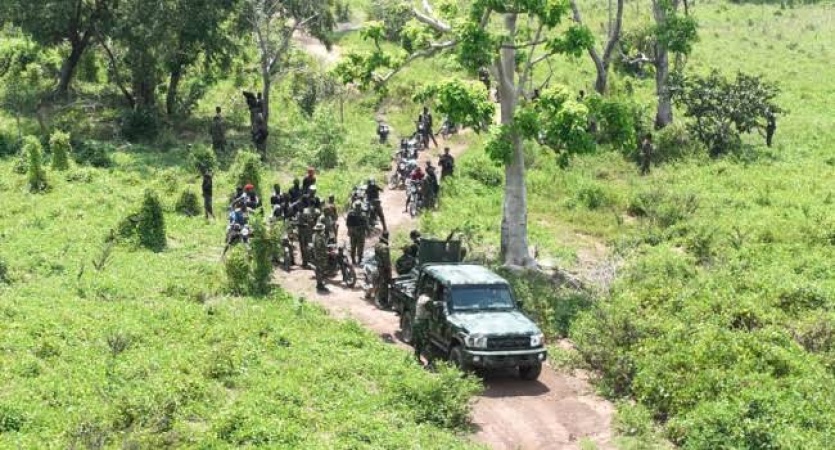
They also reportedly burnt vehicles belonging to soldiers stationed in the area.
In Dange Shuni Local Government Area, a resident said two people were killed in Wababe and Rumbus communities, while two others were abducted.
A resident, Uzairu Ibrahim Dilingu, said gunshots were heard from the eastern axis at about 1pm on Sunday, creating panic in communities including Sokondu, Wababe, Majiyya Gida and Bellar Koli. He said residents later fled their homes after receiving warnings that the attackers were approaching.
Dilingu said the attackers spent about an hour around Kwannawar Jali before reportedly changing direction towards Adarawar Tumbus and Gurgawa.
He said one of the victims, Nura Ali Dogo, was killed while returning from Dange town on a motorcycle, which the attackers also took away.
A resident of Wababe, who asked not to be named, said the attackers entered the community at about 4pm on Sunday and remained there until Monday morning.
He said they killed a mentally challenged resident identified as Wadata Dan Wababe, popularly known as Achiku or Minister, before breaking into shops to steal goods and livestock.
According to him, residents sought assistance from security personnel in the area but did not receive the expected intervention, as the attackers raided several communities in the area.

The residents called for security personnel to be permanently stationed in their communities to enable them to return to their farms and other means of livelihood without fear of attack.
The chairmen of Rabah and Dange Shuni LGAs did not respond to calls seeking comments on the attacks.
The Sokoto State Police Command spokesman, DSP Ahmad Rufai, said he would investigate the latest incidents and provide an update, but had not done so by the time of filing this report.
However, a senior security officer, who did not want his name to be disclosed because he was not authorised to speak on the incidents, confirmed all the attacks and killings, but said the number of those abducted was exaggerated.
A wave of attacks
The recent incidents piled on to a wave of bandit attacks across Sokoto State in the past eight months. On August 14, suspected bandits killed two residents and abducted 11 others during separate attacks on Taloka and Huda communities in Goronyo LGA.
The same day, two residents were killed and bandits reportedly led Friday prayers at the Izalah Central Mosque in Kaya village, Tambuwal LGA.
Four soldiers were also feared killed when suspected bandits attacked Kebbe town, while between August 14 and 15 at least 34 residents were reportedly killed in attacks on Ungushi and surrounding communities in Kebbe LGA.
On September 3, five residents were killed in Girkau village, Kebbe LGA, while five others were murdered and about 50 abducted in Tidibale, Isa LGA, two days later.
The attacks have followed months of similar incidents across Sabon Birni, Bodinga, Rabah, Wurno, Tambuwal, Goronyo and other parts of the state.
In July alone, Daily Trust reported that bandits killed and abducted residents in several communities, while dozens of villages were deserted due to persistent attacks.
On July 2, bandits attacked Takatsaba and Tarah communities in Sabon Birni, abducting at least 43 residents. A 10-year-old boy was killed and several others injured.
Between July 3 and 4, six people, including the village head of Kulodo and his eldest son, were killed in attacks on Kulodo and Kwamtsi in Bodinga LGA. Four others were abducted.
Around the same period, attacks in Danchadi District of Bodinga forced more than 30 villages to be deserted. District authorities reported at least six deaths, hundreds of displaced residents and the rustling of more than 1,000 livestock.
On July 16, bandits attacked Gasalodi and Tungar Barke communities in Tambuwal LGA, targeting residents who had returned home after earlier displacement. Several people were abducted and livestock rustled.
On July 19, two people were killed, three injured and five abducted in Kwaren Gamba, Sabon Birni.
Two days later, nine people, including two pregnant women and three children, were reportedly abducted during an attack on Barayar Zaki in Wurno LGA.
On July 22, more than 50 residents were reportedly abducted from Garin Idi, Sabon Birni.

Between July 27 and 28, attacks on Unguwan Lalle in Sabon Birni and Maikujera and Angamba in Rabah reportedly left at least 11 people dead.
On July 29, bandits attacked Tsamaye in Sabon Birni, killing at least seven people, including three worshippers inside a mosque, according to reports.
Between June 1 and 3, several communities in Tureta and Sabon Birni LGAs came under attack. Residents told Daily Trust that at least 52 people were killed, including 46 in communities around Tureta and six in Sabon Birni. More than 15 communities were reportedly deserted.
On June 16, bandits attacked farmers around Ghandi in Rabah LGA, killing four and abducting at least 12 others, according to local sources cited by Premium Times. Troops later rescued seven of the abducted farmers.
On June 24, bandits attacked Kuda-Kuda village in Goronyo LGA, killing four people, including the Chief Imam, Liman Audu, and abducting others.
On June 28 and 29, another attack in Illelar Dawagware, Goronyo LGA, left four people dead and 12 abducted, residents told Daily Trust.
On May 1, bandits attacked Garin Idi in Sabon Birni LGA, abducting eight people, including relatives of the Sokoto State Deputy Governor.
On May 6 and 7, bandits blocked the Rabah-Maikujera road and attacked commuters. Police said six people were abducted but security forces rescued five of them.
On April 1 and 2, bandits attacked Chacho village in Wurno LGA, abducting nine people and injuring two others, according to Radio Nigeria. Police said an operation was launched to track the attackers.
Between April 7 and 8, separate attacks were reported in Sabon Birni town, Dan Aduwa and Kwaren Gamba. Daily Trust reported that at least five people were killed and 22 abducted.
On March 7 and 8, bandits attacked Mallamawar Yari in Gawakuke Ward, Rabah LGA. The police confirmed that one person was killed and five others abducted.
On January 12 and 13, bandits attacked Bargaja village in Isa Local Government Area, killing two people and abducting several others, according to the Sokoto State Police Command.
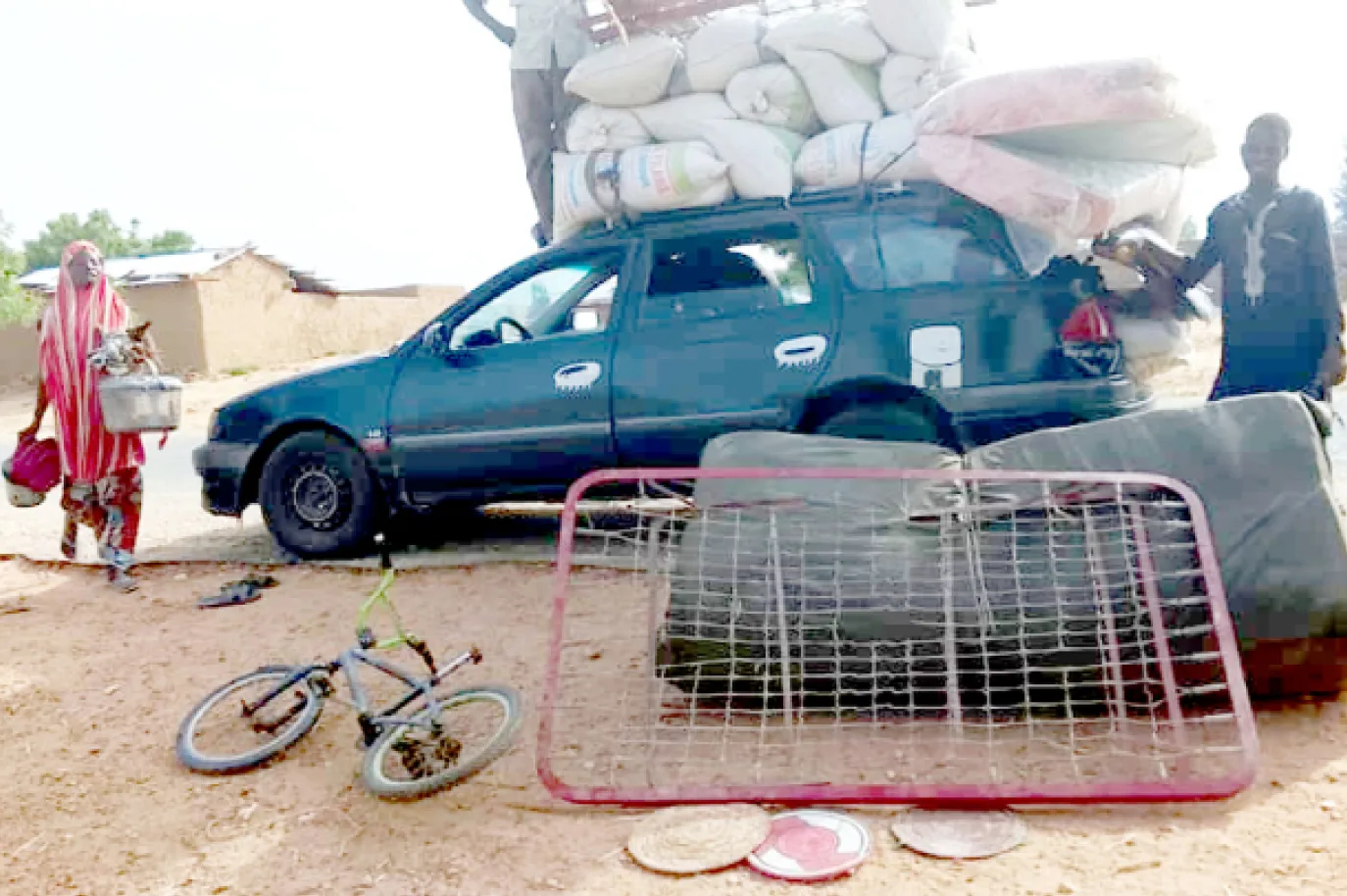
The attack was followed by a wider displacement in the area. By January 14, at least 28 villages had reportedly been deserted as residents fled to Isa town following repeated attacks.
A call for security overhaul
Security analyst and peace-building expert, Comrade Nuraddeen Bello Bodinga, said “the worsening situation” was an indication that the security system required a fundamental review.
Bodinga said the problem was no longer confined to one part of Sokoto, noting that the spread of banditry to areas previously considered relatively safe should serve as a warning to authorities.
He said the government needed to develop a clear security policy, backed by a well-defined strategy, rather than relying mainly on reactive measures after attacks had occurred.
According to him, political leaders, traditional rulers, opposition parties, security agencies and other stakeholders should come together and honestly assess the situation and agree on a common approach to tackling terrorism and banditry.
He also called for “better coordination between ground and air operations, intelligence gathering and other security mechanisms, alongside investments in education, healthcare and employment opportunities to address some of the vulnerabilities exploited by criminal groups.”
Bodinga said the expansion of banditry into more communities was evidence that the threat was spreading rather than being contained.
He warned that without a comprehensive review of the security system and a proactive approach to emerging threats, the situation could continue to deteriorate
A security analyst, Barrister Bulama Bukarti, warned that bandit attacks in Sokoto State are evolving into a more complex security threat as criminal groups increasingly interact with violent extremist organisations operating across the Sahel.
Bukarti, a senior analyst on Conflict and Development in Sub-Saharan Africa, told Daily Trust last night that the violence in the state could no longer be viewed simply as conventional banditry.
“Let me start by saying this plainly: what is happening in Sokoto is no longer just banditry. What we are witnessing is criminal violence fusing with Sahelian violent extremist groups, and the two sets of groups are feeding off each other and are becoming almost impossible to separate,” he stated.
He identified the porous border between Sokoto and Niger Republic, particularly around Sabon Birni, Tangaza, Gada and Isa, as a major factor aiding the movement of criminals, terrorists, weapons, drugs and supplies.
“This allows easy flow of criminals and terrorists as well as weapons, drugs and supplies. We are seeing an early stage of what we witnessed in the Lake Chad area,” he said.
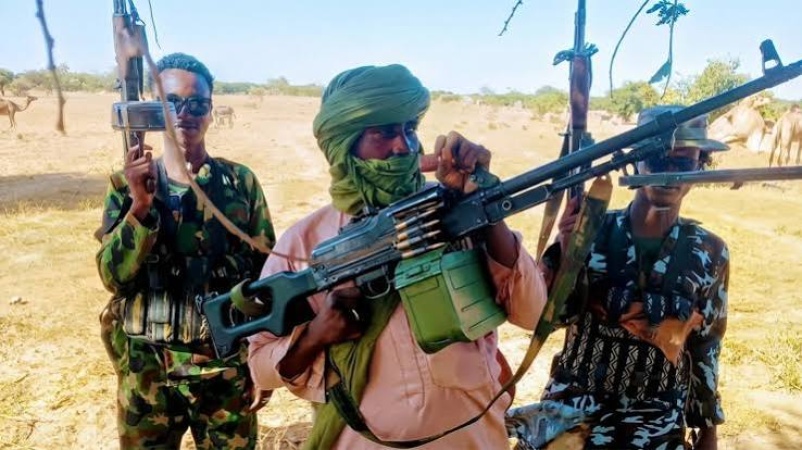
Bukarti said the same corridor had facilitated the emergence of Lakurawa, which he described as a more sophisticated and dangerous threat than conventional criminal gangs.
“I think people underestimate what kind of group this has become in terms of its organisation, sophistication and lethality. This isn’t a gang chasing ransom money and cattle. Lakurawa is a violent extremist group that is out to recruit and radicalise local people and carve out its own state and enforce its own version of Islamic law,” he added.
He said the group was already extorting money from communities, while its involvement in conflicts across the Sahel had increased the threat.
Bukarti also expressed concern over the reported activities of Islamic State’s Sahel Province and Jama’at Nusrat al-Islam wal-Muslimin (JNIM) in the region.
“ISIS’s Sahel Province has recently claimed its first attacks inside north-western Nigeria in Sokoto and Kebbi, including an ambush that reportedly killed close to 20 of our soldiers in a single incident. Meanwhile, JNIM, the al-Qaeda affiliate based in the Sahel, is also active in the same theatre,” he stated.
He explained that the rivalry between the extremist groups, which has fuelled conflicts in Mali and Burkina Faso, was now spilling into Nigeria.
“Their rivalry, which has torn through Mali and Burkina Faso for years, has arrived on our doorstep,” Bukarti said, criticising the pace of security response to the attacks.
“When you look at what happened in Lajinge and Tsamaye, attacks that lasted three, four hours, with security personnel stationed just kilometres away who never came, that tells communities something. It tells them they are on their own,” he said.
Bukarti warned that such perceptions could drive communities to flee their homes or seek protection from armed groups.
“And once people believe that, they either flee, as we have seen with entire wards emptied in Sabon Birni, or they make their peace with whoever offers them protection, even if that is the very group terrorising their neighbours,” he added.
Bukarti urged the governments to continue strike and clearance operations, but warned that they are insufficient.
He said, “We need much closer security cooperation with Niger Republic in particular, given how much of this violence moves back and forth across that line. That means tighter, better-coordinated border control. It also means a sustained push to dismantle the financing, arms supply and logistics networks that keep these groups armed and mobile. Degrading fighters without cutting off their money and weapons just buys us a temporary lull.
“I have spent years working on disarmament and reintegration, and no government has ever killed its way out of an insurgency. Most of the young men carrying weapons in northwest are driven by poverty and unemployment, illiteracy and exclusion and are absorbed into violent groups because banditry and extremism became the only economies left standing.
“Without a genuine reintegration pathway alongside the military pressure, every operation simply pushes fighters into the next ungoverned pocket. Sokoto and Zamfara’s recent talk of a regional approach is the right way to go, but it needs real political will, cross-border intelligence-sharing and resourcing that finally matches the scale of the threat.” (Daily Trust)




