ADAD
ADAD
Updating your news feed...
NEWS EXPRESS is Nigeria’s leading online newspaper. Published by Africa’s international award-winning journalist, Mr. Isaac Umunna, NEWS EXPRESS is Nigeria’s first truly professional online daily newspaper. It is published from Lagos, Nigeria’s economic and media hub, and has a provision for occasional special print editions. Thanks to our vast network of sources and dedicated team of professional journalists and contributors spread across Nigeria and overseas, NEWS EXPRESS has become synonymous with newsbreaks and exclusive stories from around the world.






Loading banners
Loading banners...

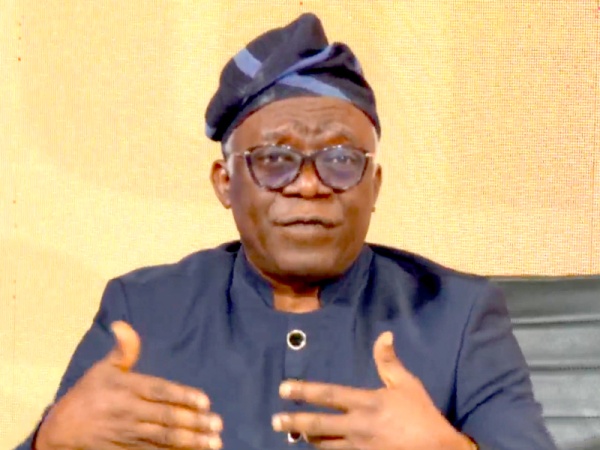
Human rights lawyer, Femi Falana, and civil rights activist, Ayo Obe, yesterday, raised the alarm over the credibility of the 2027 general elections, warning that technology and electoral reforms would achieve little without institutional integrity, transparent political processes and active citizens’ participation.
While Falana said many Nigerians were already doubtful that the elections would be free and fair, Obe warned that technological innovations, including the Bimodal Voter Accreditation System (BVAS) and INEC Results Viewing Portal (IReV), could improve elections but could not manufacture integrity where institutions and political actors failed to play by the rules.
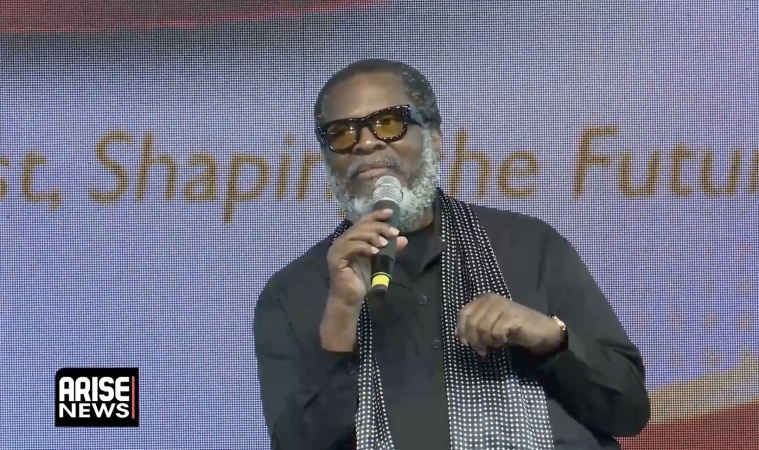
Presiding Bishop of The Redeemed Evangelical Mission (TREM), Dr Mike Okonkwo, also expressed anguish over the state of the country, saying there were times he cried over Nigeria but urged citizens not to give up on the country.
They spoke at the 25th Mike Okonkwo Annual Lecture, themed: “Democracy at the Crossroads: Electoral Credibility, Judicial Integrity and the Future of Nigeria.”
Obe, former president of the Civil Liberties Organisation (CLO), who delivered the lecture, warned against assuming that greater deployment of technology would automatically guarantee credible elections.
“Technology can transmit a result, but it cannot create political integrity,” she said.
She acknowledged that BVAS and IReV had improved aspects of the electoral process but maintained that technology could not compensate for institutional weakness, political interference, poor implementation, bad faith by political actors and weak enforcement.
Obe cited the 2023 Abia State governorship election, where Returning Officer, Prof. Nnenna Nnannaya Oti, refused to announce disputed results from Obingwa Local Government Area until the figures were authenticated with BVAS data.
She said credible elections depended on strict adherence to processes and procedures rather than electronic transmission alone.
Obe identified voter registration, insecurity, violence, intimidation, disenfranchisement, vote buying and abuse of state resources as threats capable of undermining an election even before voting begins.
She also cautioned against interpreting low voter turnout simply as apathy, arguing that some citizens deliberately stayed away because they had lost confidence in the electoral process. “If your vote did not matter, political contestants would not be so interested in buying it.”
She nevertheless urged Nigerians to participate in elections, declaring: “The one vote that is certain not to be counted is the vote that is not cast.”
Falana, who chaired the lecture, warned that the increasing influence of money, political godfathers and abuse of public resources threatened the 2027 elections. “Many are not confident that the 2027 elections will be free and fair. It is the right of citizens to participate in elections. From all indications, we cannot say that the 2027 elections will be free and fair.”
He argued that properly conducted elections should not routinely require judges to determine the eventual winners.
“Those who rig elections tell their opponents to go to court. Many election petitions are dismissed by the courts on technical grounds,” he said.
Falana warned that vote buying could assume unprecedented proportions in 2027.
“What will happen next year will be child’s play compared with 2027. Politicians will spend billions of naira during the forthcoming general elections. I understand that, in 2027, as much as N100,000 is being set aside to bribe each voter,” he said.
He also criticised political party primaries, saying manipulated nomination processes and the domination of politics by wealthy individuals and godfathers had increasingly dragged the judiciary into political disputes.
“The Nigerian people must be mobilised to fight for popular democracy, as opposed to the imposition of candidates by godfathers,” Falana said.
Okonkwo, who turns 81 on Sunday, said Nigerians themselves must take responsibility for changing the country.
“Sometimes, in my bed, I cry about the situation in the country. If Nigeria will change, it is in our hands. Politicians are ready to kill to remain in power,” he said.
Despite his concerns, the cleric urged Nigerians not to give up.
“We are already here. We are not going to run away. Nigeria will change. It will change. It will not continue this way,” he said. (The Sun)