 ADAD
ADAD
Updating your news feed...
NEWS EXPRESS is Nigeria’s leading online newspaper. Published by Africa’s international award-winning journalist, Mr. Isaac Umunna, NEWS EXPRESS is Nigeria’s first truly professional online daily newspaper. It is published from Lagos, Nigeria’s economic and media hub, and has a provision for occasional special print editions. Thanks to our vast network of sources and dedicated team of professional journalists and contributors spread across Nigeria and overseas, NEWS EXPRESS has become synonymous with newsbreaks and exclusive stories from around the world.






.webp)















Loading banners
Loading banners...

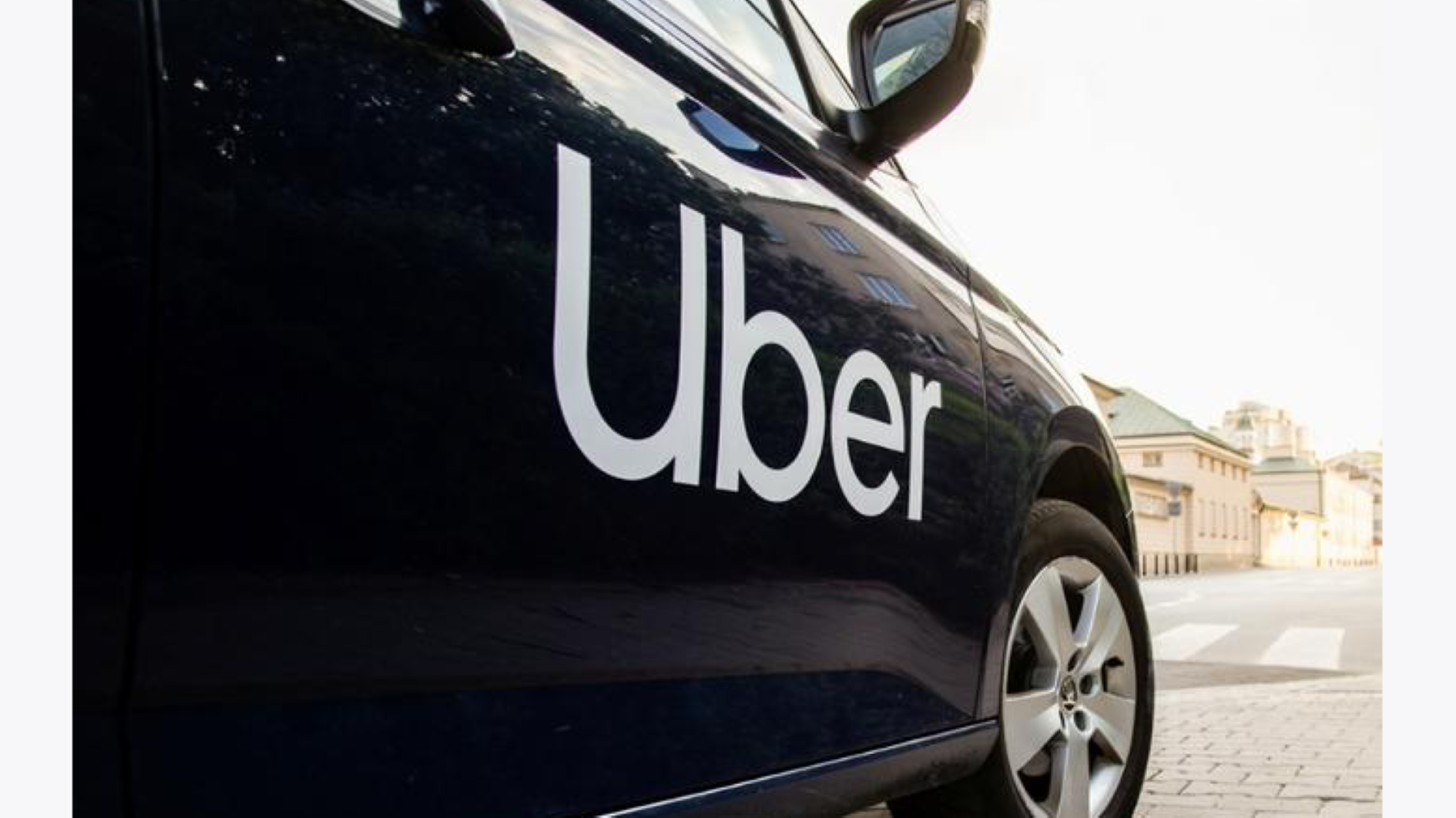
The decision by rideshare giant Uber to exit the Nigerian market after 12 years may have reflected the harsh macroeconomic reality facing multinationals and indigenous companies in the country.
Uber had played on stronger safety measures to dominate the market estimated at $450 million last year.
While it was slightly cheaper than its competitors, night crawlers, a big segment of the market, preferred using its platform for safety reasons.
Bolt, inDrive and other newcomers played on prices (for riders) and lower commissions (for drivers) to Uber’s disadvantage. Many insights suggested Uber was struggling of late on the count of prices and platform charges.
Uber was strict with cash payment in a cash-based economy. Until it closed operations, it had not implemented cash payment, increasing transaction rigidities, which rider partners protested severally.
Nigeria is caught in the company’s global restructuring that involved a 10 per cent payroll cut across continents. The number of employees in Nigeria was yet to be determined as at press time.
A few hours after the announcement, Uber deactivated its booking apps, leaving dozens of young Nigerians who depend on its service for daily survival to their fate.
The Guardian learnt that one of its consultants and a leading audit firm wrote to the company’s management immediately after the announcement to reconcile its retainership account.
The e-hailing company announced its plans to wind down its operations in Nigeria and Uganda, effective yesterday.
In a statement by the company, the platform attributed its abrupt exit from Nigeria and Uganda to the outcome of a “thorough review” of its operations.
The company also clarified that its exit from the two countries would not have any impact on its operations elsewhere within the continent.
“After a thorough review, we have taken the difficult decision to wind down operations in Nigeria and Uganda, effective September 2, 2026,” it disclosed.
E-hailing platforms had battled a slew of regulations, from state governments to federal agencies. The operators had called for a review of the regulations considered harsh.
But Uber exonerated the Federal Airports Authority of Nigeria (FAAN), the agency involved in the latest clampdown, from its exit in the country.
Uber and other e-hailing platforms were suspended from operating into the nation’s airports by FAAN last month, a decision some stakeholders have continued to fight.
The company emphasised that its immediate priority was to support drivers, riders and local team members through the transition.
It said its Help Centre would remain available until September 23 to assist customers with final account-related queries.
In the immediate term, its exit may affect a few e-hailing drivers in the country, who depend solely on its app. But stakeholders said the effect would be short-lived as the affected individuals would migrate to other platforms in the coming weeks.
While it is difficult to estimate the current total number of drivers in the ecosystem, Uber said it had onboarded over 7,000 drivers in Nigeria as of 2017.
Though Uber did not disclose detailed reasons for its withdrawal from the two countries, industry experts attributed the development to the increasingly difficult economics of ride-hailing, particularly for drivers operating petrol-powered vehicles.
Prices of fuel have increased by over 580 per cent since President Bola Tinubu assumed office. The majority of drivers have been held back from converting to compressed natural gas (CNG)-powered vehicles owing to weak support infrastructure and high conversion costs, and scarcity.
Industry players said that the cost of running a vehicle on petrol had risen to a level where fares generated through e-hailing platforms were no longer sufficient to guarantee reasonable returns for drivers.
Experts warned that the development could worsen unemployment and put the livelihoods of vendors, employees, among others who depend on the company in jeopardy.
For a tech-enabled mobility platform like Uber, the recent economic forces may have created a cascading operational crisis that proved unsustainable as drivers were hit with exorbitant vehicle maintenance expenses and soaring fuel prices, leading to repeated widespread labour friction and strikes over commissions.
Commenting on the issue, an economist and a lecturer at the Olabisi Onabanjo University (OOU), Prof. Sheriffdeen Tella, attributed the company’s exit to intense competition and a harsh operating environment in Nigeria.
He, however, said its exit would have little impact on the country’s economy.
He said: “Definitely, it will affect employment rates in Nigeria, but it will not be significant because some of their drivers would move to other platforms. Output level won’t be impacted significantly.
“It will only affect some levels of unemployment like drivers, artisans and their staff because they have to lay off some workers.”
Also commenting on the issue, the Lagos State Chairman of the Amalgamated Union of App-based Transporters of Nigeria (AUATON), Jaiyesimi Azeez, said Uber’s exit was a significant development that should prompt a broader review of the operating environment for app-based transportation businesses and workers.
Azeez said the development should not be viewed merely as the departure of one company, but as a warning about the sustainability of Nigeria’s digital mobility ecosystem.
According to him, the immediate concern was the livelihood of affected drivers who it said had invested heavily in vehicles, fuel, maintenance and technology to provide transportation services.
He stressed that the affected drivers should be treated as Nigerian workers whose economic interests must be protected during the transition.
He also expressed concern about the potential impact of the exit on passengers, particularly in terms of competition, fares and service choices.
“For drivers, the immediate concern is livelihood.
Government and other industry stakeholders must ensure that affected drivers are not simply left to fend for themselves.
“With one of the major players leaving the market, there is a possibility of reduced choices and changes in fares and service conditions,” AUATON chairman said, urging regulators to ensure that the market remains competitive.
Besides, he said the development presented an opportunity to address longstanding challenges in Nigeria’s e-hailing sector.
Azeez said Nigeria also has an opportunity to strengthen indigenous technology and mobility companies, but cautioned that local operators should not reproduce the challenges experienced by drivers under existing platforms.
The AUATON Chairman noted that concerns previously raised by drivers during industrial actions, including issues surrounding fares, commissions and rising operational costs, remained relevant despite Uber’s exit.
He said the sustainability of the industry ultimately depended on ensuring that drivers could earn a decent income while platforms remained commercially viable.
AUATON also acknowledged Uber’s explanation that its decision to leave Nigeria was based on evolving business priorities and investment strategy, as well as the company’s commitment to supporting affected drivers and workers during the transition.
Azeez urged the Federal and Lagos State governments, regulators, ride-hailing platforms, driver unions, riders and fleet owners to convene a stakeholders’ dialogue to assess the implications of Uber’s departure and develop policies for the sector.
“Uber’s exit should not merely be treated as a corporate business decision. It should be an opportunity to examine the entire app-based transportation ecosystem,” he said.
According to Azeez, until its exit, several ride-hailing apps, including OgaTaxi, Smart Ride, Gudride, Alpha 1, GLT, Jetride, Rideme, Tripz, Go247, T-cab, Taxigo, 9ja, Skyconnent, Phixama, Cruise, MotionPlus, Gidicab, Soole, BudgetRide, Zkyte, Easy Taxi, Afro Cab, Say Taxi, ProTaxi, Enivo, and Alakowe Taxi, had attempted to challenge the company in Nigeria.
The Public Relations Manager, Bolt Nigeria, Femi Adeyemo, declined to comment on the exit of its competitor, Uber, from Nigeria.
Adeyemo reiterated Bolt’s commitment to the Nigerian market, saying that it had no plans to exit the country.
“We continue to see significant opportunities in the market and remain focused on providing reliable mobility solutions for riders while creating economic opportunities for drivers and entrepreneurs across the country,” he said.
Also, the Public Relations Director of Lagride, Ifeanyi Abraham, said the company was not following in the footsteps of Uber.
Rather, he explained that Lagride was investing more aggressively in Nigeria and expanding its frontier with the launch of some new brand-new vehicles.
Abraham said: “We just launched 400 new vehicles and captains (riders) into the market and we expect significant growth in demand in the final quarter of the year, particularly as mobility demand increases during the ember and festive periods.
He noted: “We also believe this is the right time for government-backed mobility projects to take off across Nigeria. Lagride has developed strong operational experience from Lagos, and our team is ready to deploy that expertise in partnership with state governments and other institutions.
“Working with our original equipment manufacturer (OEM) partner, CIG Motors, we can provide the vehicles, technology, fleet management, driver ecosystem and operational framework required to build sustainable mobility programmes at scale.”
Abraham, however, decried the high cost of vehicle acquisition, access to affordable financing, fuel, operating costs and maintenance.
An Uber driver, Tobi Ladipo, told The Guardian that the exit may not be unconnected to the tough economics of ride-hailing, particularly for drivers operating petrol-powered vehicles under the platform.
According to him, the cost of running a vehicle on petrol in the last three years had increased to a level where fares generated through e-hailing platforms were no longer sufficient to guarantee reasonable returns for drivers.
Ladipo said the disparity between petrol and CNG prices had become a major factor in determining the profitability of drivers.
He explained that most of the e-hailing drivers were using petrol engine vehicles while a few others use CNG-powered vehicles.
“For those using CNG, the charges by the e-hailing platforms are okay. But for fuel-powered vehicles, it is not good enough for us.”
He explained that while CNG was available at about N380 per litre in some instances, petrol cost as much as N1,350 per litre, making it more expensive for drivers relying on conventional vehicles.
Ladipo said the poor economics of operating petrol-powered vehicles had already pushed many Uber drivers to rival platforms, particularly inDrive, in search of better returns.
He noted that although the tariffs offered by inDrive were not necessarily “fantastic” for petrol-powered drivers, he maintained that they remained relatively more attractive than those of some competing platforms.
According to him, the differences in the charges imposed by the various platforms are marginal, with the companies adopting different approaches to determining their tariffs and deductions.
According to Ladipo, Uber charges a total of 16 per cent, comprising 7.5 per cent value added tax (VAT), 6.1 per cent platform charge and another two per cent deductions. Others charge about 14 per cent or less and are more open to fair charge discussions.
Ladipo said intense competition among e-hailing platforms had also contributed to the pressure on drivers.
He explained that companies often reduced fares in an attempt to attract and retain passengers, but the burden of such reductions fell on drivers.
“The e-hailing companies are competing with one another. To remain in business, they reduce the fares for passengers, which is not good enough for the drivers because, in the long run, we get almost nothing for using their platforms,” he said.
The situation, he argued, was becoming unsustainable, particularly for drivers who had not been able to convert their vehicles from petrol to CNG.
Ladipo said converting a conventional vehicle, such as a Toyota Corolla, to CNG could cost between N800,000 and N1 million, describing it as a significant investment for a driver already struggling with rising fuel, maintenance and other operating costs.
On the number of affected drivers, Ladipo said he did not have official statistics, but noted that a “chunk” of the drivers would be affected.
Also, an X user, Oluwatosin Olaseinde with the handle @tosinolaseinde, said Nigeria has more than 200 million people, but the relevant market for Uber was not significant.
According to her, it is those with smartphones, economic power and reliable connectivity that book on e-hailing platforms.
She submitted that purchasing power was probably the biggest structural challenge.
According to her, Nigeria could have enormous demand for mobility, while simultaneously having relatively low purchasing power.
She stressed that when household incomes are under pressure, transportation becomes highly price sensitive.
She said: “Consumers don’t necessarily ask: Which platform has the best experience?” They ask: “Who can get me there for the least money?”
She noted that Nigeria’s recent economic reforms may have improved some macroeconomic indicators, but inflation and cost-of-living pressures continued to squeeze household incomes.
According to her, competition makes monetisation even harder.
“Uber isn’t operating in a vacuum. Bolt has become a formidable competitor, while inDrive and several local platforms compete aggressively on price, driver supply and geographic coverage.
“Bolt was reported as Nigeria’s most downloaded mobility app in 2025, ahead of Uber and inDrive,” she stressed.
She submitted that the Nigerian market itself was not necessarily small and relied on an unconfirmed estimate, which put the market at about $450 million in 2025, with projected growth towards almost $1 billion by 2032. (Guardian)



