 ADAD
ADAD
Updating your news feed...
NEWS EXPRESS is Nigeria’s leading online newspaper. Published by Africa’s international award-winning journalist, Mr. Isaac Umunna, NEWS EXPRESS is Nigeria’s first truly professional online daily newspaper. It is published from Lagos, Nigeria’s economic and media hub, and has a provision for occasional special print editions. Thanks to our vast network of sources and dedicated team of professional journalists and contributors spread across Nigeria and overseas, NEWS EXPRESS has become synonymous with newsbreaks and exclusive stories from around the world.























Loading banners
Loading banners...

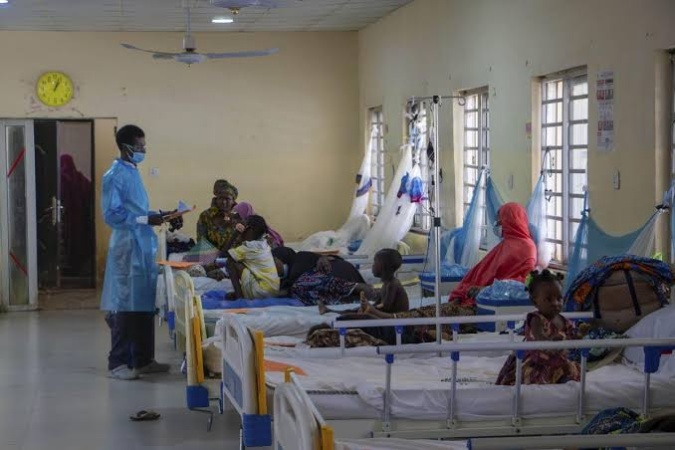
Patients in a hospital ward
Many communities in Plateau, Katsina and Kano states have been hit by diphtheria outbreaks as the authorities battle to halt the spread of the infection, which has claimed several lives and sickened many others.
No fewer than 23 people have died from diphtheria, while 143 others are suspected to have contracted the disease in various communities of Jos North Local Government Area of Plateau State.
The state government said most of the casualties were recorded in the last three weeks as it intensified efforts to contain the spread of the highly infectious disease.
The state Commissioner for Health, Dr Nicholas Baamlong, disclosed this on Tuesday in an interview with newsmen in Jos, the state capital.
Baamlong said nine patients were currently receiving treatment at the Jos University Teaching Hospital (JUTH) and the Plateau Specialist Hospital.
He said the patients were being treated at isolation centres as the government stepped up surveillance, public enlightenment and other containment measures across affected communities.
The commissioner identified shortages of diphtheria antitoxin and the late presentation of patients at health facilities as major challenges in the fight against the outbreak.
The biggest challenge is getting antitoxin, and most of them are presenting late,” the commissioner said.
Baamlong explained that diphtheria could spread through close contact, coughing and sneezing, stressing the need for residents to take preventive measures and promptly seek medical attention when symptoms are noticed.
He further disclosed that the state is facing challenges in confirming suspected cases due to the unavailability of specialised containers required for collecting and transporting samples to laboratories for diagnosis.
“We are having challenges with the diagnosis because the sample is supposed to be collected in a special container so that we can send it for confirmation, but we do not have such containers,” he said.
The commissioner, however, said the Nigeria Centre for Disease Control and Prevention (NCDC) had been notified of the development and that the state was expecting support, particularly the supply of diphtheria antitoxin and specialised sample collection containers.
“The NCDC is aware, and we are hoping that they will assist us with the antitoxin and the special containers,” he added.
Baamlong said the state government had activated awareness campaigns across communities, working through traditional rulers and other stakeholders to educate residents on the symptoms, transmission and prevention of the disease.
“We have so far activated awareness campaigns to communities through traditional rulers and other stakeholders to curtail the spread,” he said.
Earlier, the Disease Surveillance and Notification Officer (DSNO) in Jos North Local Government Area, Baks Bulus, told Daily Trust that the council had recorded 15 deaths from 117 suspected cases.
“I can account for what is happening in Jos North. According to the data we have, 117 people from communities are suspected to have contracted the disease. Out of this number, 15 people have died, based on the records available to us,” Bulus said.
He warned that people who had close contact with infected persons were at risk of contracting the disease, particularly those who shared utensils, towels and other household items with them.
“It can be transmitted from person to person. It keeps spreading when people come around the patient. It can be disastrous,” he said.
Bulus said vaccinated children usually experienced milder symptoms, while those who were unvaccinated or had not completed their doses were at greater risk of severe illness and death.
How we lost our children – Parents
Panic spread through Jos North following reports of a diphtheria outbreak in some communities, with families saying fear and lack of awareness led some victims to self-medicate.
Some parents said their children were initially given herbal concoctions or malaria drugs before they were diagnosed with the disease.
Lubatu Abdullahi, a resident of Layin Dan Maraya Street and mother of Umar Mukta, said her son first complained of a sore throat after accompanying his sister to an Islamic school.
“I thought it was just an ordinary cough, so I bought medicine and told him to sleep. But he couldn’t. By morning, he could barely eat. Later, we suspected malaria, and I bought malaria drugs for him,” she said.
She said the family did not realise he had diphtheria and did not take him to hospital. A day later, she noticed a growth around his throat.
“We then took him to a herbalist who prepared a concoction for us. We also gave him hot water and salt, but nothing changed. We hardly slept because of what he was going through,” she said.
She explained that it was only after his death that the family was told he had diphtheria. Health workers later visited the family and vaccinated all its members.
Shafi’u Abdullahi, the father of another victim, Hauwa, said his daughter initially complained of a sore throat and could not eat.
After drugs failed to improve her condition, the family took her to Jos University Teaching Hospital, where she was moved to an isolation centre and diagnosed with diphtheria.
“But it was too late to save her,” he said.
Shafi’u said the family later realised that Hauwa’s cousin, Umar, had also died from the disease after experiencing similar symptoms.
“I lost a daughter who had memorised the Holy Qur’an and was expected to sit for her Senior School Certificate Examination next year. It is a big loss to the entire family,” he said.
What to know about diphtheria
Dr. Aminu Mato Jitandutse of the Community Medicine Department at Aminu Kano Teaching Hospital (AKTH) described diphtheria as a serious, vaccine-preventable bacterial infection caused mainly by toxin-producing strains of Corynebacterium diphtheriae.
He explained that the infection commonly affects the nose and throat, though the skin may also be involved, and spreads mainly through respiratory droplets from coughing or sneezing, as well as close contact with infected persons or contaminated materials.
“The toxin produced by the bacteria can damage the heart, nerves and other organs, making early recognition, treatment and prevention very important,” he said.
According to him, common signs and symptoms include sore throat, painful swallowing, low-grade fever, general weakness, swollen glands in the neck, and in severe cases, a markedly swollen ‘bull neck’ appearance.
Other features include a thick grey or whitish membrane over the tonsils or throat, hoarseness, cough, difficult breathing, nasal discharge, and in cutaneous diphtheria, skin sores covered by a greyish membrane.
Dr. Jitandutse explained that a severe case may lead to myocarditis, abnormal heart rhythm, nerve damage, paralysis, kidney problems, airway obstruction or death. On prevention, he stressed the importance of routine childhood vaccination and booster doses later in life. He advised early identification of suspected cases, prompt medical evaluation, and isolation of confirmed cases to reduce transmission.
Close contacts of confirmed cases, he said, should be assessed promptly and may require preventive antibiotics and vaccination.
He also highlighted basic hygiene practices such as regular handwashing, covering the mouth and nose when coughing or sneezing, avoiding the sharing of personal items, and cleaning frequently touched surfaces.
“Diphtheria is a medical emergency. Anyone with a sore throat accompanied by a grey throat membrane, neck swelling, or breathing difficulty should be assessed urgently at a health facility,” he warned.
Also, Professor Sabo Ahmed of the College of Health Sciences, University of Jos, said diphtheria has several symptoms, with the disease mainly affecting the respiratory system, particularly the throat.
He said common symptoms include sore throat, fever, headache, swelling of the throat and lymph glands, as well as difficulty or pain when swallowing.
“An adult patient may have a greyish material, like a thin membrane, in the throat. That is one of the symptoms,” he said.
Ahmed said the disease could also cause skin rashes and other complications when the bacteria produces toxins that damage body tissues.
He said the toxins could continue to cause complications even after the bacteria began to die, leading to what he described as systemic manifestations that could affect different parts of the body.
On prevention, Ahmed said diphtheria vaccination was part of routine childhood immunisation but called for a review of the vaccination programme and assessment of the effectiveness of the vaccines.
He said early reporting was particularly important during an outbreak to ensure that patients, especially children, received prompt treatment.
“There are reports of deaths in many parts of the country from this disease. There is a vaccine for it, and the Nigeria Centre for Disease Control may come up with additional measures,” he said.
Ahmed, however, stressed the importance of hygiene, early diagnosis and immediate treatment in preventing complications and deaths from diphtheria.
Disease spreads to 30 LGAs in Katsina
Meanwhile, diphtheria has spread to 30 of the 34 LGAs in Katsina State, the state government has said.
The state Commissioner for Health, Alhaji Musa Adamu, disclosed this in an interview with Daily Trust on Tuesday.
However, the state government and the Federal Teaching Hospital Katsina (FTHKT) disagree over the scale of the outbreak.
While the government puts the number of confirmed cases at 31 since the recent surge began about three weeks ago, officials of FTHKT said about 150 patients with confirmed diphtheria had been admitted to the hospital within the same period, with 29 deaths recorded.
The commissioner said the state government had intensified efforts to contain the outbreak.
He said three additional isolation centres had been established in Daura, Funtua and Katsina to expand the state’s capacity to treat patients and ease pressure on existing facilities.
Adamu said the government, in collaboration with development partners, had also procured vaccines, essential consumables and other medical supplies for the prevention and treatment of diphtheria.
Giving a breakdown of the government’s figures, he said 15 confirmed cases were recorded at FTHKT, four in Funtua, 10 at the newly established isolation centre at Ahmadi Rimi Hospital and two in Daura, bringing the total to 31.
He, however, expressed concern over what he described as exaggerated reports of high casualty figures and large numbers of patients at isolation centres.
“Although diphtheria cases have continued to decline considerably since the disease was first identified in the state in 2023, we have witnessed an increase in admissions in 2026,” Adamu said.
He said 1,837 suspected cases had been recorded across the state this year, while 719 patients had presented with symptoms associated with the disease.
The commissioner described diphtheria as a seasonal and vaccine-preventable disease, urging parents and caregivers to adopt an “early warning, early response” approach by taking children with suspected symptoms to health facilities promptly.
The Acting Executive Secretary of the Katsina State Primary Health Care Agency, Dr Shaima’u Kabir Abba, said only 15 patients were currently confirmed at FTHKT.
She put the casualty rate recorded across the state at 5.6 per cent.
But the chairman of FTHKT’s Medical Advisory Committee, Dr Abdulfatah Muhammad Lawal, said about 150 patients with confirmed diphtheria had been admitted at the facility during the current outbreak, with 29 deaths recorded.
The Head of the Paediatric Ward, Dr Abdulrazak Alege, corroborated the figure, saying 29 patients had died out of approximately 150 admitted cases within three weeks.
9-year-old returns to hospital with complications
Meanwhile, nine-year-old Hafsat, who was recently discharged after receiving initial treatment for the disease, has returned to FTHKT after developing swelling in her legs and face.
Her mother told Daily Trust that doctors at the hospital confirmed the swelling was associated with complications from diphtheria.
When our correspondent attempted to interview the nine-year-old, she had difficulty speaking.
Her mother explained that the illness had affected her daughter’s voice, leaving her with distorted speech that is difficult to understand.
Dr Alege said one of the major challenges was the management of patients who return after initial treatment with serious complications affecting vital organs.
“The major challenge at the moment is that some patients with severe cases return after treatment with heart and kidney complications,” Alege said.
He urged parents and caregivers to seek medical attention as soon as children develop symptoms associated with diphtheria, saying delayed presentation could increase the risk of complications and death.
He said the hospital had begun to see some relief following the establishment of three additional isolation centres and the provision of 50 vials of diphtheria antitoxin by the state government.
Kano gets 650,000 vaccine doses
The Federal Government has supplied 650,000 doses of diphtheria vaccines to Kano State, but the state insists that at least nine million doses are required to effectively contain the outbreak across all 44 LGAs.
The Director General of the Kano State Centre for Disease Control (KNCDC), Prof. Muhammad Adamu Abbas, confirmed the delivery on Tuesday, noting that the vaccines would be administered to both children and the elderly.
“We have been battling to get it until now. But I keep saying that we want nine million, as this won’t be enough,” he said.
Abbas also said he met all the district heads of the state at the Kano Emir’s palace on Tuesday, where he briefed them on the outbreak and urged them to help mobilise households for vaccination and containment.
Earlier, he explained that while the Federal Ministry of Health had initially deployed 500,000 doses to Kano and Katsina, the scale of the emergency demanded a much larger intervention.
He noted that diphtheria cases had been confirmed in different LGAs, with most fatalities occurring among unvaccinated children and those who presented late for treatment.
Prof Abbas disclosed that the state government had embarked on active case searches in affected communities in Rano LGA, working with traditional leaders, surveillance officers, and health workers to verify reported cases and deaths.
The exercise, he said, was designed to strengthen surveillance, improve daily reporting, and mobilise households for vaccination.
His remarks came amid controversy over the true death toll. Last week, a member of the State House of Assembly representing Rano Constituency, Ibrahim Malami, had alleged that more than 50 children died in his area.
But the KNCDC DG dismissed the claim as “unverified and misleading,” clarifying that only two deaths were recorded in Rano in 2026, with a cumulative 29 deaths statewide since July 2023.
The state government has also inaugurated a Special Committee on Diphtheria Outbreak Response, comprising officials from the Ministry of Health, KNCDC, Primary Healthcare Board, Hospitals Management Board, and Emirate Councils.
The committee is mandated to verify cases, coordinate interventions, and ensure transparency in reporting.
With cholera also reported in parts of the state, Kano faces a dual public health challenge requiring sustained federal and state collaboration.
Nigeria records 10,000 confirmed cases – NCDC
The Nigeria Centre for Disease Control and Prevention (NCDC) has recorded more than 10,000 confirmed diphtheria cases this year.
The NCDC Director General, Dr Jide Idris, at a recent briefing, said despite the substantial burden, the proportion of confirmed cases resulting in death had declined considerably compared with the same period last year.
“While this remains a substantial burden, we have seen an important improvement: the proportion of confirmed cases resulting in death has declined considerably compared with the same period last year,” Idris said.
The NCDC boss said gaps in vaccination coverage remained a major factor, particularly among children who were unvaccinated or had not completed their recommended doses.
He also identified insecurity, hard-to-reach communities, displacement and population movement as factors making it difficult for health authorities to reach all eligible children.
“It is important to emphasise again that diphtheria is vaccine-preventable,” Idris said.
He urged parents and caregivers to ensure that their children are fully vaccinated against the disease.
“If a child has missed any recommended dose, please take the child to the nearest health facility to complete it,” he said.
He said diphtheria vaccines were available free of charge through routine immunisation services and vaccination campaigns.
He also urged healthcare workers to maintain a high index of suspicion for diphtheria, promptly report suspected cases and ensure appropriate management. (Daily Trust)



