ADAD
ADAD
Updating your news feed...
NEWS EXPRESS is Nigeria’s leading online newspaper. Published by Africa’s international award-winning journalist, Mr. Isaac Umunna, NEWS EXPRESS is Nigeria’s first truly professional online daily newspaper. It is published from Lagos, Nigeria’s economic and media hub, and has a provision for occasional special print editions. Thanks to our vast network of sources and dedicated team of professional journalists and contributors spread across Nigeria and overseas, NEWS EXPRESS has become synonymous with newsbreaks and exclusive stories from around the world.








Loading banners
Loading banners...

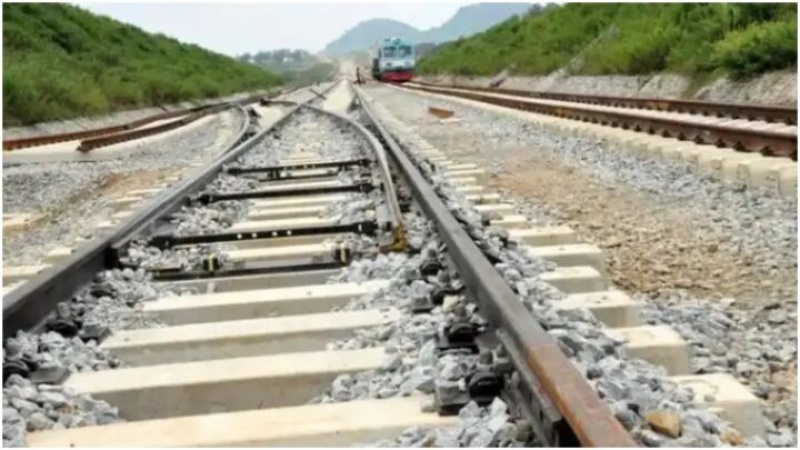
A vandalized rail track
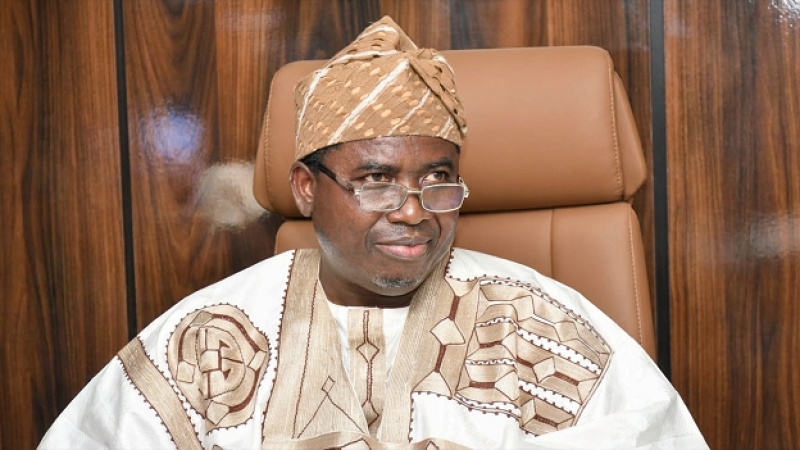
Managing Director/CEO of the Nigerian Railway Corporation (NRC), Dr Kayode Opeifa, has revealed that anytime a rail track vandalisation leads to train accident, the country replaces such rail tracks with about N300 million, aside the operational and human lives that are lost during such incidents.
Speaking with the Nigerian Tribune, Dr Opeifa explained that most of the electric cables along the rail tracks are what attracts vandals to remove the rail tracks, leading to derailment and accidents.
He said the criminal elements keep coming back, having been able to escape from possible arrest and prosecution.
Dr Opeifa lamented the injurious cost of rehabilitation after such theft and a ct of vandalism of rail track.
According to the NRC boss, “Stealing or vandalising rail track material has become an addiction for some people. Once they steal the rail assets, and make some money from it without being caught, they will keep coming back for it.
But this is coming at a cost to the NRC, and by large, the country. The cost can be cash that is wasted to replace these stolen rail assets. The cost can also be time wasted due to the derailment and the time announced for train operations suspension. The cost can also be human lives that are lost when an accident happens and is fatal.”
“For example, when we had the Warri-Itakpe accident just after Abraka last year, we had to get new rails, new clips. These two are not too expensive to replace, but when the accident happened, it also damaged the rails, and we had to replace the rails,” he added.
“The accident also damaged the concrete slippers, which we don’t produce in Nigeria. But luckily for us, we had concrete slippers in store. Those concrete sippers weigh almost 200 pounds each.
“The NRC had to provide convenient accommodation for the stranded passengers to sleep over at the station. We had to provide diesel to power the generator overnight.
“The following day, we had to give each passenger N10,000 each to complete their trips, even though they paid N5,000 each.
“We also provided breakfast for them before they departed. So, when you look at the cost incurred by the NRC after the Warri-Itakpe train accident, it is very difficult to quantify the losses,” Dr Opeifa said.
“So, when you look at the vandalisation of rail clips which cost around N10m each, it would have cost the NRC about N300 million to replace those stolen clips.
“Don’t forget that the period when the trains are not working due to train accident caused by rail track vandalisation, the NRC is losing revenue. At the end of the day, the NRC could have lost about N300 million revenue due to train suspension and will still have to replace vandalised rail assets with another N300 million.
“So, when you count the cost, you will realise that the cost the NRC incurs to replace vandalised rail assets is higher than the revenue lost on a monthly basis due to train suspension that follows such accidents.
“The cost is unquantifiable at times. It can even lead to security implications. It’s better we don’t have rail asset vandalism than allow it to happen.” (The Nation)