ADAD
ADAD
Updating your news feed...
NEWS EXPRESS is Nigeria’s leading online newspaper. Published by Africa’s international award-winning journalist, Mr. Isaac Umunna, NEWS EXPRESS is Nigeria’s first truly professional online daily newspaper. It is published from Lagos, Nigeria’s economic and media hub, and has a provision for occasional special print editions. Thanks to our vast network of sources and dedicated team of professional journalists and contributors spread across Nigeria and overseas, NEWS EXPRESS has become synonymous with newsbreaks and exclusive stories from around the world.

















Loading banners
Loading banners...

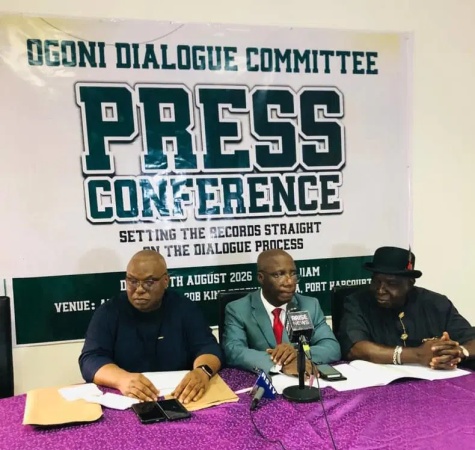
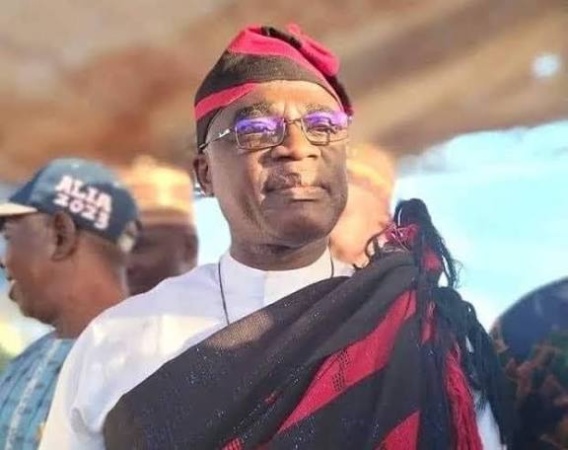
Ogoni Dialogue Committee in a press conference
The Ogoni Dialogue Committee (ODC) and the umbrella group, KAGOTE, have disagreed over the committee’s alleged involvement in the recruitment of 40 Ogoni youths by the Nigerian National Petroleum Company Limited (NNPCL), contract awards and other aspects of the ongoing dialogue on the resumption of oil production in Ogoniland.
While the ODC denied influencing the recruitment of the beneficiaries or participating in the award of government and NNPCL contracts, KAGOTE demanded greater transparency and clarification on the processes surrounding the employment opportunities and other confidence-building measures.
The fresh disagreement followed a statement by the facilitators of the Ogoni Dialogue Committee in response to KAGOTE’s August 18 press conference.
KAGOTE, in its latest response signed by its President, Chief Lesi Maol, said it was not opposed to President Bola Ahmed Tinubu’s administration, the National Security Adviser, Mallam Nuhu Ribadu, the Ogoni Dialogue or the responsible resumption of oil production in Ogoniland.
The group said its demand for clarification aimed to protect the credibility of the dialogue process rather than undermine it.
KAGOTE said, “We do not seek confrontation; we seek clarity. We do not seek to collapse the dialogue; we seek to strengthen it.”
The group also rejected the characterisation of its concerns as a “sponsored media campaign”, insisting that questions relating to the dialogue should be addressed on their merits.
The ODC chairman, Prof. Don Baridam, had earlier dismissed claims that the committee influenced the allocation of the 40 NNPCL employment opportunities to Ogoni people.
Baridam explained that the employment opportunities were among the confidence-building measures proposed by the Ogoni delegation but stressed that the ODC did not select or recruit the beneficiaries.
According to him, NNPCL relied on its existing recruitment database containing qualified Ogoni applicants who had previously applied, gone through its recruitment process and performed well.
He said, “The recruitment and selection process did not pass through the ODC, nor did the ODC determine who was employed.”
Baridam acknowledged that some ODC members submitted names of persons they wanted considered for employment but said such nominations did not determine the final selection.
He added that claims that the jobs were distributed as patronage by the ODC or its facilitators were false.
KAGOTE, however, said the clarification did not completely resolve the issue, arguing that stakeholders were entitled to appropriate information on the implementation of the employment intervention.
The group said relevant information should include the number of positions made available, selection criteria, geographical distribution across the four Ogoni local government areas and, subject to privacy requirements, verification that the beneficiaries were eligible Ogoni applicants.
KAGOTE said such disclosure would eliminate speculation and allow the intervention to receive the recognition it deserved.
The group similarly rejected suggestions that it had claimed the ODC possessed statutory powers to award Federal Government contracts.
Rather, it said its concern was about projects and interventions reportedly conceived or implemented as confidence-building measures under the dialogue process.
KAGOTE argued that where projects were presented as benefits arising from the engagement between the Federal Government and the Ogoni people, there should be sufficient information on their locations, scope, implementing agencies, contractors or beneficiaries, approved costs and monitoring arrangements.
The group said: “The fact that the ODC itself does not award contracts does not dispose of these questions.”
The ODC had maintained that contract awards were outside its mandate.
Baridam said the committee lacked the authority or machinery to influence such decisions.
“At no time did the ODC award, allocate, distribute or otherwise become involved in contracts,” he said.
Another major area of disagreement concerns reports of renewed oil-related activities in Ogoniland.
The ODC said it had no information indicating that oil and gas production had resumed under the Ogoni re-entry programme.
Baridam said NNPCL had also indicated that it was unaware of alleged oil-rig operations reported in Alesa-Eleme, adding that investigations into the activities were ongoing.
KAGOTE, however, said it was not claiming to have superior information to the Federal Government, NNPCL or regulatory agencies but wanted authoritative clarification on whether oil-related activities were taking place, their nature and purpose, the authority under which they were being conducted and whether they were connected to the re-entry negotiations.
It said resolving the uncertainty would strengthen rather than prejudice the dialogue.
The group also raised questions over the composition of a Harmonisation Committee, asking who authorised its original membership, the criteria used to include persons who were not members of the ODC and whether the name or authority of the Office of the National Security Adviser was invoked in arriving at the composition.
KAGOTE stressed that it did not accuse the NSA of personally authorising any improper action, saying it had specifically called for clarification because it had no basis to conclude that the actions complained of were authorised by the NSA or his office.
The group said, “These are institutional questions, not accusations against the NSA.”
It argued that any representation made in the name of senior government officials should be verifiable to prevent their names and offices from being associated with decisions they did not authorise.
KAGOTE also criticised what it described as inadequate information sharing among members of the ODC, insisting that duly appointed representatives should have access to relevant reports, government responses, harmonisation documents and material decisions required for them to effectively represent their constituencies.
It said a distinction should be maintained between legitimate confidentiality and unnecessary secrecy.
The group further called for broader consultation with the Ogoni people before final positions are adopted on issues of profound historical importance.
KAGOTE proposed an appropriate town hall or wider consultative engagement to help people understand government proposals, areas of agreement and disagreement, and the framework being considered for the future of Ogoniland.
On the proposed creation of Bori State, the ODC said the demand remained a key component of the Ogoni position presented to the Federal Government.
Baridam said a tactical sub-committee had been established to work on the modalities, while acknowledging that state creation must follow constitutional procedures.
But while KAGOTE welcomed progress on Bori State, it maintained that such progress did not remove the need to address questions about transparency and the administration of other aspects of the dialogue.
The ODC also denied receiving any budget, grant or other funds from the Federal Government, describing its participation in the dialogue as a sacrifice and service to the Ogoni people.
Baridam said the dialogue had progressed to efforts to harmonise outstanding issues arising from the ODC report, the Federal Government’s response and the report of a technical committee.
He said a Joint Harmonisation Committee comprising representatives of the Federal Government and Ogoni was being considered to develop an interim memorandum of understanding on areas of agreement.
Both sides, however, said they supported peace, development and a responsible framework for the resumption of oil production in Ogoniland.
KAGOTE said it recognised that, if properly negotiated and implemented, oil resumption could contribute to economic renewal, environmental restoration, employment, infrastructure development and shared prosperity.
It said any resumption should be based on credible environmental safeguards, community participation, fairness, transparency, security, economic participation, inclusive negotiations and sustainable benefits for the Ogoni people.
The group said, “We do not oppose responsible oil resumption; we seek a process whose outcome will be sustainable, transparent and beneficial to the Ogoni people.”
KAGOTE also reiterated its support for the renewed engagement initiated by President Tinubu and the NSA’s role in facilitating the process.
The group said its objective was to ensure that the Federal Government’s goodwill was not undermined by inadequate communication, procedural ambiguity, or the unauthorised invocation of the names of senior government officials. (The Nation)