ADAD
ADAD
Updating your news feed...
NEWS EXPRESS is Nigeria’s leading online newspaper. Published by Africa’s international award-winning journalist, Mr. Isaac Umunna, NEWS EXPRESS is Nigeria’s first truly professional online daily newspaper. It is published from Lagos, Nigeria’s economic and media hub, and has a provision for occasional special print editions. Thanks to our vast network of sources and dedicated team of professional journalists and contributors spread across Nigeria and overseas, NEWS EXPRESS has become synonymous with newsbreaks and exclusive stories from around the world.

.webp)
.webp)










.webp)
Loading banners
Loading banners...

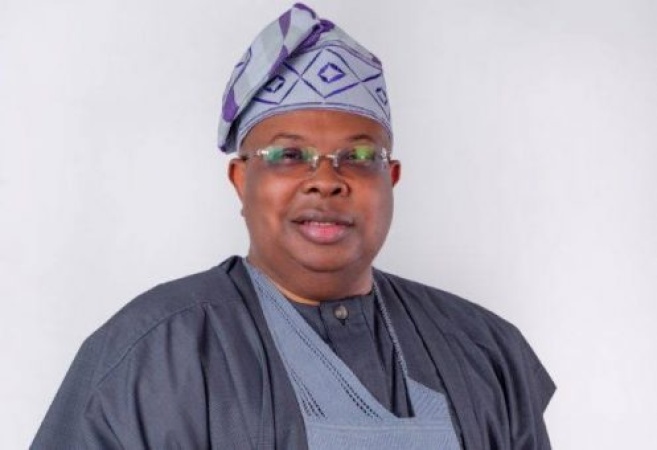
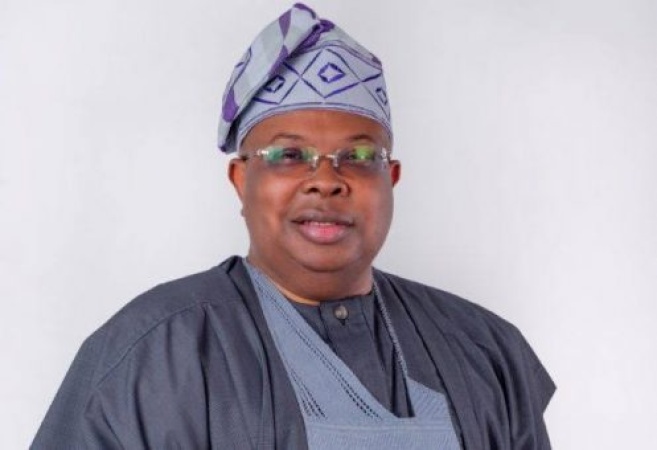
Olasunkanmi Tegbe, Nigerian Minister of Power
The Federal Government on Wednesday unveiled a target of 6,500 megawatts of electricity supply by the end of December 2026.
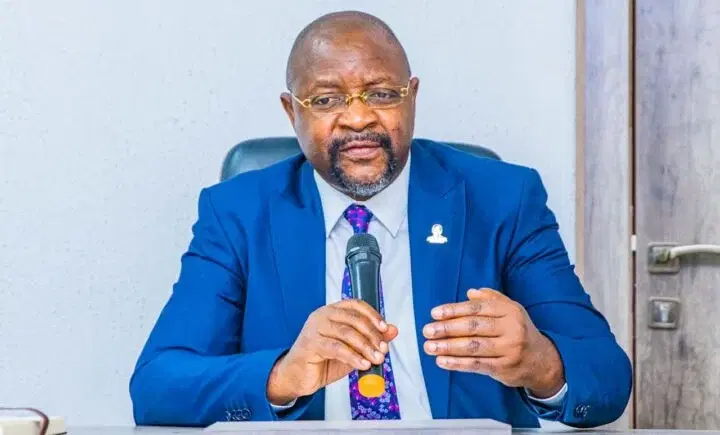
According to the Minister of Power, Joseph Tegbe, who announced the targets at the official launch of the Renewable Asset Management Company (RAMCO) in Abuja, the government also plans to raise supply to 8,000 MW by the end of 2027.
He said the country’s current generation capacity stood at approximately 5,000 megawatts.
He said, “We will revisit the east and west super grid so that we can build resilience into our grid. We are struggling to wheel 5,000 megawatts today. My target is that by the end of this year, we’ll conveniently be wheeling 6,500. By the end of next year, we will be wheeling 8,000 megawatts.”
He said this, with a further target of 8,000 megawatts by 2027, as it unveiled the Renewable Asset Management Company (RAMCO), a new institution charged with managing the country’s power infrastructure.
He said the ministry was working to close that gap through grid stabilisation efforts, asset optimisation and renewed investment in transmission and distribution infrastructure.
Tegbe said RAMCO would be central to the government’s push to raise generation and improve reliability, describing its establishment as a shift from the traditional model of acquiring and abandoning public power assets to one built on professional stewardship, governance and measurable performance.
“RAMCO is not going to be measured by how many megawatts it delivers, but the reliability of the delivery and the sustainability of that delivery,” he said, adding that the company’s success would ultimately be judged by how many assets remained operational, rather than the size of its portfolio.
The minister said Nigeria had, for too long, operated an unbalanced power sector, rich in energy resources and installed infrastructure, yet poor in the availability of dependable electricity.
He said RAMCO was designed to correct that imbalance by treating public power assets as national investments whose value must be preserved, rather than infrastructure to be commissioned and left unattended.
Tegbe said the ministry had identified three priority corridors for grid stabilisation: the Lagos axis, the Abuja-Kaduna-Kano corridor, and the Enugu-Onitsha axis. He said technical audits were ongoing across these corridors to assess the condition of towers, substations and other installations, some of which had remained in service for more than four decades, ahead of a planned replacement of ageing equipment.
He said the government was also addressing liquidity challenges within the sector, including the accumulated debt burden, through a framework for sustainable repayment and the closure of tariff shortfalls that have long undermined investment in the sector.
On the scope of RAMCO’s operations, Tegbe said the company’s mandate would not be limited to renewable energy alone, but would eventually extend across the entire grid.
Speaking earlier, the managing director of REA, Abba Aliyu, disclosed that when the agency returned to inspect the first seven solar sites it built under the Energising Education Programme, only three were found in good or usable condition.
He said one of the affected institutions had a management structure in place but was collecting no revenue to sustain its plant.
“We could have chosen not to look. We looked, because you cannot fix what you are unwilling to name,” Aliyu said, adding that REA has deployed 82 megawatts of solar-hybrid power worth about N263 billion to 22 universities and three teaching hospitals since 2017, with over 150 megawatts more under construction or planned.
To take over the maintenance and management of publicly funded renewable energy assets after they are commissioned.
He said the agency deliberately chose to confront the failure rather than ignore it.
According to him, at one of the affected institutions, a special-purpose vehicle had been set up to manage the plant, but it was not collecting revenue to sustain it. He said the assets did not fail because of poor engineering, but because REA had not built a system to maintain them, generate revenue from them, or assign clear responsibility for them after commissioning.
Aliyu said REA has, since 2017, deployed 82 megawatts of solar-hybrid power to 22 federal universities and three teaching hospitals under the Energising Education Programme, representing about N263 billion in investment from the Federal Government, the World Bank and the African Development Bank. He said more than 150 megawatts of additional capacity is under construction or planned through TETFund, DARES, the National Public Sector Solarisation Initiative and other government-funded programmes, with 70 to 80 more public institutions expected to be powered within the next three years.
He said RAMCO, which is incorporated under the Companies and Allied Matters Act with the Federal Government’s interest held through MOFI, has a clear mandate: to professionally manage renewable assets, contract competent operators, meter and bill consumers, maintain reserves for major equipment replacement, and report transparently on how each asset is performing.
“If a battery or inverter requires replacement in year eight, we should not return to the Treasury in year eight looking for emergency funding. The money should already be there,” he said.
Aliyu also appealed directly to vice chancellors and chief medical directors of beneficiary institutions to begin paying a sustainability tariff for the power they consume, saying government has already funded and built the assets, and institutions must now contribute to keeping them running.
He cited Alex Ekwueme Federal University, Ndufu-Alike, where a plant commissioned in 2019 now serves more than 9,500 staff and students, as an example of the value at stake. He said the plant generated about N1.8 billion in combined savings from avoided diesel purchases and electricity bills within its first five years, while cutting an estimated 2,367 tonnes of carbon emissions.
“That is the RAMCO compact: We provide reliable power. You pay for the energy you consume. Neither side works without the other,” he said.
He said REA had also invested about N135 billion in grid-extension infrastructure between 2012 and 2024, covering 3,766 transformers and about 9,556 kilometres of network, which he said would equally require a sustainability framework going forward.
On next steps, Aliyu said REA would, by the end of November, complete the valuation and technical assessment of the initial assets to be transferred to RAMCO, work with the Ministry of Power to formally transfer them, onboard long-term operations and maintenance partners for the second phase of the Energising Education Programme, and begin engaging beneficiary institutions on tariff arrangements. He said REA would report its progress publicly.
“The same honesty with which we went back to examine our earlier assets must become the standard by which RAMCO itself is judged,” Aliyu said.
The Chief Executive Officer of InfraCorp, Lazarus Agbaso, said the launch reflected a broader national problem: infrastructure is abandoned once commissioning ceremonies end. “Infrastructure does not create value simply because it has been commissioned. Infrastructure creates value because it continues to work,” Agbaso said.
He explained that RAMCO was deliberately structured as a partnership rather than a single institution, with REA supplying technical and sector expertise, MOFI providing the discipline of public asset ownership, and InfraCorp mobilising long-term capital and structuring investable projects. He said the initiative would also create fresh opportunities for private operators, maintenance firms, battery specialists and equipment manufacturers to build a domestic renewable energy supply chain.
The Managing Director/Chief Executive Officer of MOFI, Armstrong Takang, said the initiative was born out of an audit that found the Federal Government could verify only N1.25 trillion of public assets, a figure he said was disproportionately small compared to Nigeria’s debt, which runs into tens of trillions of naira.
Takang disclosed that patients had died at a teaching hospital in Jos because the facility depended on generators for power, recalling incidents where electricity failed in the middle of surgery and while medication was being administered. He said a small renewable asset in Kano, where MOFI separated ownership from management and handed operations to the Kano Electricity Distribution Company, generated more revenue in one year than MOFI earned in 13 years of dividends from its shareholding in the Disco.
“The amount of revenue we have generated in one year from a small asset is more than the dividends we have collected in 13 years of our shareholdings in the Disco,” Takang said, describing it as proof that a proper asset management framework was central to getting value from public resources.
All three institutions said RAMCO would run on a “no tariff, no sustainability” compact, under which beneficiary institutions such as universities and teaching hospitals will now be required to pay for the electricity they consume, with the proceeds set aside to fund long-term maintenance and equipment replacement rather than relying on repeated Treasury appropriations.
Agbaso said the real measure of RAMCO’s success would not be the launch itself but whether, in five to ten years, the assets under its management were “working better, lasting longer, serving more Nigerians” and drawing in more private investment. (The Nation)