ADAD
ADAD
Updating your news feed...
NEWS EXPRESS is Nigeria’s leading online newspaper. Published by Africa’s international award-winning journalist, Mr. Isaac Umunna, NEWS EXPRESS is Nigeria’s first truly professional online daily newspaper. It is published from Lagos, Nigeria’s economic and media hub, and has a provision for occasional special print editions. Thanks to our vast network of sources and dedicated team of professional journalists and contributors spread across Nigeria and overseas, NEWS EXPRESS has become synonymous with newsbreaks and exclusive stories from around the world.












Loading banners
Loading banners...

Vandalism, poor maintenance, systemic failure, and official neglect are steadily undermining development efforts across the South-South region as billions of naira-worth of public infrastructure are abandoned or destroyed. TINA AGOSI, SOLOMON AZU, OBINNA NWAOKU, JULIUS OSAHON and MONDAY OSAYANDE report that power infrastructure attacks are resulting in outages that affect businesses, hospitals, and households, while telecom disruptions hinder communication, financial transactions, and emergency services.
A disturbing pattern is emerging across the South-South as public infrastructure built with taxpayers’ money and donor support is steadily collapsing under the combined weight of vandalism, poor maintenance, weak institutional oversight and limited community ownership.
From abandoned water schemes in Cross River State to a derelict general hospital and an abandoned monorail project in Rivers State, and the persistent destruction of electricity and oil infrastructure in Bayelsa and Delta states, the region presents a troubling portrait of wasted investments and failed sustainability.
The consequences of all these extend far beyond damaged buildings and stolen equipment as communities are being denied access to potable water, healthcare, electricity and transportation, while governments continue to spend scarce resources replacing facilities that should have served generations.
One striking example is the collapse of the Akpab-Okoyong Small Town Water Scheme in Odukpani Local Council, Cross River State.
Constructed between 2007 and 2010 with funding from the European Union under the Water Supply and Sanitation Sector Reform Programme (WSSSRP), the facility, valued at over N50 million at the time, was designed to provide the community with safe drinking water for at least 25 years. It comprised eight boreholes, treatment facilities, elevated storage tanks and strategically located water kiosks, all supported by a community-based management model intended to guarantee sustainability.
Today, barely halfway into its projected lifespan, the facility lies in ruins.
The Head of Water Services Regulation in the Cross River State Ministry of Water Resources, Felix Irek, said the scheme functioned effectively until about 2014 or 2015 under a modest tariff system, through which residents contributed to fuel costs and routine maintenance.
“It was a well-designed arrangement meant to guarantee sustainability, but what we see today does not reflect that effort,” he said.
An inspection of the facility revealed extensive destruction. The generator that powered the pumping system had been stolen; all eight boreholes had either broken down or been deliberately blocked, and pump panels, distribution lines and other critical components had been vandalised beyond use.
The traditional ruler of the community, Chief Obon Effiong, admitted that residents’ efforts to sustain the project ultimately collapsed due to insecurity and the absence of a structured management system.
He recalled that community members contributed money, supplied diesel and even donated batteries to revive the facility, only for vandals to strip it shortly afterwards.
The collapse of the water scheme has left residents with little choice but to rely on privately owned boreholes, paying as much as N100 for 20-25 litres of water, compared to the subsidised rates they previously enjoyed.
Beyond the economic burden, sanitation conditions have deteriorated significantly.
Effiong noted that some residents now practise open defecation because they no longer have sufficient water to operate household toilets, as water projects are not working.
A trader, Affiong Okon Etim, said the absence of functional public toilets has also affected commercial activities.
“If you leave your shop to go home and use the toilet, you may lose your customers before you return,” she said.
The potable water challenge in Cross River State is intractable. That perhaps explains why the councillor representing the area, Okunidem Okun, described the situation as alarming.
“Without water, you cannot talk about sanitation. Everything has gone bad,” he said,
The Commissioner for Water Resources, Bassey Mensah, blamed the widespread destruction on the increasing activities of scrap metal vandals.
Describing the situation as “sad and unacceptable,” he warned that continued vandalism was discouraging public investment and undermining development efforts across the state.
“There is no reason such a facility should be in this condition. Communities must take responsibility. You cannot destroy what is meant to help you,” he said.
The Akpab-Okoyong experience reflects a broader trend across Cross River, where infrastructure belonging to government agencies, the Niger Delta Development Commission (NDDC), telecommunications operators and electricity providers has repeatedly come under attack.
To stem the tide, Governor Bassey Otu recently suspended scrap metal trading through an executive order, while the Nigeria Security and Civil Defence Corps (NSCDC) has intensified surveillance and enforcement operations.
Yet stakeholders argue that enforcement alone cannot solve the problem. Without effective community participation, sustained maintenance and institutional accountability, they warn that public infrastructure will remain vulnerable to destruction.
In Rivers State, some government hospitals, health centres, and schools built by the administration of former Governor Chibuike Amaechi have been neglected. Some of the roofing sheets have been stolen by hoodlums.
Also, the N60 billion monorail project initiated by the Amaechi-led administration became a monument to abandonment even while Amaechi was in office; it was seen as an elephant project with little impact.
Residents of Elele-Alimini in Ikwere Local Council of the state blamed years of vandalism and government neglect for the collapse of their community’s general hospital, saying it reflects the fate of several abandoned public projects across the state.
A visit to the once-functional hospital revealed buildings stripped of roofing sheets, doors, windows and medical equipment, with overgrown vegetation swallowing what remains of the facility.
Inquiries by The Guardian revealed that the destruction occurred gradually as years of abandonment turned the hospital into an easy target for scavengers and sundry characters.
A community leader in the area, Hyginus Okpakah, said that the hospital was systematically dismantled.
“This hospital didn’t just stop working; it was gradually destroyed. Things were removed bit by bit until nothing meaningful was left,” he said.
Residents now travel about 27 kilometres to Choba or nine kilometres to Ahoada to access healthcare, while pregnant women face significant risks in obtaining antenatal care and emergency medical services.
A former youth leader, Confidence Amadi, said the hospital’s fate illustrates the consequences of abandoning public investments.
Paramount Ruler of Elele-Alimini, Eze Peter Wagbara, expressed displeasure and disappointment at the neglect of public assets, saying: “The level of vandalism here reflects total abandonment. If this place had been maintained or secured, we wouldn’t be in this situation,” he said.
“What we are seeing here is not different from other projects in the state that were left to waste. When the government abandons projects, people vandalise them, and eventually they become useless,” he said.
In Bayelsa and Delta states, the challenge assumes even broader economic and security dimensions.
Critical infrastructure, including crude oil pipelines, electricity transmission facilities, transformers and NDDC projects, has repeatedly come under attack.
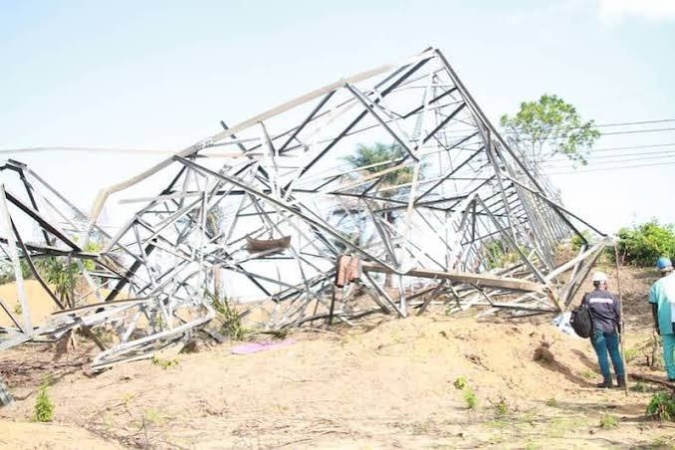
Between 2024 and 2025 alone, more than 253 electricity transformers and at least 13 high-voltage transmission towers were vandalised in Bayelsa, triggering prolonged power outages across several communities.
The destruction also affected strategic facilities such as the Ahoada-Yenagoa 132kV transmission line, solar streetlight installations and gas pipelines.
The impact extends beyond electricity supply. Small businesses, including welders, bakeries, hairdressing salons and cold-room operators, have suffered severe economic losses due to prolonged blackouts, while communities continue to grapple with disrupted livelihoods.
Although the government has strengthened surveillance and deployed technology to protect strategic assets, community projects executed by the NDDC continue to suffer vandalism across several local councils.
Key infrastructure damaged included the Ahoada-Yenagoa 132kV line and 20 solar light poles. Gas pipelines were also recently attacked.
It was discovered that 13 out of 16 towers, or up to 17-21 towers, were destroyed along the Ahoada-Yenagoa 132kV transmission line in different incidents during 2024 and 2025.
Not too long ago, in December 2024, the Bayelsa State government confirmed that over 253 electricity transformers were vandalised in communities around the state capital, Yenagoa.
The vandalisation of the electrical transformers was made easier by the total blackout, as vandals invaded transformers in almost all the affected communities, looking for aluminium cables, transformer oil, and key components.
In April 2025, regarding the gas pipeline, the state government reported new vandalism on the 24-inch Ogboinbiri/Obiobi gas pipeline.
The destruction led to a prolonged, multi-month blackout, prompting the government to deploy surveillance technology to protect critical assets.
Various community projects facilitated by the Niger Delta Development Commission (NDDC) across all eight local government areas have been vandalised, prompting calls for better community protection.
In Delta State, vandalism of oil and gas infrastructure has long shaped both the economy and security environment.
While official reports suggest improved protection of critical national assets, analysts caution that the gains remain fragile, given persistent socio-economic grievances, illegal scrap metal activities and weak community engagement.
Beyond militancy, vandalism has evolved into a criminal enterprise. Illegal bunkering networks siphon off crude oil for black-market sale, often damaging pipelines in the process. This has turned infrastructure sabotage into both a political and economic crime.
From oil installations to telecom facilities and power infrastructure, acts of vandalism have not only disrupted essential services but also exposed deeper socio-economic and security challenges.
Recent data from the Nigeria Security and Civil Defence Corps (NSCDC) paints a sobering picture, but also signals a growing determination by authorities to stem the tide.
According to the NSCDC State spokesman, Anthony Uchenna, the scale and pattern of attacks reveal a coordinated and sustained assault on vital assets.
Uchenna said that, from January 2024 to date, the Command has recorded about 28 arrests linked to vandalism, involving over 55 suspects.
Equally troubling is the repeated targeting of power infrastructure, such as the Transmission Company of Nigeria (TCN) towers in Warri, which were vandalised twice during the review period, raising serious concerns about electricity supply stability in the region.
Telecommunication outfits have not been spared, as vandals attacked a telecom base station opposite the Federal College of Education in Asaba and a 30KVA generator at a telecom site in Ogwashi-Uku, disrupting connectivity and digital services.
Infrastructure vandalism in Delta State is more than a criminal issue; it is deeply intertwined with economic hardship, unemployment, and, in some cases, organised crime networks.
One community leader, Joseph Osakwe, said that the financial implications are staggering as vandalised oil facilities lead to production losses, environmental degradation, and reduced national revenue. Power infrastructure attacks result in outages that affect businesses, hospitals, and households. Telecom disruptions hinder communication, financial transactions, and emergency services.
The battle against vandalism is not just about protecting assets — it is about safeguarding the future of communities, preserving national resources, and reinforcing the rule of law in a State that remains vital to Nigeria’s economic survival. (The Guardian)