ADAD
ADADUpdating your news feed...

NEWS EXPRESS is Nigeria’s leading online newspaper. Published by Africa’s international award-winning journalist, Mr. Isaac Umunna, NEWS EXPRESS is Nigeria’s first truly professional online daily newspaper. It is published from Lagos, Nigeria’s economic and media hub, and has a provision for occasional special print editions. Thanks to our vast network of sources and dedicated team of professional journalists and contributors spread across Nigeria and overseas, NEWS EXPRESS has become synonymous with newsbreaks and exclusive stories from around the world.



Loading banners
Loading banners...

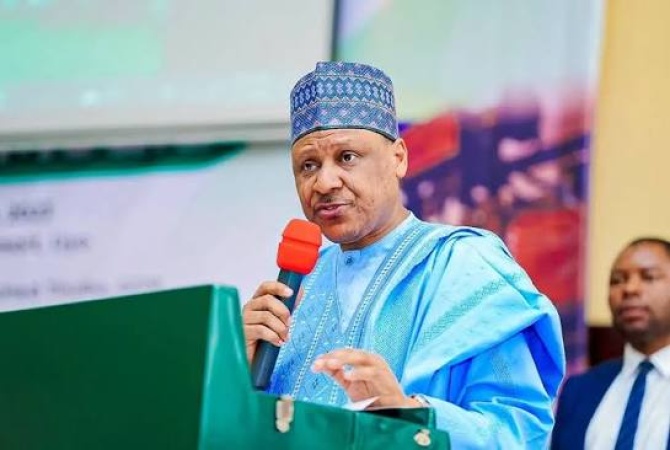
Minister of Information, Mohammed Idris
The Federal Government yesterday listed the dangers of fuel subsidy reversal.
It said Nigeria cannot afford to return to the “retrogressive path”.
A reversal, it warned, would throw up the old challenges that have been resolved by the bold and courageous reforms introduced since May 29, 2023.
According to the Federal Government, fuel subsidy removal would undo the gains of the reforms, return the country to the forbidden era of fuel scarcity and create uncertainties for investors.
Minister of Information, Mohammed Idris, said the fiscal pressures arising from removal may return Nigeria to another era of ‘ways and means’ –borrowing by government from Central Bank of Nigeria (CBN).
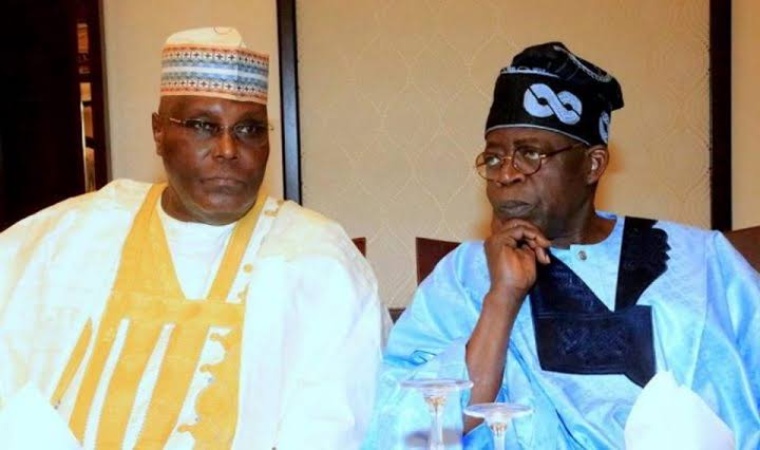
The Minister, who objected to the reversal push by the African Democratic Congress (ADC) presidential candidate Atiku Abubakar, said the proposal was calculated at crippling activities at the three tiers of government.
Removal of fuel subsidy along with unification of foreign exchange are the twin policies driving the economic reform of the Tinubu administration.
The former vice president last week pledged to reverse removal of fuel subsidy if elected in the January 16 presidential election.
He alleged that the proceeds have been mismanaged.
In 2019 and 2023 when he contested for president, Atiku stated expressly that he would remove fuel subsidy should he be elected president.
President Bola Ahmed Tinubu described Atiku’s change of position on fuel subsidy as an idea borne out of ignorance.
The Presidency said the former Vice President is desperate for power and was merely pandering to some sentiments expressed on the effect of the reforms on the poor.
Many economists, labour activists, the Organised Private Sector (OPS) and manufacturers at the weekend criticised the Presidential candidate of the ADC for his proposal.
But yesterday, the ex-Vice-President modified his position.
a statement by his media aide Phrank Shaibu, Atiku said: “The administration cannot claim to have abolished subsidy while granting tax credits, concessions and other fiscal incentives to operators in the same petroleum industry.
“This is precisely why the Atiku Economic Recovery Plan rejects Tinubu’s false choice between the corrupt subsidy regime of yesterday and the cruel shock therapy of today.
“What he (Atiku) proposes is a targeted, capped, transparently budgeted and independently audited intervention with a clearly defined exit mechanism, accompanied by accelerated domestic refining, competition, mass transportation and measures to restore household purchasing power.”
Nigeria can’t return to the past, says Minister
Idris said Nigerians should examine the gains of the reform and losses that would accrue to the country if subsidy is restored.
Quoting the Minister of Finance and Coordinating Minister of the Economy, Dr. Taiwo Oyedele, the minister said subsidy savings mobilised N15.8 trillion in resources for the federation between June 2023 and December 2025.
He said approximately N5.43 trillion of the amount accrued to the Federal Government, N6.52 trillion to states and N3.88 trillion to local governments.
Idris stressed that the N15.8 trillion is not sitting in a government account as a separate pool of cash called “subsidy savings,” clarifying that it represents resources released within the Federation’s wider fiscal system and made available across the three tiers of government.
The Minister explained that the details were provided by the Minister of Finance at Wednesday’s Federal Government’s presentation of “Nigeria’s reform scorecard: The benefits, costs and harms prevented.”
Idris recalled that in 2022, Nigeria battled with declining oil production and weak revenues, while it spent about $10 billion on fuel subsidies.
He said government is also currently subsidising power.
Idris said the additional resources available to states and local governments have strengthened their capacity to meet salaries and pension obligations and to invest in infrastructure and essential services, including primary healthcare, basic education, roads and other needs.
Highlighting the utilisation of additional resources, the minister said: “The Federal Government’s Reform Scorecard records approximately N6.47 trillion in additional expenditure on strategic infrastructure, covering major investments in transport, housing, agriculture, security and other strategic projects.
“These include major national corridors such as the Lagos-Calabar Coastal Highway, Sokoto-Badagry Superhighway, and the Trans-Sahara Superhighway.
“The reforms have also made room for significant investments in human capital and social support. Over 10 million Nigerian households have benefited from social transfers.
“The administration has also extended more than N400 billion towards landmark social investment initiatives like the Nigerian Education Loan Fund, NELFUND (N223.8 billion), the MOFI Real Estate Investment Fund, MREIF (N150 billion) and the Nigerian Consumer Credit Corporation, CREDICORP (N50 billion).
“Renewed domestic and foreign investor confidence founded on the reforms have helped make the Nigerian stock market the world’s best performing in 2026, pushed the external reserves to the highest level in almost 20 years, and helped the country grow oil production to exceed its OPEC quota for the first time in years.
“The additional fiscal space has also supported wage adjustments, minimum-wage obligations and pensions, while expanding the capacity for investments in education, healthcare, agriculture, electricity, security and other critical areas of national development.”
Idris disclosed that Nigeria is entering a new phase in its petroleum sector, with marked expansion in domestic refining capacity.
The Minister warned that the reversal will introduce fresh uncertainty for investors at a time Nigeria should be consolidating domestic refining and strengthening energy security.
He added: “Had the subsidy regime remained unaddressed, petrol scarcity would have returned, pushing prices above N3,000 per litre on the black market. The legacy Ways and Means financing, which stood at about N30 trillion in May 2023 and has since been curtailed, would have doubled to N60 trillion or more.
“The Scorecard projects that, without the reforms, the inherited situation of 27 states unable to reliably pay salaries would undoubtedly have worsened.
“Nigeria already carries a second energy subsidy, on electricity consumption, which cost the country an additional N3.14 trillion between June 2023 and December 2025.
“This subsidy helps bridge the gap between actual power production costs and the capped tariffs paid by most consumers.
“Reintroducing a petrol consumption subsidy on top of this would deal a double blow to Nigeria’s fiscal position.” NigerianHealth News
Idris said “restoring subsidy would almost instantly return Nigeria to the economic conditions of 2022, recreating the same fiscal pressures, distortions, scarcity and incentives for arbitrage that made the old system unsustainable in the first place.”
He stressed: “We are not claiming that the reforms have solved all of Nigeria’s economic challenges; there is indeed still much work to be done to translate improved fiscal capacity into better services, jobs, infrastructure and living standards.
“But the proper response to the hardship associated with reform is not to dismantle the reform; it is to accelerate the benefits – which remains what the Tinubu administration is resolutely focused on.
“The objective is clear: to move public resources away from subsidising consumption and towards investing in the Nigerian people and the productive foundations of lasting prosperity.
“This is also why the debate over restoring subsidy must ultimately come down to hard choices.”
Idris also raised some posers: “Do we restore petrol subsidy, or sustain student loans and consumer credit for young Nigerians?
“Do we restore subsidy, or preserve higher allocations to states and local governments?
“Do we restore subsidy, or continue funding roads, rail, power and security?
“Do we restore subsidy, or strengthen the fiscal capacity required to expand healthcare, education and social protection for vulnerable Nigerians?
“Nigeria cannot build tomorrow’s economy by returning to yesterday’s unsustainable subsidy regime. We have moved beyond that model.”
Hashim: Atiku’s change of position dishonest
Accord stalwart Gbenga Olawepo-Hashim described the change of position on fuel subsidy removal by Atiku as the height of dishonesty, adding that Nigerians deserve more explanations from him
He said there is nothing wrong with changing one’s position due to circumstances, but insisted that politicians should acknowledge their previous positions and explain why they changed course.
He said in a statement: “Atiku’s recant on subsidy removal without an apology is dishonesty. If you change your position because circumstances or evidence have changed, tell Nigerians why you changed.”
Hashim said Atiku, President Tinubu and Nigeria Democratic Congress (NDC) presidential candidate Peter Obi campaigned for subsidy removal during the 2023 presidential election, while he and other candidates, including Omoyele Sowore and Adewole Adebayo, opposed the policy.
He described Atiku as one of the prominent advocates of subsidy removal and wholesale privatisation during the Fourth Republic.
Hashim recalled that during the administration of former President Olusegun Obasanjo, Atiku as Vice President headed the economic team when the administration increased petroleum prices and attempted to remove subsidy.
He said he and other PDP officials publicly opposed the move, adding that the National Assembly also passed resolutions against the policy, leading to its reversal.
He recalled: “We opposed subsidy removal when it was politically inconvenient to do so. We did not suddenly discover the suffering of Nigerians because another election is approaching.”
The Accord chieftain, who called for the restoration of subsidy on petroleum products and other strategic commodities, said it should be targeted, transparent and designed to protect consumers and productive sectors.
He said: “Our position is simple: restore subsidy on petroleum products and other strategic products where necessary, but do it intelligently.”
Hashim said a reformed subsidy regime should have clear eligibility criteria, publicly disclosed costs and beneficiaries, measurable economic objectives and strict accountability.
He urged Nigerians to scrutinise the consistency and economic programmes of presidential contenders ahead of the 2027 election.
Hashim added: “Nigeria needs originality, courage and compassion in leadership. We cannot continue recycling people because they have the biggest megaphone.” (The Nation)