ADAD
ADADUpdating your news feed...

NEWS EXPRESS is Nigeria’s leading online newspaper. Published by Africa’s international award-winning journalist, Mr. Isaac Umunna, NEWS EXPRESS is Nigeria’s first truly professional online daily newspaper. It is published from Lagos, Nigeria’s economic and media hub, and has a provision for occasional special print editions. Thanks to our vast network of sources and dedicated team of professional journalists and contributors spread across Nigeria and overseas, NEWS EXPRESS has become synonymous with newsbreaks and exclusive stories from around the world.













Loading banners
Loading banners...

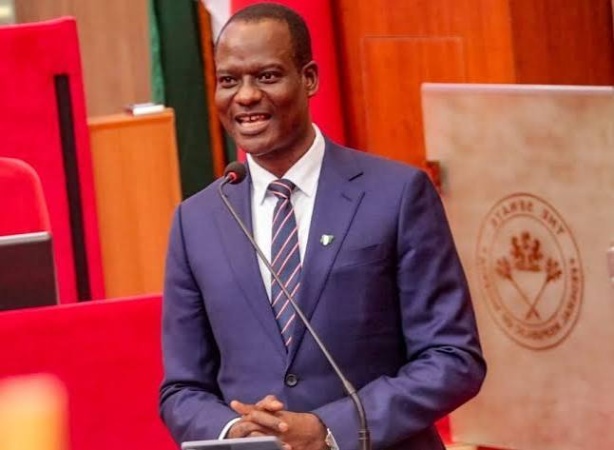
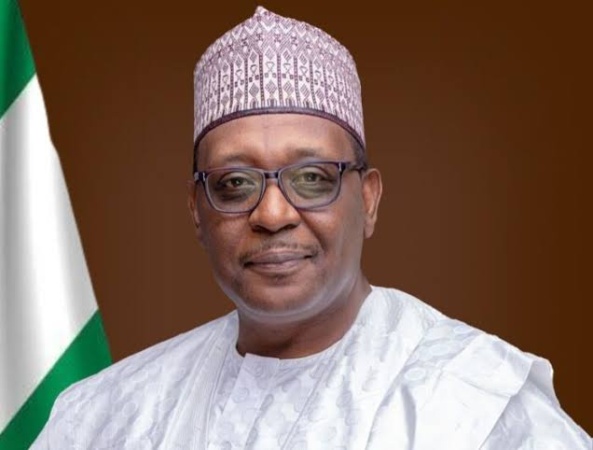
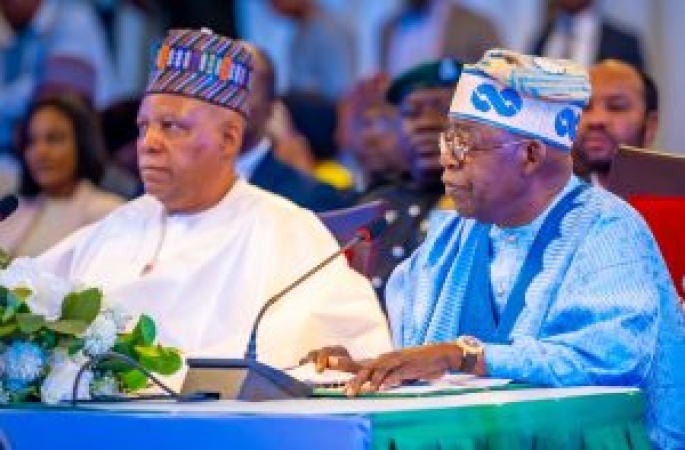
Minister of Finance and Coordinating Minister of the Economy, Taiwo Oyedele
The 36 state governors are facing growing pressure to account for how they have spent public funds disbursed as revenue by the Federation Account Allocation Committee in the last three years, The PUNCH reports.
This scrutiny follows the revelation that the Federation Account disbursed about N47tn to the three tiers of government in the three years since the removal of petrol subsidy.
This was as the Federal Government, 36 states and 774 local governments shared a cumulative N93.216tn as revenue from the Federation Account between 2017 and 2025, with more than half of the amount distributed in the three years following the economic reforms introduced by the Federal Government in 2023.
These figures were disclosed in a document obtained by our correspondent from the Federal Ministry of Finance on Sunday.
It showed that N47.25tn, representing about 50.7 per cent of the N93.13tn shared during the period, was distributed between 2023 and 2025 alone, highlighting the sharp expansion in revenues following the removal of petrol subsidy, exchange rate reforms and increased revenue mobilisation.
But policy analysts, civil society groups and other critics say the increase in revenue has not translated into a corresponding improvement in the living conditions of Nigerians facing rising living costs, unemployment, poverty and inadequate public services.
In an interview with PUNCH, a policy analyst, Adebayo Abubakar, said the removal of subsidy had increased government revenues but argued that the additional funds had not always translated into spending that reflected the economic hardship facing Nigerians.
“Roads, bridges, drainage and other infrastructure remain important, but some governments appear to favour conspicuous projects while schools, healthcare facilities, water supply and other basic services receive inadequate attention,” he said.
The removal of petrol subsidy and other economic reforms introduced by the Federal Government in 2023 have triggered an unprecedented surge in revenue flowing into the Federation Account, with the 36 states and 774 local government areas receiving significantly higher allocations amid growing questions over how the windfall has translated into improved infrastructure, security and public services.
The sharp increase in Federation Account Allocation Committee payouts has, however, placed state governors under renewed scrutiny, as many Nigerians continue to grapple with high living costs, poor infrastructure and worsening insecurity despite the substantial growth in revenues available to subnational governments.
While some governors have linked higher FAAC receipts to road construction, bridges, healthcare, education, workers’ welfare and other projects, residents in some states said the increased revenue had not resulted in improved public services or reduced economic hardship.
Findings by The PUNCH showed that the Federal Government, states and local governments received about N47tn from the Federation Account in the three years following the reforms, exceeding the amount shared in the preceding six-year period and reigniting the debate over the benefits and consequences of the subsidy removal policy.
FAAC disbursements
The document showed that FAAC distributions rose from N5.64tn in 2017 to N21.90tn in 2025, representing an increase of about 288 per cent over the nine-year period.
Year-by-year, net FAAC stood at N5.64tn in 2017, N7.98tn in 2018, N7.85tn in 2019, N7.11tn in 2020, N8.12tn in 2021 and N9.18tn in 2022. It subsequently rose to N10.09tn in 2023, N15.26tn in 2024 and a record N21.90tn in 2025.
The development highlights the dramatic transformation in Nigeria’s federation revenue following the removal of petrol subsidy, reforms in the foreign exchange market and efforts to improve revenue mobilisation.
It also exposes the limits of measuring Nigeria’s revenue growth in naira terms alone. While the removal of petrol subsidy, foreign exchange reforms and improved revenue mobilisation helped to push FAAC allocations sharply higher, a significant part of the increase reflects the devaluation of the naira.
For instance, Nigeria shared N7.98tn through FAAC in 2018, which, at the Central Bank of Nigeria exchange rate at the time, was equivalent to about $26bn. By 2025, the amount shared had risen almost threefold to N21.9tn. However, when converted at the CBN exchange rate for 2025, the allocation was worth only about $14.4bn.
In other words, while FAAC distribution increased by about 174 per cent in naira terms between 2018 and 2025, its dollar value fell by roughly 45 per cent, or about $11.6bn.
The comparison suggests that the apparent surge in federation revenue was driven not only by increased revenue generation and reforms, but also by the weaker naira, which translated dollar-denominated oil and other foreign currency earnings into substantially larger amounts of naira.
The document showed that net FAAC allocations stood at N5.64tn in 2017 and rose to N7.98tn in 2018, representing a 29 per cent increase. However, growth was not sustained in the following two years.
The distributable revenue fell by two per cent to N7.85tn in 2019. It declined further by 10 per cent to N7.11tn in 2020, reflecting the economic disruptions associated with the COVID-19 pandemic and developments in the oil market.
The distributable revenue, however, recovered to N8.12tn in 2021 and increased to N9.18tn in 2022. The document put the average annual growth rate for the pre-reform period at eight per cent. But the sharpest increase came after the reforms introduced in 2023.
Net FAAC rose to N10.09tn in 2023, representing a nine per cent increase. It then jumped by 34 per cent to N15.26tn in 2024 and expanded by another 30 per cent to a record N21.90tn in 2025.
This means the average annual growth rate accelerated from eight per cent in the pre-reform period to 24 per cent between 2023 and 2025. In effect, the pace of growth in distributable federation revenue was three times higher in the post-reform period than the average recorded before the reforms.
The figures also showed the extraordinary weight of the last three years in Nigeria’s federation revenue history. Of the N93.13tn shared between 2017 and 2025, the N47.25tn distributed between 2023 and 2025 alone exceeded the combined allocations recorded in several earlier years, meaning that every N2 shared over the nine-year period contained more than N1 distributed after the reforms.
Finance ministry speaks
The Federal Ministry of Finance, in its assessment of the reforms, said states and local governments had received substantially higher allocations, increasing the resources available to subnational governments for salaries, pensions, infrastructure and other public responsibilities.
The ministry said, “States and local governments received significantly higher allocations through the Federation Account, increasing the resources available to meet salaries, pensions, infrastructure and other responsibilities at the subnational level that benefit the people.”
It added that, compared with the monthly run-rate before the removal of petrol subsidy, “states received about N9.17tn in additional allocations from June 2023 to December 2025,” while local governments received about N6.66tn in additional allocations during the same period.
Further analysis of tier-by-tier annual distribution figures for 2022 to 2025 showed that the Federal Government received N1.996tn in 2022, N3.749tn in 2023, N4.570tn in 2024 and N7.024tn in 2025, bringing its four-year allocation to about N17.34tn.
The states received N2.060tn in 2022, N4.179tn in 2023, N6.533tn in 2024 and N8.934tn in 2025, totalling about N21.71tn, while local governments received N1.285tn, N2.601tn, N3.774tn and N5.351tn respectively, amounting to about N13.01tn over the four years.
The figures showed that the states emerged as the biggest beneficiaries of the post-reform expansion in FAAC receipts. Their annual allocation jumped from N4.18tn in 2023 to N8.93tn in 2025, more than doubling within two years. In 2024, states received N6.53tn, exceeding the Federal Government’s N4.57tn allocation in the figures contained in the document.
A World Bank analysis similarly identified 2024 as a turning point when state governments received more from FAAC distributable revenues than the Federal Government, reflecting a structural shift in the pattern of federation revenue distribution.
The expansion in FAAC receipts has been linked largely to the fiscal reforms introduced by President Bola Tinubu’s administration after it assumed office in May 2023.
The reforms included the removal of petrol subsidy and changes to the foreign exchange regime, alongside efforts to improve tax collection and revenue remittances.
Earlier analysis by the Nigeria Extractive Industries Transparency Initiative had attributed the increase in federation revenue in 2023 to improved remittances following the removal of the petrol subsidy and the floating of the exchange rate.
The impact became more pronounced in 2024 and 2025 as monthly allocations crossed the trillion-naira mark with increasing regularity. For instance, the Federal Ministry of Finance announced that FAAC shared N1.354tn for June 2024 and N1.818tn for June 2025, reflecting the rising scale of revenues flowing into the Federation Account.
The N93.13tn distributed over the nine-year period therefore tells two different stories. The first six years, from 2017 to 2022, produced a cumulative N45.88tn in net FAAC distributions. But the following three years generated N47.25tn.
Thus, three post-reform years produced more distributable federation revenue than the preceding six years combined. The surge has strengthened the financial capacity of the three tiers of government, particularly state and local governments, which have become major beneficiaries of the expansion in distributable revenues.
However, the sharp rise in public revenues has also intensified scrutiny of how the additional funds are being deployed, especially as many Nigerians continue to face rising living costs and infrastructure and security challenges.
Analysts react
Commenting, Abubakar further criticised the concentration of development projects in major urban and political centres, saying public revenue should benefit communities across the states rather than selected constituencies.
Similarly, an Abuja-based analyst, Olayemi Adebanjo, said the increased revenue should have led to stronger interventions in affordable transportation, healthcare, education, agriculture and job creation.
Another analyst, Festus Oyabambi, said rising government revenues alongside worsening hardship would raise questions about how public funds were being deployed.
“The real test of the post-subsidy era should be whether Nigerians can feel a tangible improvement in their lives,” he said.
Also speaking, the Chief Executive Officer of the Centre for the Promotion of Private Enterprise, Dr Muda Yusuf, said transparency remained a major concern, warning that some state governments could channel public funds towards projects that do not deliver sufficient economic or social benefits.
“Transparency is also a big issue because sometimes monies are spent on unnecessary things. Of recent, states are concerned about setting up airlines. That is not even profitable and you end up subsidising the airlines instead of spending the money on water, roads and other necessary economy growth-tied infrastructure, while neglecting citizens in the rural areas,” Yusuf said.
He argued that the conversation about the benefits of the reforms should move beyond the amount of money being shared among the three tiers of government to how the funds are eventually deployed.
According to him, the Federal Government has limited powers to determine how state governments spend funds that accrue to them from the Federation Account, making citizen participation and public scrutiny crucial.
Yusuf said, “We need a framework for the citizens themselves to be able to engage with subnationals. There is a limit to how the Federal Government can dictate to them how they should spend their money, and citizens should be given that power.
“If we want to get the dividends of these reforms, we must be able to focus on state and local governments.”
The economist said the increased revenues flowing to subnational governments should be directed towards projects capable of improving productivity and living standards, particularly in rural communities where access to basic infrastructure remains inadequate.
He maintained that investments in roads, water supply and other critical infrastructure would have a more direct impact on economic activities and the welfare of citizens than projects that could require continuous government subsidies to survive.
Similarly, a development economist, Aliyu Ilias, said it was encouraging that the government had begun attaching specific objectives to some funds released to states.
He, however, said the effectiveness of such funding would depend largely on transparency and the willingness of citizens and civil society organisations to monitor how the money was utilised.
“First and foremost, it is a good one that the government has started attaching money given to states for something specific, and that is why the funding is okay. But citizens must monitor them to see what they are actually doing,” Ilias said.
He added, “The states also need to be more transparent. In as much as the government has stated what the money should be for, they should, in turn, tell the people what they are doing, state by state.
“Non-governmental organisations should also start looking at this area to track how they have actually utilised the money.”
Ilias said the increase in revenue accruing to the states following the removal of petrol subsidy had created a greater responsibility for governors to demonstrate the impact of the additional resources on the lives of citizens.
“The Finance Minister said states have collected from subsidy savings, so it has to show,” he said.
He also recalled that President Bola Tinubu had cautioned state governments against focusing solely on physical projects such as bridges, urging them to pursue broader development initiatives capable of improving the welfare of Nigerians. (The PUNCH)