ADAD
ADAD
Updating your news feed...
NEWS EXPRESS is Nigeria’s leading online newspaper. Published by Africa’s international award-winning journalist, Mr. Isaac Umunna, NEWS EXPRESS is Nigeria’s first truly professional online daily newspaper. It is published from Lagos, Nigeria’s economic and media hub, and has a provision for occasional special print editions. Thanks to our vast network of sources and dedicated team of professional journalists and contributors spread across Nigeria and overseas, NEWS EXPRESS has become synonymous with newsbreaks and exclusive stories from around the world.


Loading banners
Loading banners...

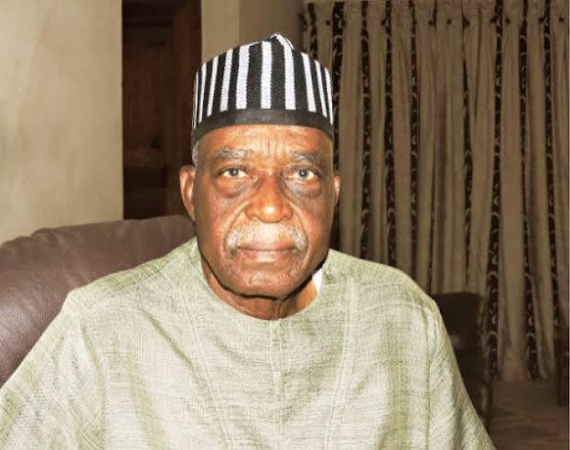
Brig-Gen John Atom Kpera Rtd
Brigadier-General John Atom Kpera spent 24 years in the Nigerian military, where he served in many key positions. He was the military governor of the Southeastern State between 1975 and 1978 under the Murtala/Obasanjo regime, and later, the military governor of his home state, Benue, under General Muhammadu Buhari (1984-85). He retired 41 years ago, and, remarkably, returned home to Gboko, where this interview was held.
Tell us about your early days in this beautiful city.
I have been in Gboko since I retired in 1985. On and off, I go to places, but I come back to Gboko. I think my retirement period has been quite satisfactory, as far as I am concerned.
How was your growing up, as well as schooling?
I was born on January 3, 1941, about 25 miles away from here. I was the fourth child. But I was born not quite good. They called it a soft head. Everybody thought I was going to die before I grew up because I had a soft head.
What does that mean?
I don’t know what they call it in English. It is a medical condition; and because of that, my father wasn’t thinking seriously about me. I couldn’t possibly become a farming child, the two boys he had before me were helping him. So he sent me to my grandmother at the age of four. The village is not quite six miles from where we are sitting. So I literally grew up with my grandmother, up to the age of seven, then I was sent to school.
Who sent you to school: your grandmother or father?
My grandmother. My parents simply sent me there. And literally, my father particularly didn’t have much hope that I would survive and be of any benefit to him.
I grew up with my grandmother who was a staff of the then Dutch Reformed Church Mission at Mkpar. She took care of me until the age of seven in 1948, when I went to elementary school as we called it in those days.
My mother’s brother was staying in Gboko town here, working for the Tiv Native Authority (NA). So at the age of 10 in 1951, I requested to go to him and my grandmother said yes by all means.
I was in Elementary Two or something like that when I joined my uncle. He put me in the Tiv Native Authority Elementary School in Gboko here.
What I consider as not particularly something to be happy about was the year my uncle stopped working in the Tiv Native Authority. In fact, he was accused of embezzlement and sent to prison.
But God has been kind to me. Somehow, I managed until 1956 and I went to the then Benue Provincial Secondary School in Katsina-Ala, which is about an hour or so drive from here. That’s where I stayed throughout my secondary school days, up to 1962.
In the middle of that same year, by June when we had a long summer break, the army was Nigerianising. It was all white officers, so they sent one Captain, a British man, to our school to explain how wonderful it would be if you joined the army. They asked for those who would like to join and I gave my name.
You had finished mock examination but hadn’t completed WASSCE; and suddenly, this army thing came?
Exactly. I had to go to the school and tell the principal that I was not going to come back for WASSCE. The man was almost saying I would not go away, but I told him the offer I had from the army and was required to go to Kaduna for military interview. He said, “Well, if you must go, you can go.”
You were recruited into the army and immediately sent to Ethiopia. How was the experience?
Of the 20 of us that were sent to Ethiopia, 10 were for the Air Force and 10 for the Army. I was one of those that were sent for the air force. We were in Ethiopia from 1962 to 1965 – three years. The 10 of us knew that they were going to train us as pilots to fight in the Nigerian Air Force, but only four of us succeeded in going. We call it a ticket, I mean a wing; that means you passed and could go for a further training.
Was it strange that from Benue you found yourself in that environment? Did you enjoy it?
Well, I had no choice; so generally, I must say that I enjoyed it because almost all of us came from places like that. We were young, so we became friends. I started making friends with foreigners.
Were there adventures you can remember?
I don’t know what you mean by adventure, but I will tell you a story to some level. The only adventure I must say we had was that we had challenges in the military academy. Ethiopian students were there too as cadets. As a military academy, when you finished you would get commissioned straightaway. There was no short service; it was a combatant regular training.
Ethiopians became some of our friends. We went out together. Of course, we started catching up with their language too – Amharic.
When we finished in 1965, the 16 of us came back and were all commissioned as Second Lieutenants. I went to the Nigerian Army Engineers. Everybody chose where they wanted and they sent us there – Infantry, Artillery, signals, everything.
Where were you when the coup happened?
I was at the Field Squadron Engineers in Kaduna.
Did it affect you?
I had no choice; I had to participate in it. We had two nights. They called the first night of the coup, Exercise Damisa.
It was an exercise that turned into a coup?
Yes that turned into a coup.
When you say you participated, what do you mean; were you active in carrying out the coup?
Well, if you patiently listen you would see whether I carried it out or participated in it. So, as I said, we were there. I was in one field squadron. Major Nzeogwu was in the military training college. He was the one that organised what, in our own understanding, was a night exercise.
So, on the first night of January 14, 1966, we went for a night attack on Zaria Road. I deployed my troops and every one of us got various placements. Mine was to contain Radio Nigeria, Kaduna. The instruction was that I should surround the place so that nobody moved in and nobody would come out.
We were there for about five hours, then my commanding officer, who was an Igbo man, Captain Gbulie, came around, inspected and said, “You can stand down.” That means you can go. That was the 14th day. So I took my troops away to their barracks.
The second one on the 15th was the same exercise. We went to the field and did a night attack. So I came again and surrounded Radio Nigeria. This time, the instruction was to stay there until daybreak.
I was there until word came that we should go to the Brigade Headquarters. So I called my sergeant and told him to take charge as I was going to the Brigade Headquarters. I saw Major Nzeogwu who came to address us with a bandage. He said we had succeeded in the exercise of putting Nigeria in a better shape.
I was ignorant about that, so he went ahead and explained that we had taken over. If you recall, he was one of the five Majors that took over. We just sat there and (he) said there was a coup.
What happened to you during the civil war? Where were you?
I was still with engineers. The engineers had grown and I was commanding a squadron. And we were deployed to Ogoja side.
We were building bridges, breaking explosives the other side had planted. We did the normal thing we were trained to do – carry our troops, build the bridge, get the roads moving with the trucks and the army vehicles.
You were made the military administrator of East-Central State in 1975, after the coup against Gowon. Did you participate in the coup?
I wasn’t involved.
You were still a regular officer?
I was a regular combatant.
I am wondering how you came by that appointment.
Well, you would be surprised that I was also surprised. I was doing my military job. I was in fact commanding a brigade of engineers in Ibadan when I received a signal – a command that I should report to Dodan Barracks the following day at 10 o’clock.
I drove from Ibadan to Dodan Barracks in Lagos the following day and reported at 10 o’clock. Murtala Muhammed was the Commander-in-Chief, while General Obasanjo was the Chief of Army Staff.
I had worked with Obasanjo, so I went straight to his office. Are you listening to me very carefully? When we were working together at the Army Engineers Headquarters, he was the commander of Corps of Engineers, while I was a principal officer.
When I saw Obasanjo, he asked: “How about being a governor?” I said I did not understand. Then he got up and said, “Follow me.” So we went to General Murtala Muhammed’s office. I had worked with General Mohammed on a committee set up by the army.
He was in signals, while you were an engineer?
Yes. He was the chairman of that committee. Signals, engineers and artillery were combatant services. General Murtala Muhammed looked at me and said, “You are going to Enugu to be governor.” I said I didn’t understand, but he said I would understand. He told me to go back with my order. So I went back to General Obasanjo’s office, thinking that he would tell me something.
He said, “John, tomorrow at 10 o’clock you will report to the airport. The air force is going to take you to Enugu and you will take over from Colonel Ochefu.” I said I was sorry but I didn’t understand him. He said, “Now get up, at 10 o’clock be there.”
General John Atom Kpera
No explanation?
Nothing. I rushed back to Ibadan, packed, and at 10 o’clock I was at the airport and they took me to Enugu.
And you became a governor?
No. Wait a minute; when I got there, I was a lieutenant colonel, so Colonel Ochefu was my senior. They sent people to pick me up at the airport. When I got to his office I saluted and greeted him and he told me to sit down. He said, “I know why you are here; I am retiring. That’s why they said you should come and take over from me.”
He was a very good man. Having gone through the state as a military governor, he made copious notes of what was going on, his plan etc. We sat down, he briefed me and handed me his notes completely.
Was he forced to retire?
I have no idea. He just told me he was going on retirement. I sat there relieved.
I took over as the military governor of the East Central State in November 1975.
The whole East Central State? There are several states now.
Yes. There are about five states now. That was when we had the North Central State, North Eastern State, Western State – the 12-state structure.
Was it overwhelming for you? How did you cope being a governor so suddenly?
It was not overwhelming. It was a military duty. I took over from my senior and I thought I had a challenge – I must do it as good as he was doing.
When I went to General Murtala Muhammed’s office with General Obasanjo, Murtala said: “You are going there to take over as military governor; if I hear any stupid thing you will be sorry. Do you hear me?” I said yes, but added that I didn’t understand. He said, “Go with your oga.”
He said I would be sorry if I messed up, I had that in mind. So I studied whatever Colonel Ochefu gave me.
You spent 31 months there as governor?
Yes. In February of 1976, the Dimka coup killed Muhammed and Obasanjo became the military head of state and so on. My good friend, Shehu Yar’adua was his chief of staff, Supreme Headquarters. So there was easy communication – anytime I had a problem I would go there.
Nothing “stupid” happened after Murtala’s warning?
Nothing stupid happened. Gen Obasanjo took over, and as far as I am concerned, everything was going on very well up to the end when I left.
You said you successfully finished your assignment as the military governor of the East Central State; and later, Anambra. But I read somewhere that you were actually relieved when the assignment was over and you came back to the military. People would be surprised that from being a governor you went back to become a soldier; wasn’t that kind of letdown?
No, it wasn’t. I wasn’t the only one – all of us.
So you went back to engineering?
I went back to engineering and was posted to the Military Army Engineers Training School in Kainji, where I took over as commandant and continued my normal duties.
So you enjoyed the transition from being a governor to a trainer of engineers?
Yes. I came back and started my normal work. I didn’t ask to be appointed a military governor; and I didn’t have any problem at all.
You were also appointed a military administrator during the Buhari regime in 1984/1985 and posted to your home state, Benue?
Correct.
Was that another surprise appointment?
It was a big surprise. One day, I was on annual leave here in Gboko when I heard that there was a coup. I read that it was Buhari and Idiagbon, who were my friends. They didn’t tell me anything.
I rushed back to Lagos and went straight to Tunde Idiagbon’s office and asked why they were doing that nonsense. I asked if he knew they would have roped me in if the coup had failed, because they would know or think that we were friends. We played squash and did things together. Everybody knew that we were friends.
I accused Tunde of carrying out the coup without telling me and he said, “We have taken care of you.” I asked what he was talking (about) and he said, “You are going to be governor in your state.”
How was it being the governor of your home state?
A lot of challenges. At that time we had three big tribes – the Tiv, Idoma and Igala, who are now in Kogi. It was a matter of getting the three major tribes to work harmoniously, because Idoma and Igala believed that I would be a Tiv man in everything.
But I thank God that I didn’t prove that officially.
Though a Tiv man, I was the military governor of Benue State, so every Benue indigene or tribe was my responsibility; hence I would treat them the same way I would treat a Tiv man. It took a little bit time, but they all started accepting me.
It was a very short tenure, wasn’t it?
Yes; 16 months.
Do you remember anything that was impactful during your time there?
To tell you the truth, I can’t say exactly what I did because I was just doing my normal job. I appointed commissioners; we would have our meetings and everybody would bring their issues. I didn’t think I had a very particular challenge.
Was money not a challenge?
Money was.
Such that when you were leaving, you didn’t leave much in your treasury?
I agree with you. I didn’t leave money because I didn’t have.
So you spent all the money you got?
Yes. On roads and all the things I was supposed to do. In the ministries we would make a budget and the internal revenue would go to the treasury. And I was not touching it because you would be dismissed if you dealt with any money you did not earn. That was the instruction from the Supreme Headquarters.
I was receiving my salaries from the military and anything we wanted to do regarding state money. For example if I had to travel, state money would be used. I asked my aide de camp and the permanent secretary in the Government House to work out the expenditure. And when we travelled and came back, I would tell the aide de camp to give his report to the permanent secretary in the Government House. He would do that and I personally wouldn’t touch anything.
You were not travelling like governors do these days – going abroad to get investment?
What would I be going abroad to do as a military governor? I would be called to the Supreme Headquarters and smashed. Where would you get the money to travel abroad? It wasn’t so.
I remember that at that time we were not getting federal allocation. It was what you generated as internal revenue that you would use.
There was no question of me spending any money that was not known by my commissioners in their various ministries. The Ministry of Finance also had a commissioner. It was whatever needed to be signed when we passed the budget that would be used. And the budgets had heads and sub-heads – those we allocated physical cash to.
As a governor, how did you relate with traditional rulers, such as the Tor Tiv?
We had three main traditional rulers – the Tor Tiv, Och’idoma and the Attah Igala. I treated them equally as it had always been.
The Tor Tiv was the chairman of the state traditional council, but the local governments were handling their expenditures. And I never showed for one minute that I was a Tiv man treating a Tiv man differently. I had no reason to.
When I was the military governor of the East Central State, I went to the palace of our Tor Tiv then, to greet him. Traditionally, he wanted to host me as his son by giving me a cow. But I bent down and told him that I was not allowed to take any of such gifts from him. He said I was his son, but I told him that I was a military governor and if I touched it I would be summoned to the Supreme Headquarters and it would look as if I was taking bribe.
You retired rather early from the army; why?
Yes; that was in 1985. I wish you could ask General Muhammadu Buhari this same question.
Was he the one that retired you?
No. We retired the same day; the same year Ibrahim Babangida took over.
After the IBB coup?
Yes.
So he retired all of you?
We had to retire. The military tradition is that if a junior takes over, you have to go. Ibrahim Babangida was our junior, so we had to go.
When you retired, very unusually you came back home to Gboko. You didn’t stay in Makurdi, Kaduna or Abuja where the big Generals are?
That is where I had a roof over me. When I came back to Gboko, one of the military governors, Garba Duba, asked what I was doing here. He was in the military with Buhari and Abacha. I think we met in a flight and he asked why I was not staying in Lagos or elsewhere. I told him that Gboko was the only place I had a roof over me; not this one, it was another over there.
I told him that I would ask him to give me accommodation in his boys’ quarters (Abuja), or in Kaduna.
What about Makurdi, which is the state capital of Benue?
I still didn’t have a house there; nothing. Ibrahim Babangida took over in1985 and I had to go. I had no other place but to come to Gboko. And I have stayed here.
How is the experience?
I knew that we were farmers; Benue is described as the Food Basket of the Nation, so I encouraged farming. I said everybody had to go and farm. I strictly instructed civil servants to close at 12pm on Fridays and go to farm until Monday. But some people didn’t like it. One of them came smearing, asking if I was a General on the farm. I said that was alright.
So the retirement was not particularly very interesting. But by God’s grace, I sailed through. I believe and I trust in God.
So you went back to farm?
I did. Very rough and tough, but I did it physically. Growing, I had a farmland in my village, where I said I would grow maize and yam.
When I retired, to abuse me, somebody went and built a statue with a hoe and put it at the roundabout, noting that Atom Kpera was farming.
People were joking about you?
That’s right. They said Atom Kpera became a General by farming. I didn’t take it seriously. I rather thanked God.
So despite the challenges of farming, you never regretted sitting in Gboko and enjoying your retirement?
I have no reason to regret at all. God is great and wonderful.
How did you deal with the demands of local people?
I would employ them to work on my farm and pay. And God has been gracious. I used to harvest on my farm, but I can’t do it again. My wife is also old and our two children are all married. We get a lot of bags of maize. And we will sell and put some in the bank.
My friend in Lagos, Emmanuel Ejewere encouraged me and we formed a company.
Consultancy?
Not consultancy. We give out money.
Loans?
Kind of. This young man here was the one who opened it. I am 85, so I forget a lot of these things very easily. We formed a company and it was bringing some good money. But COVID-19 came and dissolved it. This young man was the manager in Lagos.
So what do you do now?
Literally, I do nothing, but I thank God. My pension is not much, but I must say that God has helped me. My wife is a trained teacher, so we opened a school, which she is running. She is in school right now. She doesn’t ask me for kobo to buy salt or anything. The school is doing very well. There’s also a secondary school. So I would say that incidentally, apart from my pension, that is what is keeping us.
As a retiree, if you don’t work or go to farm, how do you occupy your time? What are the challenges of retirement?
There are always people who come with one problem or another and I try to look at them. If it is something I can be of help, I do. But I don’t throw my problems on people. God is in charge and I worship him. I am in church every Sunday. And God has given me a good and really enjoyable time.
Do you get involved with politics?
Not at all; I haven’t touched it.
You have never tried to contest?
Not one minute. But I had a temptation. I was called when my former boss, General Obasanjo became president. I went to see him and he said, “John, you have to join politics. Nowadays we don’t do anything except with politicians, so join us.” I said no.
Did Obasanjo help you when he was president?
No. With Obasanjo, there was nothing. Also, before Buhari started campaigning, he came here and asked me to join him. But I said I was not touching partisan politics because it’s dirty. He told me to join him and stop it from being dirty. I said no and he went away.
On the day he was elected, he called me and said he was going to give me something but I had to change and become a politician. I said I was not interested.
You are one of the strongest 85-year-olds I have seen. What do you do to keep fit?
I actually do some exercises. I also read. And I walk slowly. I read things on my telephone.
WhatsApp?
Yes. I read something on why Chinese military officers don’t break down when they retire. I read it two times. They will tell you not to sit down, instead, do an exercise every day. If you start having problems with your hand, shoot. They say the best form of defence is attack. If you want to defend this thing, attack it. So, if I start having pains in my leg, I am shooting it.
And it works?
Very much. I can jump up now and run and shake. I am perfectly all right. At 85 years, I run around here. And I am doing it every day. I don’t leave my bedroom until 5 to 10 minutes doing the exercise.
My only problem is my eyes. I was playing tennis too, but now, I see the ball only when it gets close. So I don’t play, but I run and jump as if I were an 18-year-old.
What about food?
That’s another one. The same Chinese said ‘eat natural food.’ Now, strictly I eat natural foods like okra, vegetable soup and nothing artificial.
Do you eat pounded yam?
Pounded yam is limited. I eat for about five months when it is still fresh. When it becomes solid, it is starchy. I don’t eat it until when we have the new yam. I eat corn. They grind corn and make fufu for me. And I eat lots of vegetable. That one is also helpful; it is natural. I eat a lot of fresh okra. I don’t touch Maggi; okra replaces it completely.
Successful Tiv men traditionally tend to marry (many) wives, but you didn’t go in that direction?
Yes, I have only one wife and all my children are from her. We married in 1968 during the war. We are 57 years (married) now. And I don’t think she married any other husband. We have been together and God has given us two daughters. We have grandchildren now.
That’s a very small family.
It is. God didn’t give us a third one. He gave us only two girls and we thank him for that.
You served this country in various capacities. What do you make of what is happening now?
You are now dragging me into what I try to avoid openly. I am a citizen of Nigeria and I love my country. I want Nigeria to develop and become a big and independent nation. But I must tell you quite frankly that I am very scared about what is happening. Partisan politics is becoming more scary.
But I always pray that God would give us leaders who would always hold mankind, not enemies within Nigeria. We shouldn’t have enemies. We should all be friends. This is our country; we have no other place to go but Nigeria.
What are you scared about?
A lot of. Let me put it this way: disagreement by politicians – literally going as if the place would burst. Partisan politics now is very dividing. There are groups and if you mention that you are even a friend of a particular group, the other group hates you. It shouldn’t be.
Partisan politics you should be entitled to your own ideas. If we merge ideas or stay closely, the ideas would work for Nigeria.
But some people may argue that the military, of which you are a senior member, has failed us. Obasanjo and Buhari were both military leaders who became civilian leaders. They had all the opportunities to make a difference, yet here we are with the same problems.
Did I praise them for that? No. You are asking of my personal opinion, not military. I cannot speak for the military. I have been out of the military for 41 years now.
But do you agree that the military didn’t really help us? All the long years of military rule didn’t solve these problems you mentioned.
I am not sure whether it is what the military did that is affecting us. Personally, I think the civilians are not little babies. They have grown up. They are not copying the military. Strictly speaking, I don’t think that is the case. But politics now opens the field for everybody.
You have to use your thinking and the fact that you are a Nigerian, as well as the other person who says he is a Nigerian. And you have absolutely no power to eliminate him. If he is not doing what you do, do your own better, so that he may be educated. He will look at it and copy you. But don’t do it against him. He may start hating you more because you are doing it against him. That’s what is happening now and I don’t think it is correct. (Weekend Trust)