ADAD
ADAD
Updating your news feed...
NEWS EXPRESS is Nigeria’s leading online newspaper. Published by Africa’s international award-winning journalist, Mr. Isaac Umunna, NEWS EXPRESS is Nigeria’s first truly professional online daily newspaper. It is published from Lagos, Nigeria’s economic and media hub, and has a provision for occasional special print editions. Thanks to our vast network of sources and dedicated team of professional journalists and contributors spread across Nigeria and overseas, NEWS EXPRESS has become synonymous with newsbreaks and exclusive stories from around the world.























Loading banners
Loading banners...

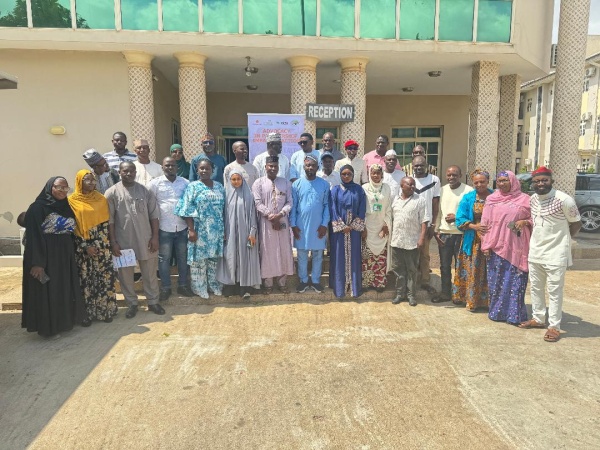
Participants at the programme
By GARBA MUHAMMAD
As governments and development actors increasingly rely on credible data to determine where health resources should go and how services should be improved, civil society organisations in Kaduna State are being equipped to ensure that the numbers translate into action.
The focus is shifting from merely collecting health data to understanding what the figures reveal about gaps in service delivery, funding and health outcomes and using that evidence to demand appropriate responses from those responsible.
It was against this backdrop that the Federal Ministry of Health and Social Welfare, in collaboration with EngenderHealth and Results for Development (R4D), organised a two-day capacity-building workshop on the FASTR Reproductive, Maternal, Newborn, Child and Adolescent Health and Nutrition (RMNCAH+N) Scorecard and advocacy brief development.
Held in Kaduna on August 12 and 13, 2026, the workshop brought together officials of the Kaduna State Ministry of Health, Kaduna State Primary Health Care Board, representatives of the State-Led Accountability Mechanism (SLAM), civil society organisations and other health-sector stakeholders.
With the theme, “Strengthening CSO Capacity for Evidence-Based Advocacy Using the FASTR RMNCAH+N Scorecard,” the training sought to strengthen the capacity of programme managers and accountability actors to access, analyse and interpret routine health data and translate the findings into evidence for advocacy, accountability and better decision-making in primary healthcare.
Kaduna is the first state to benefit from the initiative, with Lagos scheduled to follow and Kano expected to be the next state.
For participants, however, the significance of the training went beyond learning how to navigate another health-data platform. It was about understanding how routine figures generated across health facilities can be transformed into evidence that tells a compelling story about what is working, where the gaps are and what government and other duty-bearers need to do differently.
Beyond Numbers: Making Data Useful
At the heart of the workshop was a simple message: collecting data is not enough. Its real value lies in how effectively it is analysed, interpreted and used to improve health services and outcomes.
Facilitators took participants through practical sessions on accessing and analysing information on the FASTR platform, developing scorecard visualisations and slide decks, and interpreting key RMNCH+N indicators.
Joshua Elaigwu, Senior Programme Officer with Results for Development (R4D) Nigeria, guided participants through the FASTR platform, demonstrating how raw health data could be transformed into clear and understandable visual presentations for policymakers and other stakeholders.
But producing graphs and scorecards was only part of the exercise. Participants were required to interpret the figures and provide the context behind them, ensuring that numbers were not presented in isolation.
The training also drew a clear distinction between data, information, evidence and an advocacy message, a distinction considered critical for organisations seeking to hold the health system accountable.
A poor-performing health indicator, for instance, represents data. Examining its trend and the circumstances surrounding it turns the figure into information. Establishing what that information means for health outcomes and supporting it with credible sources transforms it into evidence.
The final and perhaps most important step is converting that evidence into a clear advocacy message capable of persuading the appropriate decision-maker to act.