ADAD
ADADUpdating your news feed...

NEWS EXPRESS is Nigeria’s leading online newspaper. Published by Africa’s international award-winning journalist, Mr. Isaac Umunna, NEWS EXPRESS is Nigeria’s first truly professional online daily newspaper. It is published from Lagos, Nigeria’s economic and media hub, and has a provision for occasional special print editions. Thanks to our vast network of sources and dedicated team of professional journalists and contributors spread across Nigeria and overseas, NEWS EXPRESS has become synonymous with newsbreaks and exclusive stories from around the world.
.webp)
.webp)





Loading banners
Loading banners...

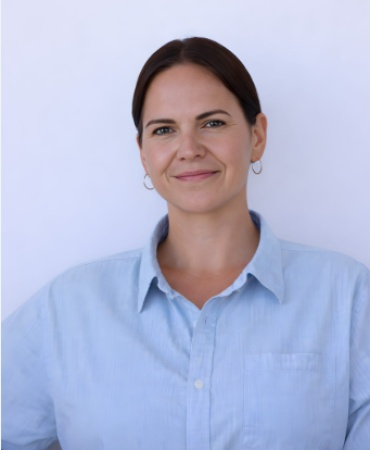
Vice President Brand Creative at APO Group, Libby Allen
By LIBBY ALLEN
Three weeks of football can make a country's name, but what it's worth in five years depends on decisions being taken now
I work in branding and communications, so I spent this World Cup watching something on top of football: what happens to a country's name when several hundred million people hear it for the first time.
Cabo Verde has a population of about 530,000 and was ranked 67th in the world before its debut in June. It drew 0–0 with Spain, who went on to win the tournament, and took Argentina to extra time in the Round of 32.
A supporter in Miami put it to Al Jazeera like this: "Now the whole world knows about Cabo Verde – that's how you pronounce it, not Cape Verde."
That’s national brand equity acquired in three weeks.
Egypt makes another powerhouse story. It had never won a World Cup match until this year, where it reached the Round of 16. Interest in young Egyptian players is surging. Eighteen-year-old striker Hamza Abdelkarim signed permanently to Barcelona in June.
Attention has a shelf life, but what lasts is the structure built underneath.
Morocco started in 2008 with a national plan for football development. The Mohammed VI Academy followed a year later. Now, Morocco sits sixth in the world. Diaspora players raised in European countries choose to represent Morocco instead. It's currently hosting WAFCON, and hosting AFCON last year reportedly brought in around €1.5 billion – enough to cover an estimated 80% of its 2030 World Cup costs.
Cabo Verde won the world's attention. Morocco built something that keeps earning it.
Where the money goes
The UK and European football transfer windows close at the start of September. FIFA's transfer rules set aside a solidarity contribution of up to 5% of any international fee for the clubs that trained the player between the ages of 12 and 23. Training compensation works on a similar principle when a player signs a first professional contract, and on international moves up to the end of the season of his 23rd birthday.
It doesn't work the same way in women's football. Training compensation doesn’t currently apply to women; FIFA approved a governing framework in December 2023 and consultation continues. Solidarity contributions cover both men's and women's football, but they're triggered by transfer fees, and in the women's game those fees are still small and infrequent. This means the money reaching clubs that develop women arrives mostly through visibility and sponsorship instead. For those clubs, visibility isn't a supporting system. It's the main one.
The money reaches an academy only if the academy can prove the player was there. Registration records, dates, contracts – filed, kept, and retrievable years later. The ones who did that paperwork can claim. The ones who didn't have nothing to claim with.
Talent has never been the constraint on African sport. The machinery around talent is.
"Talent exists everywhere. Opportunity does not."
Those words are from Herbert Mensah, President of Rugby Africa, writing last month in a piece titled “The Future of Rugby Will Be Built By the Many, Not the Few”. His argument is that potential must be supported by systems: better competitions, stronger pathways, improved logistics, and a commercial model that lets unions grow. "Our responsibility is to close that gap." On timing, he adds: "If we want a stronger seat at the table by 2031, we must prepare now."
His own sport makes the case twice in one match example: Zimbabwe qualified for the Rugby World Cup last July for the first time since 1991, beating Namibia 30–28 in the Rugby Africa Cup final in Kampala. Namibia had reached the previous seven World Cups. Neither record came from a single good season.
Coverage comes first
Broadcast and sponsorship rights are priced on the audience, and on the confidence that the audience will still be there when the next cycle is negotiated. A federation covered consistently is one a broadcaster can value. One that surfaces only when it wins gets priced as a risk. The coverage must be there when someone comes looking.
That's the work I see my colleagues do. APO Group is Rugby Africa's Official Public Relations Partner. Our founder, Nicolas Pompigne-Mognard, advises its president. He also sits on the board of the World Football Summit. We work with the NFL on growing flag football’s visibility across African markets. When the IOC announced that Senegal would host the first Olympic event ever held in Africa, we carried it through Africa Newsroom: the newswire we own, which reaches 250+ Africa-focused platforms in the languages the continent's newsrooms publish in.
A football supporter in Miami said the whole world now knows how to pronounce Cabo Verde. For three weeks, it did.
Holding onto that takes years of work. It’s relationships built. Stories written. Communities engaged. Grassroots investment. Reporting. Lobbying.
Those moments decide what the rest is worth.
•Libby Allen is Vice President: Brand & Creative at APO Group. Based in Cape Town, she leads marketing and creative services for the consultancy and its clients across African markets.