ADAD
Updating your news feed...

NEWS EXPRESS is Nigeria’s leading online newspaper. Published by Africa’s international award-winning journalist, Mr. Isaac Umunna, NEWS EXPRESS is Nigeria’s first truly professional online daily newspaper. It is published from Lagos, Nigeria’s economic and media hub, and has a provision for occasional special print editions. Thanks to our vast network of sources and dedicated team of professional journalists and contributors spread across Nigeria and overseas, NEWS EXPRESS has become synonymous with newsbreaks and exclusive stories from around the world.
.webp)
.webp)















Loading banners
Loading banners...


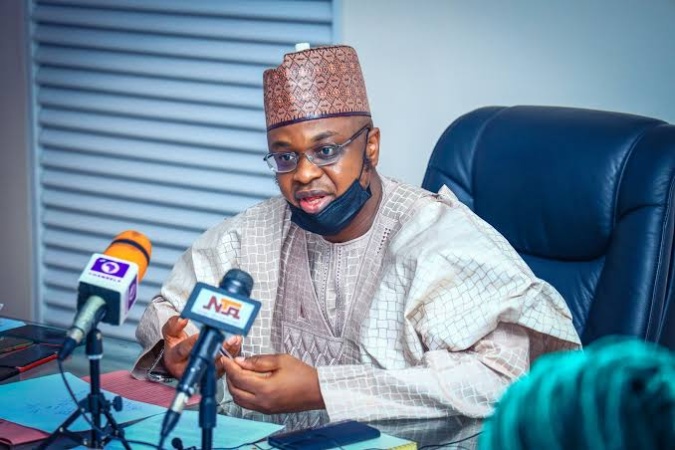
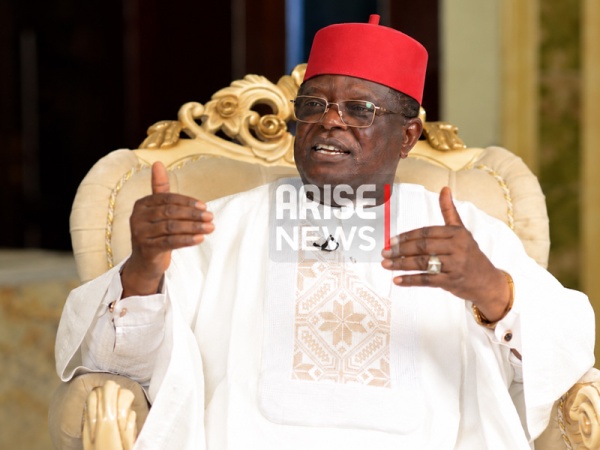
Nigeria’s Minister of Works, David Umahi, has defended the award of the Lagos-Calabar Coastal Highway to Hitech Construction, saying the company was selected through direct procurement permitted by law because of its specialised experience in tackling coastal engineering challenges.
Umahi also rejected claims that President Bola Tinubu’s son, Seyi Tinubu, sits on Hitech’s board, amid longstanding questions about the relationship between the President’s family and companies associated with the Chagoury Group.
Speaking in an exclusive interview with ARISE News, Umahi confirmed that there was no public advertisement or open competitive bidding for the highway, but insisted the procurement method was lawful.
When challenged if there was advertisement or public bidding, Umahi retorted, “But there was direct procurement. It’s within the law.”
Asked specifically whether Seyi Tinubu was on Hitech’s board, Umahi responded: “He’s not.”
The minister said the government had examined Hitech’s board as part of the pre-qualification process.
“I’ve heard people that say, ‘Oh, Seyi Tinubu is on the board of Hitech.’ We have the board of Hitech, because before we did pre-qualification,” he said.
Umahi explained that federal procurement rules provide different routes for awarding contracts, including open tendering, restrictive tendering and direct procurement, with emergency procurement available under particular circumstances.
“There are three kinds of procurement that are allowed,” he said. “There is a fourth one, which is emergency procurement.”
Explaining the distinction, Umahi said open procurement involves public advertisement, while restrictive tendering allows government to invite companies considered to have the necessary expertise to pre-qualify and bid.
“And so the third one is direct procurement,” he said. “Direct procurement is where there are no competitive bids. But it’s a specialised kind of procurement.”
Umahi said the decision to use that method for Hitech was driven by the engineering challenges expected along the coastline, particularly the threat posed by Atlantic Ocean surges.
“Our job was to construct road along the coast — coastal highway — and we knew that we were going to be confronted with the ocean surge,” he said.
The minister cited the historical threat of coastal erosion to Victoria Island and the eventual development of Eko Atlantic as evidence of Hitech’s ability to undertake specialised coastal engineering.
Umahi recalled that repeated interventions by expatriate contractors had failed to permanently resolve the threat to Victoria Island before Hitech became involved.
“All over the years, the Federal Government would engage expatriates from Belgium, from France and all over the country,” he said. “Each time the flood came, there would be that kind of intervention. But it could not solve the problem of the VI.”
He said Hitech initially resisted undertaking the coastal protection work because of the financial and technical risks involved.
“The President called Hitech and said, ‘Please, can you invest to do this, to tame the Atlantic Ocean?’ They said, ‘No. You’re going to liquidate us. We won’t be able to do it.’”
Umahi said the company eventually developed a solution involving massive concrete structures and geotextile materials to hold back the Atlantic.
“They were almost liquidated until they came up with that method,” he said, referring to the coastal protection system. “And today we have a beauty to behold, the Eko Atlantic.”
According to Umahi, that track record became central to the government’s justification for proposing Hitech for the Coastal Highway.
“So when we knew that we were going to be confronted with this, we were going to look for that kind of technical expertise,” he said. “And that’s why we sent the name of Hitech.”
He said the government presented Hitech’s Eko Atlantic work as evidence of its performance, technical capacity and capability to the Bureau of Public Procurement.
“They put the Eko Atlantic as the attraction and the evidence of performance and capacity and capability to the BPP,” Umahi said.
The BPP, he said, considered the proposal before allowing the government to proceed with direct procurement on a section-by-section basis.
“BPP looked at it and said, ‘Yes, but procure this thing in sections,’” he said.
Umahi said the government subsequently obtained a Certificate of No Objection before taking the procurement to the Federal Executive Council for approval.
“Federal Executive Council approved: go ahead, direct procurement, but procure it in sections,” he said.
Pressed on whether this amounted to confirmation that there had been no public bidding for the project, Umahi initially objected to the framing, insisting that the central question should be whether the procurement complied with Nigerian law.
“You should ask me whether we conformed to the law of the Federal Government,” he said.
When the interviewer ARIISE News Anchor Ojy Okpe reiterated that there had been no advertisement or public bidding, Umahi ultimately confirmed the procurement method, he said. “It’s within the law.” (AriseNews TV)