ADAD
ADAD
Updating your news feed...
NEWS EXPRESS is Nigeria’s leading online newspaper. Published by Africa’s international award-winning journalist, Mr. Isaac Umunna, NEWS EXPRESS is Nigeria’s first truly professional online daily newspaper. It is published from Lagos, Nigeria’s economic and media hub, and has a provision for occasional special print editions. Thanks to our vast network of sources and dedicated team of professional journalists and contributors spread across Nigeria and overseas, NEWS EXPRESS has become synonymous with newsbreaks and exclusive stories from around the world.


Loading banners
Loading banners...

OYC National President, Comrade Igboayaka O Igboayaka
By CHARLES IWUOHA
The National President of Ohanaeze Youth Council (OYC), Comrade Igboayaka O. Igboayaka, has warned that Nigeria’s unity could come under increasing strain if religious extremism and domination continue to shape political discourse in the country.
Igboayaka spoke in Owerri, Imo State, on Wednesday while reacting to comments attributed to Sheikh Yahaya Jingir in defence of the Muslim-Muslim presidential ticket of President Bola Ahmed Tinubu and Vice-President Kashim Shettima.
According to him, Jingir’s reported assertion that Nigeria is a Muslim country raises fundamental questions about the country’s multi-religious and multi-ethnic character and further reinforces calls for a referendum on Nigeria’s political future.
Igboayaka said Nigerians should be concerned about any political or religious narrative that portrays the country as belonging exclusively to one faith, arguing that such a position could deepen mistrust among the various religious and ethnic groups.
He said, “Ndigbo has appreciated Sheikh Yahaya Jingir’s revelation,” adding that while every group or region had the right to pursue its aspirations, Nigeria could not legitimately be described as a Muslim country because it is a multi-national and multi-religious state.
The Ohanaeze youth leader further argued that the controversy surrounding the Muslim-Muslim ticket should be viewed within the broader context of national cohesion, religious freedom and the constitutional rights of citizens.
He maintained that Jingir’s reported remarks had given fresh impetus to the agitation by pro-Biafra groups for a referendum, which he described as a possible peaceful mechanism for determining the future political relationship among Nigeria’s constituent peoples.
Igboayaka therefore urged groups advocating self-determination, including pro-Biafra organisations, to intensify their campaign for a referendum rather than resorting to violence.
He said, “Sheikh Yahaya Jingir’s statement has provided credence and credibility to the call for the restoration of the Republican State of Biafra through a referendum.”
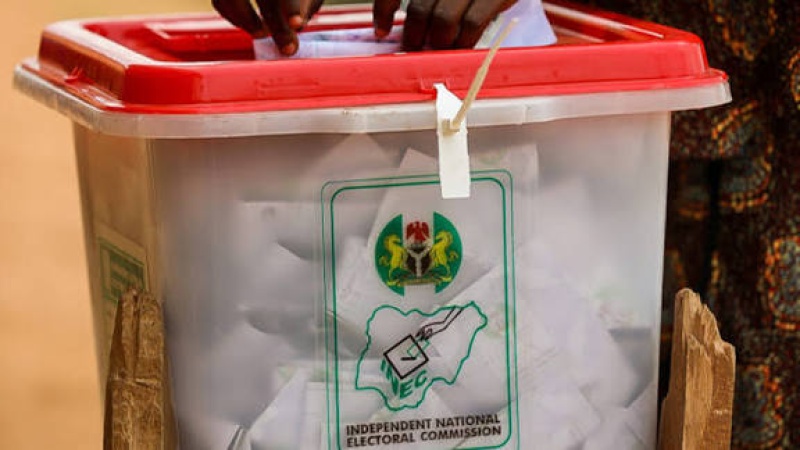
According to him, the various groups advocating Biafra self-determination should channel their demands through peaceful and democratic processes, stressing that a referendum would provide an opportunity for Nigerians to express their preferences on the country’s political future.
Igboayaka also criticised what he described as the silence of the Federal Government over the statement attributed to Jingir, saying that government’s response to sensitive religious rhetoric was important to maintaining confidence in Nigeria’s democratic institutions.
He said the failure to adequately address inflammatory religious rhetoric could create further suspicion among citizens and aggravate existing divisions.
“The Federal Government’s silence means consent,” Igboayaka alleged, arguing that statements capable of heightening religious tension should be treated with caution by political leaders and other public authorities.
He further recalled his New Year message in January 2026, in which he had advised Ndigbo to prepare for what he described as a possible political exit from Nigeria, saying subsequent developments had reinforced his concerns about the country’s ability to manage its religious and ethnic diversity.
The Ohanaeze youth leader called on Nigerians who were uncomfortable with the reported assertion that Nigeria was a Muslim country to support a campaign for a peaceful referendum.
He said such a process, if properly conducted under constitutional and democratic safeguards, could provide an avenue for addressing deep-seated grievances and preventing further escalation of religious and ethnic tensions.
Igboayaka, however, stressed the need for the debate over Nigeria’s future to remain peaceful, insisting that disagreements over religion, politics or self-determination should not translate into violence.
He said the objective should be to protect the lives, rights and dignity of all Nigerians while creating a democratic framework through which competing national aspirations could be addressed.
He concluded that Nigeria’s future should not be determined by religious domination or exclusion, but through dialogue, constitutionalism and the free expression of the wishes of its constituent peoples.