ADAD
ADAD
Updating your news feed...
NEWS EXPRESS is Nigeria’s leading online newspaper. Published by Africa’s international award-winning journalist, Mr. Isaac Umunna, NEWS EXPRESS is Nigeria’s first truly professional online daily newspaper. It is published from Lagos, Nigeria’s economic and media hub, and has a provision for occasional special print editions. Thanks to our vast network of sources and dedicated team of professional journalists and contributors spread across Nigeria and overseas, NEWS EXPRESS has become synonymous with newsbreaks and exclusive stories from around the world.























Loading banners
Loading banners...

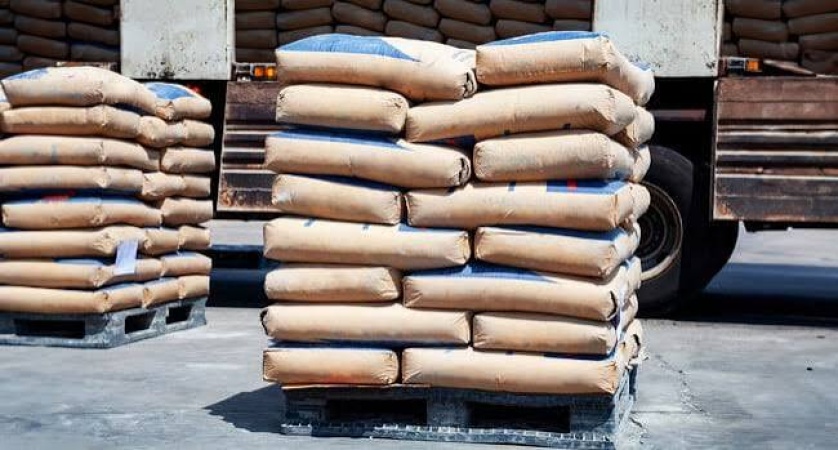
Bags of cement
Nigeria’s cement market has been projected to expand from approximately N3.59 trillion in 2025 to over N5.8 trillion in 2030.
According to a report by the Global Cement Group, the market is expected to grow by 12.6 percent on an annual basis to reach N3.9 trillion in 2026.
This is coming a few days after the three major cement manufacturers in the country: Dangote Cement, BUA Cement and HMB, formerly Lafarge Africa, declared a combined revenue of N3.2 trillion in the first half of 2026.
The growth momentum is expected to remain positive, with the market projected to expand at a Compound Annual Growth Rate (CAGR) of 10.2 percent during 2026-2030, with the market forecast to grow from $1.33 billion to $1.96 billion by the end of 2029.
In local currency terms, projections indicate growth toward over N5.8 trillion by 2030.
The growth is reportedly being driven by public infrastructure projects, urban housing and import substitution.
The report noted that local producers have managed to maintain supplies, despite currency pressure, energy costs and logistics constraints.
“Firms are investing in alternative fuels, digital logistics and energy optimisation to manage volatility and support sustainability targets.
“However, long-term competitiveness will depend on regulatory reforms, energy stability and sustainable resource management,” the statement read.
The annual revenues of the three major cement manufacturers in the country have been projected by industry experts to hit N6.4trillion by the end of the year.
The predicted revenue, in the face of exorbitantly high prices of cement, the built environment experts said, showed there is over-dependence on cement by Nigerian government and home builders.
The prediction followed the impressive growth trajectory in the first half of 2026, with Dangote Cement reporting Nigeria’s revenue of N1. 8trillion, BUA cement (N728. 9 billion) , HMB Nigeria (N678.4 billion).
The performance, experts said reflects sustained demand for cement across residential, commercial and infrastructure projects.
Building materials, especially cement iron rods, have seen significant increases in the first half of the year, with a 50-kilogramme of cement selling at as high as N12, 500 per bag, depending on locations.
While cement manufacturing are smiling to the banks, some Nigerians are questioning the rationale behind the huge profit in the face of high cement price in the country.
Speaking with the Nigerian Tribune, Principal Partner, Ubosi Eleh and Co., Chudi Ubosi, said the issue is not whether cement manufacturers are making money, but about whether the price Nigerians are paying for cement is reasonable, considering the costs of producing and distributing the product, especially government deductions.
To really deal with cement high price, Ubosi said there would be a need for the government and the industry to look at the situation seriously.
Another real estate expert, Osilama Emanuel Osilama, corroborated Ubosi, saying, “We need more transparency, stronger competition (allow others in the manufacturing arm) lower production and logistics costs, and policies that can help bring the cost of building down,” he said.
Rather than seeing the huge profit recorded by cement manufacturers as a rip-off, the Managing Director, Fame Oyster Ltd., Femi Oyedele, said it was due to lack of efficient relationship between Nigeria’s building research centers and the housing policy makers.
“When cement companies are making these huge profits year after year in the face of exorbitantly high prices of cements, it portends that there is over-dependence of people on cement,” he said.
Oyedele blamed the excessive demand of cement on its adoption as a material for concrete road by the Federal Government and demand of cement for housing by home builders and the masses.
“The situation portends danger for the housing sector of the economy as more and more Nigerians will be homeless due to exorbitantly high cost of housing delivery,” he said.
“The only way we can describe the situation is that it is shambolic. The essence of having research institutions like the Faculty of Environmental Sciences in our tertiary institutions and Nigerian Building and Road Research Institute (NBRRI) is to forestall situations like this.
“Manufacturers cannot be making so much profit from the people on essential commodities like cement, which is necessary for provision of a basic need like housing and the governments will fold their arms without finding solutions to address the situation,” he added.
To avoid the shambolic situation, Oyedele urged government to lead in the adoption of alternative building materials that will reduce the consumption of cement in their building construction.
Another real estate professional, Akin Opatola, said the huge revenue declared by cement revenue, certainly raised questions about the affordability of building materials and the broader cost of housing in Nigeria.
From the perspective of the real estate and housing sector, he described the trend as “deeply concerning” as cement is one of the most important inputs in construction.
He argued that sustained increases in cement price would have a direct multiplier effect on the cost of building houses.
He said: “When cement becomes more expensive, the developer’s construction cost rises; this ultimately feeds into the price of completed homes, rents and even land values in some locations.” (Nigerian Tribune)