ADAD
ADAD
Updating your news feed...
NEWS EXPRESS is Nigeria’s leading online newspaper. Published by Africa’s international award-winning journalist, Mr. Isaac Umunna, NEWS EXPRESS is Nigeria’s first truly professional online daily newspaper. It is published from Lagos, Nigeria’s economic and media hub, and has a provision for occasional special print editions. Thanks to our vast network of sources and dedicated team of professional journalists and contributors spread across Nigeria and overseas, NEWS EXPRESS has become synonymous with newsbreaks and exclusive stories from around the world.








Loading banners
Loading banners...

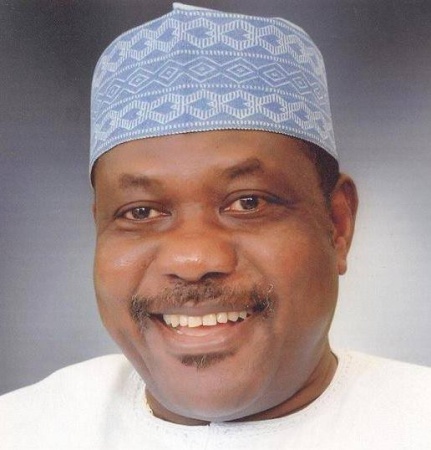
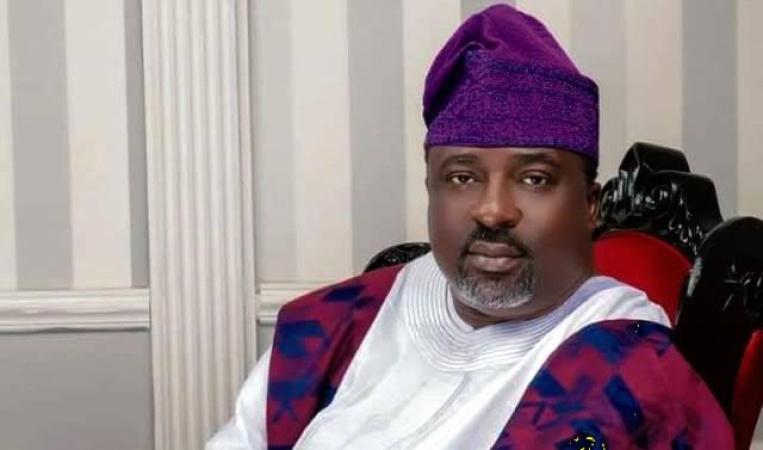
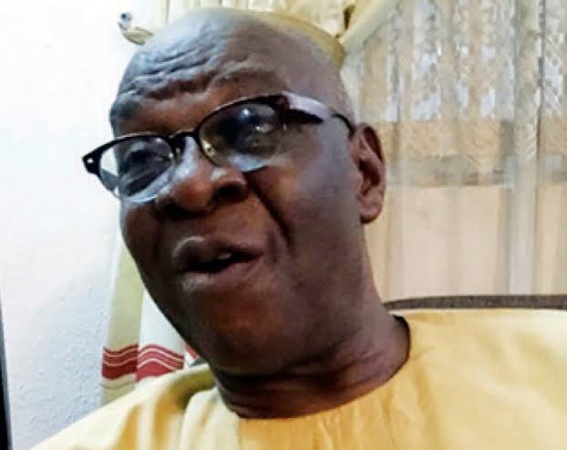
Former Finance Minister, Dr Kalu Idika
A former Finance Minister, Dr Kalu Idika Kalu, has criticised some provisions in the 2026 Budget, noting that government should not be overtly involved in budgeting for renovation of churches, mosques and palaces of traditional rulers given the enormity of the challenges weighing down the country’s economy.
In an interview with VINCENT KALU, the presidential candidate of the New Nigeria Peoples Party (NNPP) in the 2003 election cautioned that those processing the establishment of the state police should ensure that those in charge will lack the operational and legal capacity to deploy it against their enemies and competitors.
He also counselled the Federal Government on
What are your expectations for the 2027 elections?
I should express my hopes. Expectations will be more or less a function of one’s hopes and will now depend on so many variables. I hope that by 2027, we will be able to record another successful democratic transition that will involve far less rancour than we have had in the past. What is so important for any polity is that transition means that the people are able to look back over the previous leadership or the previous governance and make the changes they wish in an open democratic atmosphere with less litigation post-elections, with general acceptance of the principles that underscore our democracy.
So, despite all the noise and thunder, all the multiple gyrations within the political process, political parties; some coming and newly to express their manifesto to the people who will elect them, people moving from one platform to another platform, people changing political parties, and generally a lot of flux – the kind of thing we expected at the very early stages of our democracy. We are now getting them like so many years, half a century after.
We are supposed to be settling down in terms of ideologies that are driven by what the people want. How to build a stable democracy that creates opportunities, a rulership that is close to its electorate, that monitors what those who send them into power want them to do. There should be distinct improvement in transparency in politics, transparency in the financial sector, and in the legal area. Some of these things are the sacrosanct areas we expected.
By 2027, we can see a distinct difference between a new dispensation and the one that succeeded it, and the one that succeeded the one that succeeded it. So, these are some of the expectations. I see hope. But if I would dare to now go directly to the intent of your question, given what has been happening, what expectations? Well, based on the reality before 2027, our expectations are that we are going to be happy that we were able to put that behind us before the actual voting time.
We are elder statesmen now, and we read so many things. We are not politically active on a day-to-day basis, but we still have interest. We have just emerged from a very active group of people who were involved in politics. From the world go, I have never really seen myself as a politician – somebody who is fighting for power, for representation, or something. But mine has always been squarely based on how we use our resources to improve the lives of our people; improve infrastructure of all kinds – roads, rails, power, water etc.
How do we use the resources within the public domain and in concert with the private domain, in concert with foreign contribution, equity, direct investment, to create increasing opportunities for our heavy labour force? We are supposed to be maybe number three soon by 2050, in terms of population. I don’t know how that will go ahead, given our fecundity and our mortality rates, whether we will be able to achieve that net growth in population where we will be only behind India and China. You can imagine that. It boggles the mind where Nigeria is now number three. We are now in a group that still includes Bangladesh, Indonesia, Brazil, and so on. By then, we will have gone ahead of these ones that are close to us now to be number three, only after India and China.
We have to spend the next 25 years before that period to begin to practise good, strong, democratic, sustainable governance. That’s the only way we are going to be able to achieve that. Otherwise, it will be a very dreadful thing where we are just a nuisance. Sorry to use that word. We are a nuisance because of our shared numbers that will be flooding our neighbours and other economies far and near.
Nigerians should be contributing the way they are doing now. We have professionals everywhere, but that can only make sense when we are mobilising them to build our own economy, to help our own people in every village, in every town, in every city, in every state of this federation and the federal capital. No areas where there will be so much differentials in income and facilities, education, hospitals, and so on. That is the way I see it.
The new dispensation should show a distinct beginning of an irreversible departure from chaotic politics, chaotic administration, elections full of disputes, elections that now go to be resolved in the law courts. It is the voice of the people that should be recorded. That should be the thing that basically ushers in the new administration.
In the 2026 budgets, N22 billion was earmarked for innovation of palaces of traditional rulers across the country, and N8 billion was also earmarked for building of mosques and also equipping of churches. What is your view on this?
I have not been opportune to look beyond the broad aggregates of budgets and recurrent revenue, recurrent expenditure, capital expenditure, and perhaps gross debt service and things of this sort. I have not really been opportune to go down into the items.
But just on the face of it, I’m rather surprised that the numbers should be what you put, given what is universally recognised as the needs of the people. Yes, the people need churches and they need mosques and other places of worship as they want, but in the situation where we are; where we are still weighed down in our incomes, we are weighed down in our social amenities, the state is not supposed to be overtly involved in budgeting for churches and mosques not to talk of palaces and things of this sort. So that should really be something to worry about. Those numbers sound very large, even if I cannot readily give you the percentages of the budget.
Government should have clearly other objectives than renovating palaces, churches and mosques. The people in their constituencies as citizens within a particular domain should be the ones looking after that. It should not be the government so overtly involved. But of course, in building infrastructure, in providing electricity and roads, in providing water, ready pipe on water, all season flowing water and so on should enhance the capacity of palaces of traditional rulers, our churches and our mosques to operate, but to have them overtly as items of a budget that people can identify because of their share relative size, I’m surprised if that is the case. So that is really how I see it.
The benchmark for oil price for 2026 budget is about $65 per barrel, while the oil price is hovering between $90 and $100 per barrel, which means the government is making an excess of about $25 per barrel. What should the government be doing in this regard?
First of all, you cannot just assume that because the oil price is where it is now, and the differential between what was used as a benchmark for the budget is way down. Even the most industrialised societies are all being hit by this wave of increases coming from the international situation.
But what one can say offhand is that from the onset, we were expecting all these things that will affect the oil price to be there. So, the best approach is that you build in scenarios of at least maybe two or three dollars. In other words, if the benchmark is 60 something and it goes up to 70, you should have a sizable body of projects, important projects, whether they are already in the budget or a new one that could be taken up in that eventuality.
It should not be something that is happening on a weekly basis, because these prices can go up and come down $5, $10 etc. But if you thought through this and expect this, as our leaders should know, because they are all involved. We are a major country in the UN.
We are in essence part of the subunits of the UN, whether it’s G this or G that. We are somehow represented in some of these groups.
There should be contingency planning, so that irrespective of the differential between the actual and the original, we already have some sort of planning that takes care of it, rather than where we appear to be just watching it happen on a day-to-day basis and then fall to the temptation of scratching our heads on what to do with it and give the impression that we are creating grounds for less than efficient allocation of scarce resources.
Because even at $100, given the realities of Nigeria, in our federal structure, in our state structure, at our local government, we should have infrastructure like power and roads and rails, and then funding for development projects in agriculture, small, medium, and large scale, providing social amenities, education, health, etc.
We have a lot of things to do, so new money should not be surprising to us if we plan ahead. If it gets to $70, $80, or $90, the best thing is always to increase the surplus. You should go to surplus to give you more time to plan how to spend it. There will be nothing wrong with that. That strengthens the price level, that strengthens the exchange rate, and that gives you an opportunity to think through, to make sure you select projects that will meet the needs of the economy, the needs of the people, the needs of education, defence, health, transportation and communications and so on and so forth.
It was reported that Nigeria has exceeded its borrowing limit by N4.7 trillion. What does it mean?
It doesn’t mean very much. What it means is that there are benchmarks, which relate your borrowing to government revenue, if you are talking about public sector borrowing, or related to your export earnings. If you are borrowing in foreign exchange, it’s much easier for you to pay back if your borrowing is not so much in relation to your gross domestic product in an aggregate sense, starting with the latter.
Usually, there’s no magic, there’s no bracket, there’s no ratio that could constitute what you might say you’ve over borrowed. It’s your capacity to pay that you’re doing. If you borrow heavily and you’re able to pay, it is because you borrowed in the right structure.
Borrowing means your interest costs will be as low as possible. Even for commercial borrowing or for non-commercial borrowing, you should borrow at the low interest rates from institutions that give low rates, give you a long maturity; a long grace period to construct what you are borrowing for, and then give you a long maturity to pay back what you have used it to build. Those are the important things, not just some absolute number or even an absolute ratio.
But generally, you shouldn’t allow your borrowing at this level to be more than five per cent of your GDP. It should not be more than 20 per cent of your national revenue. It should not be more than, say, 30 per cent of your export revenue so that you know what you are generating in terms of what you may need to pay back without undue stress, where you are scrambling to convert your currency and so on.
When you are producing exportable goods, you can borrow directly from funds you set up to pay directly for those you borrowed to get the equipment or the essential raw materials or the essential expertise or whatever it is.
There’s no magic to it. There’s no just shouting, oh, we are borrowing and borrowing or whatever. I know a lot of you don’t really understand it, but I’m breaking it down. If you think through what to borrow, you borrow when you need to. You borrow because you can pay back. You can pay back because you are borrowing for a specific project that could produce the wherewithal.
But in the social sectors, it may not be something that gives a percentage rate of return as such. But those social areas, health, education, infrastructure, you can more or less measure the contribution to the economy and its overall viability of the economy to sustain that debt that makes them sensible, not because their rate of return is higher than the rate of interest.
But, for commercial-type borrowing, where you are borrowing, it should be for specific projects that produce marketed goods. It’s easy to measure this and say, okay, your rate of return should be substantially, significantly above the rate of interest.
So, you continue to borrow because you’re expanding capacity, which means you’re expanding employment. But when they now begin to meet, then you know that you have to watch it. You don’t want to go beyond where what you are getting in return is lower than what you are paying for, for the cost of the capital you used.
This is conventional wisdom that is not really meaningful until you go down to the brass facts of the issue. You look before you leap. Once you look before you leap, you can keep leaping until you know that another leap will land you in hot water because you won’t be able to pay back. Until you get there, by borrowing sensibly, you are expanding capacity for the entire economy. I’ve had people who say, ah, we should stop borrowing.
You can say you’ll stop borrowing when you cannot produce effectively to make up for the borrowing, not because it is N100 billion or N200 billion or N300 billion. I’m just giving you examples.
On the other hand, for a developing country, by definition, you mobilise all the savings you want. But if you can produce more, it is very sensible to borrow to expand your investment capacity because you are going to create additional capacity that will more than pay off that incremental cost that you add to your savings to make for the investment.
What is your view on the insecurity in the country?
This is a crying shame because we are where we are for a very long time. Nigeria is a major country. For years we were going and defending other people internally. We’ve contributed to peacekeeping all over the place.
How can it be that Nigeria cannot police its own community, its borders, its innocent citizens, school children, women in marketplaces, farmers, hunters, etc? It is a crying shame that our communities, our defence forces from vigilante to community leaders, traditional rulers, our police, our armed forces; all arms, because when it concerns security, you have to employ everything. Our intelligence organisations by their ability to detect these things ahead of time can help people to pre-empt a lot of these things.
Out there, when you’re outside the country or you’re inside the country, you just read about how people are being gathered in vehicles and kidnapped, taken to the bush, and they stay somewhere in the bush and dare to be making phone calls to relations demanding ransoms. How these demands are discussed as if it’s an ultimatum from some foreign governments; some constituted authorities. It’s a crying shame, it shouldn’t be happening, of all places in a country as large as Nigeria that other countries, certainly in our region, look up to, to provide security.
Before independence, we sent people to East Africa, we sent people to Congo, we sent people everywhere. Through post-independence, we set up ECOMOG to defend West Africa, Sierra Leone, Liberia, and our armed forces have been used by the United Nations everywhere. Why is it not possible to get a structured defence force with the appropriate intelligence arms to be able to prevent so much destruction of our country, to prevent the infusion of so much fear in our villages and small towns and in cities? In fact, these days, no place is exempt, Lagos, Abuja, from all I gathered.
It’s an open question. It is a challenge to the community leaders. I know the security force always says, ‘security is the business of everybody.’ I think they are very right. Villagers have a right to be able to defend themselves, but in defending themselves, we don’t expect them to be carrying arms. We are not America, where everybody can carry arms anyhow. We don’t have the funds to do that. But if the villagers have access to defence information in their local governments, in their state capitals, in the larger urban areas, the information can flow so that those who can forcefully respond, because they are officially commissioned to carry arms, can come in. You can’t just tell villagers to defend themselves. What are they going to do? Go and be wrestling these people or what? So, it is a crying shame.
It’s a ”Ig challenge to the very top, from the presidency, to the Senate, to the House of Representatives, to governors, to the Houses of Assembly, to everybody; public institutions, private institutions.
It has got to the level where the rest of the world must be wondering, how is Nigeria governing itself where buses can be parked in schools and people – men, women, girls, and boys, and so on, are herded into buses and they are being kidnapped and kept in the forest for weeks and months.
It’s totally unacceptable, and I’m yet to read any acceptable explanation for this. So, for our leadership and it’s not just at the very top, at the various levels I’ve pointed to; every single tier of governance; every level of officialdom, their first commitment is the safety of their wards, the safety and security of the people. What else are you doing? If you are building factories, and doing whatever, if the people are not safe, all that is rubbish, frankly. And that is how we expect Nigerians to react.
How can we have our leaders, and this is continuing, why would these people outwit them? We should be trained on how to waylay these people, dress like them, stalk them, and surprise them, and capture them, and once they have been captured, they must be brought to book. That’s where the judiciary comes in, from the police to prisons, to the major police stations, to the major levels of the magistracy and the judiciary.
The question of due process must be there. The certainty of punishment should be known to everybody, not discussing ransom, discussing changing of hands. The whole question of amnesty and bringing the people back is something that should be clearly obvious and how it should be handled. It cannot be just haphazard. You gather people, you keep them somewhere, and then you come back later, and you bring out the Bible, bring out the Quran, you all sing and pray and say, okay, go back, refrain from committing more crimes. There must be more certain ways of rehabilitating that.
Those who have committed murder, the law should take its course, no matter who they are, no matter how many they are, no matter where they come from. Our borders should be patrolled effectively to make sure that these criminals are not foreign elements. I know all these factors come into it, but it’s the responsibility of our government to know the structure of this violence, the source of this violence, and to make sure that the law is administered to protect the citizen, wherever they are, whether it’s in Borno, Ogun, Cross River, or wherever. The citizen deserves the protection of the law. They should have their habeas corpus. That’s an ancient doctrine. People should be free to move about their own lawful engagements without fear of being kidnapped. Parents must be sure that when they send their children to school, they won’t be, any fear from having proper protection in the structure of the school, to having responsible people administering the schools, to having proper security, looking out for any source of danger for these invaluable citizens of our future. Where you have dozens and scores being kidnapped, it’s an outrage with no buts to it. It’s an outrage.
So, I’m sorry, you’re asking me a very, very sore point. I feel very strongly about it. I think every Nigerian feels very strongly about the state of our security, there’s no question, and for it to have lingered this long is totally unbelievable.
So, any administration that is worth its salt, this must be their commitment. That’s what the constitution says. That’s their first commitment. Whether it’s political, or economic, or religious, or ethnic, you cannot have it in any modern state, and Nigeria should not tolerate it. It has gone on for too long.
Against this background of insecurity, the government is tinkering or coming up with state police. How can it be handled so that governors or whoever will not take advantage of it to suppress opposing views?
The Issue of state police goes back to the early days of our independence; the rambunctious days of Wetie. Nigerians have always been so partisan, politically. We are talking about heterogeneous communities, and within heterogeneous communities you have different religions, within different religions, you have different sects, within different sects, you have different dialects, and within different dialects, you have naturally communities struggling over land issue, water issue and over whatever.
There are so many cleavages in a big country like Nigeria, a country that is going to be close to 500 million in less than 30 years. When you have cleavages, the fear has been that those who control police within these various cleavages will take advantage of it. You begin to see something like, ‘go and arrest that guy, he wants to come and run against me; go and arrest that guy, he is encroaching on my land. Go and arrest that guy he’s gathering support in his political party against me.’
All kinds of weird images come to the Nigerian mind when we talk about state police, and we assume that if they are federalised that would be minimal. But, of course, it can also be used because we don’t all have equal access to federal police. Even though they are federal, as long as there’s no equal access to that force, it can be deployed against your own interest whether it’s your state or your religion or your tribe or your sub-tribe or your village, or each of these constituents that has even those diverse divisions.
Naturally, we have to be very careful of what we are trying to do. The positive aspect of this from the word go, is that the federal police cannot penetrate to administer security down to the grassroots. So, you need it to be tiered up so that the positive elements of maintaining peace, law and order are divested down to the local level. That is the positive aspect of the state police. However, the negative aspect is that because we are immature in relative terms, the tendency, and the temptation to deploy this peculiar force to oppress people you don’t like; even people who are competing against you legitimately in business or politics, are there. Your real or imaginary enemies or competitors don’t have the same access to this peculiar force.
The bottom line depends on how it’s structured, the quality of their training, how they are supervised, the application of discipline, administration for the state police.
The last I heard was that people are thinking of creating zones, and it will be at the level of the six zones. The decentralisation for federal will go first to the zones and not to the states. I don’t know what that means because even at that, the zones consist of six, seven states. The principles are still the same – proper training, proper supervision, administration of laws and regulations devoid of any personal interests, economic, religious, and political or what have you.
For sure, it depends on how it is structured. You can’t vote on it and go home and think you’ve solved it, no. It could be a continuous process of making sure that it works. You go to some countries, they’ve had this for generations, but they still have problems, but by and large those problems would be problems of administration and not problems of bias and misuse of personal power for selfish interests, whether it’s political or economic or so. (The Sun)