ADAD
ADAD
Updating your news feed...
NEWS EXPRESS is Nigeria’s leading online newspaper. Published by Africa’s international award-winning journalist, Mr. Isaac Umunna, NEWS EXPRESS is Nigeria’s first truly professional online daily newspaper. It is published from Lagos, Nigeria’s economic and media hub, and has a provision for occasional special print editions. Thanks to our vast network of sources and dedicated team of professional journalists and contributors spread across Nigeria and overseas, NEWS EXPRESS has become synonymous with newsbreaks and exclusive stories from around the world.

















.webp)





Loading banners
Loading banners...

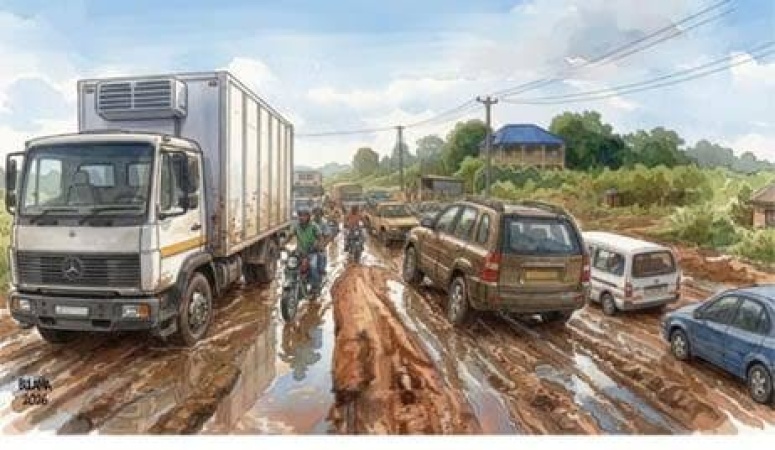
Every day, thousands of heavy-duty trucks transporting goods between Lagos and northern Nigeria travel along the Bida–Lapai road in Niger State, one of the country’s most strategic economic corridors. The highway serves as a vital link between the seaports in Lagos and markets across the North, while also providing a route for the movement of agricultural produce and livestock to southern Nigeria. Yet, despite its importance to the country’s economy, the road is in a state of severe disrepair.
Years of neglect have left the highway riddled with deep potholes, damaged asphalt and long stretches that have become hazardous for motorists. Transport operators say the deteriorating condition of the road has led to frequent vehicle breakdowns, prolonged travel times, rising transport costs and repeated accidents involving heavy trucks, resulting in loss of lives and properties on a daily basis. They warn that the situation is not only disrupting the movement of goods but also increasing the cost of doing business and ultimately affecting the prices of commodities in markets across the country.
For thousands of truck drivers, traders and communities whose livelihoods depend on the Bida–Lapai road, the issue goes beyond a failing highway. It is a story of lives at risk, businesses under pressure and an economy bearing the cost of neglected infrastructure. As motorists continue to navigate the dangerous route daily, they urge the federal government to urgently rehabilitate the road before more lives and livelihoods are lost.
Road taking lives
For members of transport unions, the poor state of the road is no longer just an inconvenience; it has become a matter of life and death.
Abdurahman Umar Gimba, a member of the National Truck Drivers Associations, said transport unions had been forced to devise their own safety measures to minimise casualties among motorists and members of surrounding communities. He lamented that every journey carried significant risks, especially for heavy-duty vehicles transporting goods across the country.
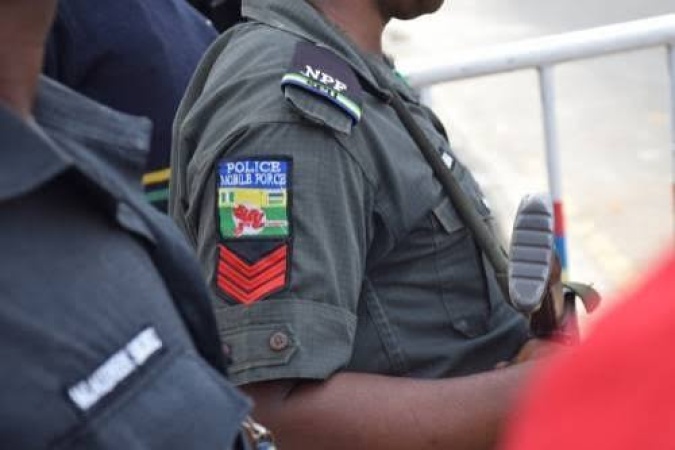
He told Weekend Trust that many lives have been lost on the road, prompting members of drivers unions to adopt measures aimed at reducing the risks to commuters. He noted that a taskforce committee was formed with the support of the police area commander and saddled with the responsibility of controlling the movement of heavy trucks in and out of Bida town.
“Just recently, trucks killed three commercial motorcycle riders; that’s why we are here to control them. We restrict their movement from this point opposite the police area command towards Bida town. And we communicate with our members at the other end of the Bida-Lapai road, which is in severe deteriorating condition.
“As traffic moves, we release 50 to 60 trucks at a time and stop the rest. And when the road is free, we release another batch. This is what we have been doing, day and night. And if we fail to do it, there will be more casualties as the accidents caused by the bad road condition are too much,” he said.
Lamenting that every journey comes with significant risks, especially for heavy-duty vehicles transporting goods across the country, Abdurahman Gimba urged the authorities to come to their aid by fixing the road.
The nightmare continues
Commercial drivers said the deteriorating state of the road had significantly increased vehicle maintenance cost, with tyres, suspension systems and steering components wearing out faster than expected.
Traders transporting food and other goods also face delays, while passengers endure longer travel times, higher transport fares and increased fuel consumption.
Muhammed Sani, a truck driver who was transporting bags of soya beans loaded on his truck from the North to Ibadan, told Weekend Trust that he had spent three days covering less than 40 kilometres before his truck overturned because of the condition of the road.
He said: “This is what we face daily on this road. My truck overturned after spending three days covering less than 40 kilometres. The loss is enormous. We appeal to the government to urgently repair this road.”
or drivers like Sani, every breakdown means not only expensive repairs but also damaged goods, delayed deliveries and lost income.
The physical damage to the road is obvious. Massive craters punctuate long stretches of the highway, while broken pavement forces vehicles to weave dangerously from one side of the road to another in search of safer paths. During the rainy season, pools of muddy water conceal the true depth of the potholes, making accidents almost inevitable.
Beyond the damaged surface lies a deeper story, one of livelihoods threatened, businesses disrupted, lives lost and communities left to bear the burden of failing infrastructure.
For commercial transport operators, the Bida–Lapai road has become an expensive obstacle to doing business.
Drivers who once completed trips within hours now spend days navigating less than 100 kilometres. The slow pace of movement translates into higher fuel consumption, frequent mechanical breakdowns and reduced earnings.
Every damaged section of the highway leaves another victim behind: a burst tyre, broken suspension system, damaged steering rack or an overturned truck.
Passengers also pay the price as transport fares have steadily increased as operators struggle to recover the soaring cost of vehicle maintenance.
What should be a routine journey has become an exhausting experience marked by delays, discomfort and uncertainty.
Frustration mounts
A truck driver, Usman Jaba, a member of the GDN Truck Drivers Association, described the Bida–Lapai road as a disaster requiring immediate government’s intervention. According to him, drivers have reached a point where they can no longer depend solely on repairs by the government.
He said transport operators had collectively spent millions of naira filling dangerous potholes and carrying out temporary repairs, simply to keep the road passable.
Weekend Trust reports that while these community efforts provide short-term relief, they fall short of the comprehensive rehabilitation the highway desperately needs.
“We are unable to wait any longer for government’s intervention. Truck drivers plying the deteriorating Bida–Lapai road have taken the unusual step of contributing money among ourselves to carry out emergency repairs on some of the worst sections of the highway.
“Our decision was not about taking over government’s responsibility but protecting lives, preventing accidents and reducing the huge financial losses caused by the road’s worsening condition. Our food is on this road – truck drivers depend on it to feed our families and pay the school fees of our children.
“Without this road, people in northern Nigeria cannot have access to fuel and other commodities transported from the seaport to the North. Also, people in the southwestern part of the country will not have access to foodstuff and animals being transported from the North to their region. Unfortunately, despite all these, this road has been abandoned for over eight years.
“You would notice that we are now under a higher tension because the main highway is no longer motorable,” he said.
According to him, they heard that the federal government had approved the rehabilitation of the road since February this year. It is six months later, but we have not seen any sign of improvement on the side of the federal government. We also heard recently that Dangote would be the one to rebuild the road. As you can see, this is a truck conveying Dangote’s fertiliser which just overturned. Even if it is not affecting him, it is affecting his customers. You can also see another container for Inland Port heading to Kano that has also overturned. Another one carrying scrapped mental from the North also overturned. At this point, over five trucks have overturned. This is what is happening on a daily basis along the Bida-Lapai road.
Usman Jaba added that under a normal condition, heavy trucks conveying goods to or from Kano, Kaduna and Barno axis, would have to follow the Bida-Lapai road as their best route is Kaduna-Birnin Gwari.
“But due to the deteriorating state of that Birnin Gwari-Kaduna road and issues with insecurity in that axis due to the presence of bandits, truck drivers were forced to ply Bida-Lapai, which is an additional 120-killomer distance or more. If the Kaduna-Birnin Gwari is in a good condition, the bandits would not have the opportunity to incubate. It is the deteriorating condition of this road that allows bandits to operate, he added.
He said that in the last six months, drivers had contributed nothing less than N20 million to fix the road, adding, “If we were not doing the repair, this road would not be motorable for now. And we can only do it in our own little way. Let them do it even if they are going to construct a tollgate and regain what they spent.”
Environmental hazard
Residents living along the Bida–Lapai road are raising concern over the growing environmental risk posed by frequent accidents involving trucks and other vehicles transporting industrial chemicals.
They said the poor condition of the busy highway had led to repeated crashes, leaving hazardous substances to spill onto surrounding farmlands, drainage channels and nearby communities.
According to Isa Alhaji Sani Dankwarai, many of the spills are never properly cleaned up, raising fears of soil and water contamination, health risks and damage to agricultural lands.
“Just two days ago, a truck carrying chemical, which was unknown to us, overturned and spilled the chemical here. We don’t know what the chemical is, but many trees and grasses have burnt down. The chemical has even gone deep into the underground water that residents depend on. I learnt that some children were hospitalised a day after the incident because they drank from one of the wells,” he said.
e said farmers were also worried that continued exposure to the chemicals could reduce crop yield and endanger livestock, while community members are in panic as the leaking substances are often washed into streams and wells during the rainy season.
Isa Dankwarai also criticised the slow response to accidents involving hazardous materials, noting that overturned trucks sometimes remain at crash sites for hours or days without proper containment of the spills.
Dankwarai also urged the federal government to urgently rehabilitate the Bida–Lapai road, calling on environmental and emergency agencies to investigate the repeated chemical spills, assess their impact on surrounding communities and ensure that contaminated sites are properly cleaned before the situation develops into a larger environmental crisis.
Drivers count losses
Truck drivers said almost every trip on the road came with a high cost, revealing that many people complain of damaged tyres, broken suspension systems, cracked axles and increased fuel consumption.
Muhammed Bashir, a transporter, said the poor state of the road also increased the cost of moving goods across the country, a burden that is eventually passed on to consumers. One driver explained that the money they contribute voluntarily was less than what they would spend repairing vehicles damaged by the road.
“If we don’t fix these dangerous spots ourselves, we risk losing our trucks, goods and even our lives,” he noted.
Residents and motorists said the sight of truck drivers repairing a federal highway highlighted the growing frustration among road users.
Rather than wait indefinitely for rehabilitation works, many believe that temporary community efforts have become the only option for keeping traffic moving.
Transport unions and motorists also said that while the repairs carried out by the drivers provided temporary relief, they could not replace a proper engineering work required to reconstruct the highway, adding that the dangers extend beyond accidents and financial losses as they heighten security concerns.
Weekend Trust reports that many drivers now avoid travelling when it is dark, preferring to wait until daylight despite the resulting delays.
For transport operators working under tight delivery schedules, this has become another costly consequence of the bad state of the road.
Residents along the Bida-Lapai corridor said they had repeatedly appealed to successive governments to rehabilitate the highway to no avail.
For many communities, the road serves as a lifeline connecting farms, markets, schools and health care facilities.
Businesses also report declining patronage as travellers increasingly avoid the route whenever possible.
To many Nigerians who have never travelled the Bida-Lapai road, discussion often centres on potholes. But for those who use the highway daily, the story runs deeper. It is about children waiting longer for parents to return home safely. It is also about traders watching profits disappear because goods arrive late, transport operators spending more on repairs than expanding their businesses, and lives cut short by avoidable accidents.
Above all, it is about communities whose economic survival depends on a road that no longer serves its purpose.
Despite years of complaints and repeated promises of rehabilitation, road users said they continued to endure the same hardship.
As traffic inches through damaged sections of the highway each day, motorists remain hopeful that meaningful intervention would finally restore one of Niger State’s most important transport corridors. Until then, every journey along the Bida-Lapai road remains a reminder that the cost of neglected infrastructure is measured, not only in damaged vehicles but also in lost time, shattered livelihoods and, too often, human lives.
The Bida–Lapai road, which remains one of the busiest highways in the North-Central, provides access for agricultural produce from Niger and neighbouring states to markets across the country, while also serving as a major route for goods moving between northern and southern Nigeria.
Frequent vehicle breakdowns and traffic delays on the road have raised transportation cost and affected businesses that rely on timely deliveries.
Meanwhile, road users are urging the federal government to accelerate comprehensive reconstruction of the highway, warning that continued delays could lead to more accidents and economic losses.
The federal government had, in previous years, acknowledged the strategic importance of the Lambata–Lapai–Bida road and assured road users that rehabilitation would continue under road infrastructure funding programmes.
For the truck drivers now spending their own money to fill potholes however, the message is simple: Until permanent repairs are completed, they have little choice but to help keep one of Nigeria’s busiest highways passable.
Dangote confirms preparation for road construction
Dangote Group has confirmed that it is continuing preparation to commence the construction of three major roads in Niger State under the federal government’s Road Infrastructure Tax Credit Scheme.
The confirmation was given by the company’s spokesman, Tony Chiejina, in response to inquiries about the projects by Weekend Trust.
According to him, the roads covered under the project are Mokwa–Bida, Bida–Lambata and Mokwa–Tegina with a combined length of approximately 410 kilometres.
The company stated that technical assessments and project planning were underway to ensure that all the requirements were completed before contractors are mobilised to the project sites.
It stated that contractors were expected to be deployed to the sites between now and the end of the third quarter of the year provided the ongoing preparation is completed as scheduled.
Dangote also disclosed that the construction work was expected to take 30 months from the official commencement date.
The update came amid a growing public interest in the planned reconstruction of major roads in Niger State, particularly the Bida–Lambata road, which has remained in a bad condition for many years. (Weekend Trust)