ADAD
ADAD
Updating your news feed...
NEWS EXPRESS is Nigeria’s leading online newspaper. Published by Africa’s international award-winning journalist, Mr. Isaac Umunna, NEWS EXPRESS is Nigeria’s first truly professional online daily newspaper. It is published from Lagos, Nigeria’s economic and media hub, and has a provision for occasional special print editions. Thanks to our vast network of sources and dedicated team of professional journalists and contributors spread across Nigeria and overseas, NEWS EXPRESS has become synonymous with newsbreaks and exclusive stories from around the world.














Loading banners
Loading banners...

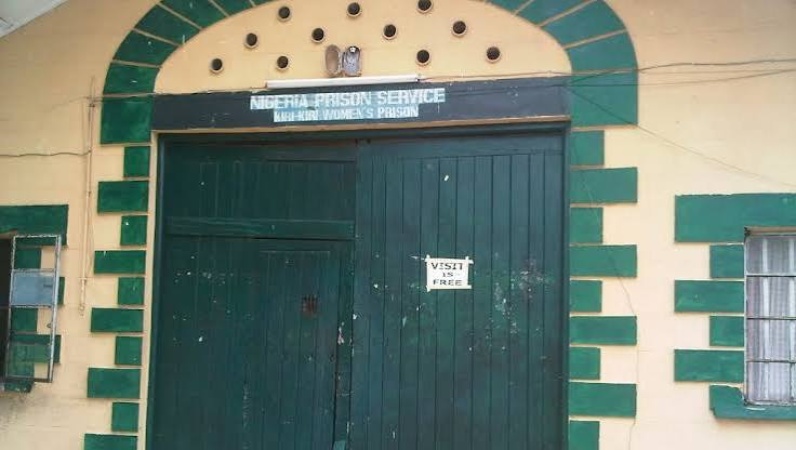
The Kirikiri Correction Center
The first thing that strikes a visitor or listener when Kirikiri is mentioned is ‘maximum prison.’ However, there is more to this community beyond the prison, as before sunrise, scores of commercial motorcycles snake through the two narrow roads linking the community with Mile 2, Apapa and Lagos Island. Kirikiri is a well known area in Apapa, Lagos State, famous for housing the Kirikiri Maximum Prison, a major federal correctional facility established in 1955.
The unending queue of trucks entering the community to lift petroleum products from the numerous tank farms lines both sides of the roads, with urchins collecting tolls from the trucks. During school hours, pupils in crisp uniforms dodge motorcycles as they navigate their way to classrooms, while the aroma of fried akara and freshly baked puff-puff from roadside kiosks at the entrance into Kirikiri community fills the air.
From the waterfront, wooden fishing boats glide across the calm waters as fishermen return with the morning’s catch. Nearby, barges ferry goods between jetties, a reminder that Kirikiri’s economy, has always been tied to Lagos’ maritime heritage.
Yet, outside the community, few people know this side of Kirikiri.
For millions of Nigerians, the name evokes only one image, the sprawling correctional centre that has, for decades, made Kirikiri synonymous with incarceration.
Most residents said single narrative had eclipsed the story of a thriving neighbourhood, where generations have lived, worked and built their futures.
At 66, High Chief Babatunde Babalola Shabi, the Baale of Kirikiri town, has watched the community transform from a sparsely populated settlement surrounded by mangrove vegetation into one of Lagos’ busiest working-class communities.
“When I settled here in the late 1970s, there were more cashew trees than houses. The prison was already part of the landscape, but nobody imagined that one day, the entire community would become known only because of it,” he recalled.
Pointing towards a busy street filled with tricycles and traders, he said: “Look around you. Does this look like a prison? This is a living community.”
According to Shabi, his greatest disappointment is that outsiders seldom see beyond the prison gates.
He said, “I have children who are professionals. Whenever they tell people they are from Kirikiri, the first reaction is always about prison. Imagine carrying that stereotype throughout your life.”
The traditional ruler narrated how the community assists warders in ensuring that inmates never abscond when they come out to do public work. “I remember how some inmates tried to escape during the COVID-19 period. About six or seven of them had a hashed plan of how to burrow a hole through the prison walls without knowing that the surrounding environment is a tick-reptile-infested mangrove swamp. The Navy assisted the hunt with their helicopter. The fleeing inmates were tracked down into the swamp. About two of them had been eaten up by crocodiles before security operatives got to them,” he said.
Another resident of the area who identified himself as James Oyinkro disclosed that he moved into Kirikiri town with his parents many years ago. He said the town was more of a fishing community than what it is today.
“As a young man I used to go fishing with my late parents along the Kirikiri creeks. It was a community of very few people. There was a small airstrip in the area. Smaller aircraft landed and took off carrying some Europeans who were in charge of the construction of Tin-Can Island port,” he noted.
He also said that as young boys, they usually rushed to the airstrip to watch the landing and takeoff of the aircraft, adding that those who owned small fishing trawlers started setting up small offices by the jetty.
Long before the correctional centres became household names, Kirikiri was sustained by water. Along the waterfront, fishermen repair torn nets beneath makeshift sheds, while wooden canoes bob gently against the shoreline.
The air carries the smell of smoked fish and salt water as traders negotiate prices with buyers from neighbouring communities.
A 58-year-old fisherman, Bassey Edet, who has spent nearly three decades on the waters said, “The lagoon feeds many families here.
“People think Kirikiri is only a prison, but many households survive through fishing, marine transport and waterside trading.”
Our correspondent reports that children run along the shoreline as barges loaded with building materials and industrial supplies navigate nearby channels, illustrating how the waterways remain vital to commerce.
Factories that keep Lagos moving
Beyond the residential streets are Kirikiri industrial estates, where thousands of workers report daily at manufacturing companies, warehouses and logistics firms serving Apapa Port and Tin Can Island.
Edet, however, noted that most of the factories relocated because of heavy traffic into the area.
At one tank farm, a machine operator, Ibrahim Musa, said most outsiders had no idea that Kirikiri supported a large industrial workforce.
“We handle all petroleum products which trucks distribute across Nigeria. Every morning, workers come here from FESTAC, Satellite Town, Amuwo-Odofin and even Ogun State,” he said.
He believes the prison has unfairly overshadowed the area’s contribution to Lagos economy, saying, “We help industries to grow, yet people remember only the correctional centre.”
Inside the warders’ quarters, a welder, Emmanuel Okafor, wiped sweat from his face as sparks flew from a steel fabrication workshop.
He said, ‘There are hundreds of artisans here – mechanics, electricians, carpenters, painters and welders. Our workshops train apprentices who later establish businesses across Lagos. We work on Tokunbo cars and do other repair works.”
Shaping future leaders
By the side of Kirikiri police station is Dr Lucas Secondary School, where a police officer recounted the daily routine: “Every day, the morning assembly echoes with the national anthem before students disperse into classrooms.
The policeman, who didn’t want his name mentioned, said former students of the school had become medical doctors, engineers, lawyers, academics and entrepreneurs.
“Some of the old students once told me that they were often surprised when people reacted negatively after hearing they lived in Kirikiri. But the always reply that excellence speaks louder than address,” he said.
A market that never sleeps
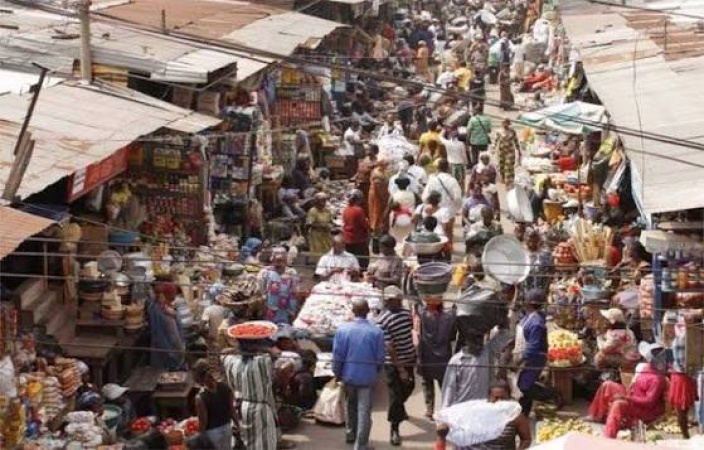
By midday, Kirikiri market becomes a sea of colour and sound. Inside the market, traders display baskets of tomato, pepper and onions, alongside smoked fish, fabrics, electronics and household items, with customers bargaining loudly as wheelbarrow pushers navigate crowded pathways.
Saying that business often begins before dawn, a market leader, Alhaja Rukayat Bello noted, “Our customers come from many parts of Lagos. If Kirikiri was only about prison, these markets would not be this busy.”
She estimates that thousands of people earn their livelihood directly or indirectly through commercial activities in the community, adding, “We don’t make headlines because we are simply trying to make honest living.”
For younger residents, the prison has become an unavoidable part of their identity even though they have never stepped inside it.
Ifeanyi Okoli, one of the youngest chiefs in the area, said he vividly remembered how some of his classmates laughed at him whenever he mentioned where he lived.
“They usually asked if I greeted prisoners every morning. It was embarrassing until I invited some friends home. They couldn’t believe that Kirikiri looked like any other Lagos neighbourhood,” he noted.
A history longer than the prison
Local historians said Kirikiri’s strategic location along Lagos waterways attracted fishing communities, traders and later industrial development long before the correctional facility became nationally recognised.
Its proximity to Apapa’s ports, Tin Can Island and major transport corridors encouraged manufacturing firms, warehouses and marine-related businesses to establish operations in the area.
As Lagos expanded westward, Kirikiri evolved into a mixed residential, industrial and commercial community.
The correctional centres undoubtedly became its most famous landmark, but they never represented the whole story.
Meanwhile, the community development association elder, Chief Adebayo, believes that changing public perception would require sustained storytelling.
“We are not ashamed that the correctional centre is here. It serves an important national purpose. What we reject is the assumption that everyone who lives in Kirikiri is somehow connected to prison” he said.
He noted ongoing community sanitation projects, youth empowerment programmes, neighbourhood security initiatives and religious organisations supporting vulnerable families, saying, “This community has produced successful people in every profession.”
Long before the endless procession of petroleum tankers became part of its identity, Kirikiri was known for quiet residential settlements, fishing communities and the imposing correctional centres that made its name popular across Nigeria and beyond.
Today, however, the Lagos suburb has acquired a new nickname: “Tank Farm Village, a name coined by residents, truck drivers and commuters who have watched the community transform into one of the country’s busiest petroleum storage hubs.
At daybreak, Kirikiri awakens not to cheerful songs of birds welcoming the new day but the thunderous roar of diesel engines with hundreds of fuel tankers queuing up patiently along narrow roads leading to sprawling petroleum depots that dominate the skyline. Steel storage tanks tower over homes, while the smell of petrol hangs permanently in the air.
For many residents, the new identity is one of mixed blessings.
The tank farms have brought jobs and commercial activity. Roadside food vendors, mechanics, vulcanisers and spare parts dealers now rely heavily on the steady stream of tanker drivers and depot workers.
Prosperity with a price
Our correspondent observed that small businesses have sprung up to serve the booming petroleum logistics industry, turning once quiet streets into bustling commercial corridors, translating to prosperity coming with a price.
Traffic congestion has become a defining feature of everyday life. During school hours, schoolchildren weave through parked tankers to reach their classrooms, while commuters spend hours navigating roads clogged by articulated vehicles waiting to lift petroleum products. Residents speak of sleepless nights caused by the constant movement of heavy trucks and the fear that an accident or fire could trigger a catastrophe.
Environmental concerns have also become part of daily conversation, with many residents concerned about air pollution, deteriorating roads and the long-term health implications of living among massive petroleum storage facilities.
But High Chief Shabi told our correspondent that most of the roads and drainages had been rehabilitated by some of tank farm owners.
Despite these challenges, life continues, with markets opening before sunrise.
To outsiders, Kirikiri may simply be another industrial district, but for those who call it home, it is a community caught between opportunity and sacrifice, a neighbourhood that has become indispensable to Nigeria’s fuel distribution network while struggling to preserve its own identity.
As evening approaches, workers return from factories, fishermen pull in their final nets and children chase footballs across dusty playgrounds.
Calls to prayer mingle with church bells as roadside restaurants fill with customers discussing football, politics and the rising cost of living. It is an ordinary Lagos evening. Yet for the people of Kirikiri, ordinary has always struggled to compete with a name that evokes extraordinary images.
Behind the towering prison walls is a community that has spent decades nurturing dreams, educating children, building businesses and sustaining industries; hence residents want Nigerians and others to look beyond the prison walls and see the other side of the community. (Weekend Trust)