ADAD
ADAD
Updating your news feed...
NEWS EXPRESS is Nigeria’s leading online newspaper. Published by Africa’s international award-winning journalist, Mr. Isaac Umunna, NEWS EXPRESS is Nigeria’s first truly professional online daily newspaper. It is published from Lagos, Nigeria’s economic and media hub, and has a provision for occasional special print editions. Thanks to our vast network of sources and dedicated team of professional journalists and contributors spread across Nigeria and overseas, NEWS EXPRESS has become synonymous with newsbreaks and exclusive stories from around the world.












Loading banners
Loading banners...

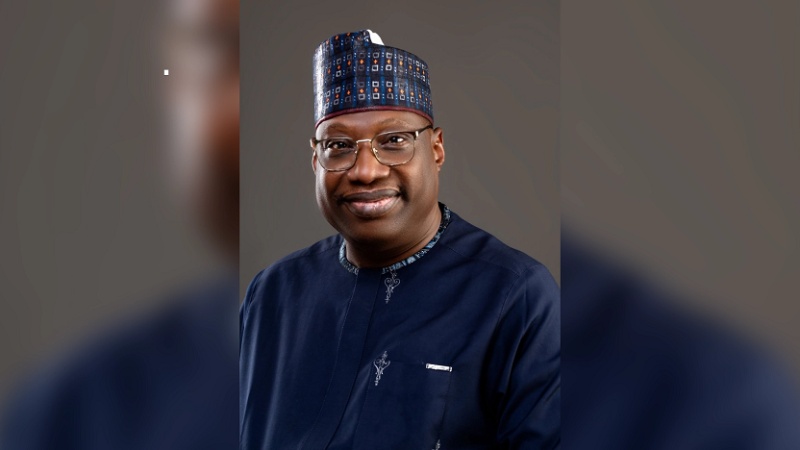
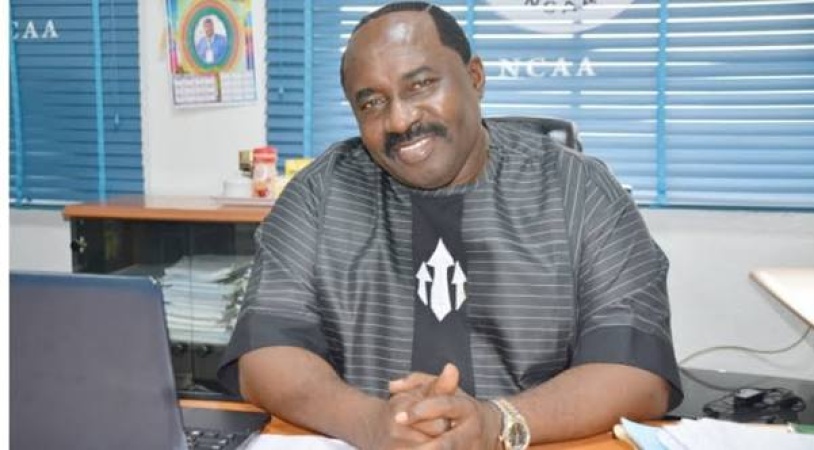
Director-General of the Nigerian Civil Aviation Authority, Chris Najomo
Nigeria’s aviation industry is heading towards another confrontation as labour unions threaten to shut down domestic airline operations over non-remittance of the five per cent ticket sales charge (TSC). While the Civil Aviation Act 2022 makes the failure to remit the levy a criminal offence, the controversy has evolved beyond compliance into a broader debate on whether airlines should continue to collect statutory charges on behalf of the government in an era of digital payment, OLUSEGUN KOIKI reports.
What appears on every airline ticket as a routine statutory deduction has become one of the most controversial issues in Nigeria’s aviation industry.
The five per cent ticket sales charge (TSC), a levy paid by passengers and collected by airlines on behalf of the government, has once again exposed the fragile relationship among regulators, airline operators, labour unions, and other aviation agencies.
The TSC is shared among five aviation agencies as follows: the Nigeria Civil Aviation Authority (NCAA), 56 per cent; Nigerian Airspace Management Agency (NAMA), 22 per cent; Nigerian Meteorological Agency (NiMet), nine per cent; Nigerian College of Aviation Technology (NCAT), seven per cent; and Nigerian Safety Investigation Bureau (NSIB), with six per cent.
In recent months, the dispute has escalated from regulatory correspondence to public exchanges, threats of industrial action and calls for legislative reforms.
The controversy has also raised questions about whether airlines should continue to serve as tax collectors for government agencies, despite the numerous digital platforms available to make such collections seamless and prompt.
To ensure prompt remittance of the charge, Section 23(10) of the Civil Aviation Act 2022 criminalised non-remittance of 5 per cent TSC by any air operator.
The act reads: “An air operator, which fails to remit or pay to the authority, within the time specified in the relevant regulations made under this Act, the five per cent of airfare, contract, charter, cargo, sales charge and management fee collected under this section, commits an offence and its directors are each liable on conviction to a fine of N5,000,000 or imprisonment for a term of two years or both.”
But, despite this provision, collection of the charges has been difficult, with the debt purportedly climbing to about N12 billion as of May this year, while the NCAA has also failed to implement the law as stipulated in the Act.
The latest controversies began in February 2026 when the NCAA summoned members of the Airline Operators of Nigeria (AON) to Abuja over the remittance of the charge.
The meeting followed the authority’s decision to introduce Advance Payment Guarantees (APGs), a bank-backed financial instrument intended to ensure that airlines promptly remit passenger charges collected on behalf of the government.
The Director-General of Civil Aviation, Chris Najomo, at the meeting, reminded airline operators that the Civil Aviation Act 2022 empowers the NCAA to collect the five per cent TSC on a cost-recovery basis, insisting that the money did not belong to the airlines.
According to him, it represents funds already paid by passengers and held in trust pending remittance to the NCAA for onward distribution among aviation agencies.
Najomo expressed concern over persistent delays in remittances, saying the APGs were designed to improve compliance, guarantee predictable funding for safety oversight and strengthen financial discipline within the industry.
Knowing the financial challenges confronting operators, however, the NCAA granted a 90-day deferment to allow operators to regularise outstanding remittances before enforcing the new requirement.
But three months after the meeting, the NCAA suspended the planned enforcement of the ‘no pay, no service’ directive that had been imposed earlier on some operators.
Najomo had said the temporary suspension of the directive followed extensive consultations with stakeholders and a review of prevailing operational realities in the aviation industry, particularly the rising cost of Jet A1 and the need to maintain stability in the sector.
However, rather than the suspension assuaging the challenge and encouraging compliance, it has degenerated further, with the industry unions stepping in to issue threats to enforce payment by air operators.
The National Union of Air Transport Employees (NUATE) and the Air Transport Services Senior Staff Association of Nigeria (ATSSSAN) issued notices threatening to picket airlines accused of withholding TSC.
The unions, in a joint circular signed by Frances Akinjole and Odinaka Igbokwe, ATSSSAN General Secretary and NUATE Deputy General Secretary, respectively, argued that after a 14-day ultimatum and a subsequent seven-day extension expired without compliance, they had no option but to mobilise workers to stop flight operations by defaulting airlines.
According to the unions, some airlines had deliberately retained statutory funds collected from passengers, thereby depriving aviation agencies of resources required to maintain safety oversight, air navigation, accident investigation, weather forecasting and aviation training.
The unions said: “It has become crystal clear that these airlines that collected this money from the passengers on behalf of the aviation agencies have decided to siphon the fund to the detriment of our collective safety and well-being.
“Hence, our unions, in safeguarding the interests of the airport workers, and in general, the safety of the flying public, have decided to stop the operations of the cancerous airlines in our airports at any time from now, without any further notice.”
However, the President of AON, Abdulmunaf Yunusa Sarina, insisted the airlines were not debtors and described the unions’ intervention as unnecessary and misplaced.
Sarina, in a statement, declared that every regulatory activity performed by the NCAA was invoiced and fully paid for before services were rendered.
Besides, the association insisted it had no transactional relationship with unions regarding TSC remittances. It maintained that discussions on the matter were already ongoing with the NCAA through established regulatory channels.
“AON members, as patriotic Nigerians and legitimate investors in Nigeria’s economy and contributors to the economic development of Nigeria under President Ahmed Bola Tinubu, remain fully committed to the safety and seamless travel experience of all Nigerians, and we will not be distracted by threats, misinformation, or manufactured crises,” AON said.
Despite this response from AON, the labour unions are determined to picket the airlines, but are keeping the date under wraps. Like in the past, they may carry out their threat without further public statement to airlines and the government.
Commenting on the issue, President of the Aircraft Owners and Pilots Association of Nigeria (AOPAN), Alex Nwuba, urged the Federal government to urgently intervene in the lingering dispute between aviation unions and the operators.
Nwuba, in an interview with The Guardian, warned that further industrial action could cripple the sector if left unresolved.
Nwuba said the picketing of airlines by aviation unions should not be viewed as an end in itself, but as a signal that dialogue between the parties had broken down, calling for mediation rather than confrontation.
According to him, it was necessary to find out whether the disputed funds are being deliberately withheld by the airlines or whether they are genuinely struggling with severe financial constraints.
He said: “After picketing, the question that naturally follows is what comes next because picketing is never an end in itself. It is a pressure valve, a signal that dialogue has broken down and stakeholders have reached the limits of patience.
“The dispute should now shift from accusations to an objective assessment of the financial health of airline operators. While unions maintain that airlines have collected statutory charges from passengers but failed to remit them, the airlines insist that the current remittance framework is unsustainable because of the industry’s fragile financial position. These two positions cannot coexist without intervention.”
He insisted that the aviation sector was approaching a critical point, with unions already signalling their readiness to escalate the dispute. At the same time, airlines remained unwilling to concede to the unions’ demands.
Also, an engineer with the defunct national carrier, Nigeria Airways, Chris Amokwu, said that for the agencies, the TSC was more than revenue.
Amokwu said the fund is used to finance regulatory inspections, air navigation services, accident investigations, aviation safety programmes, meteorological support, workforce training, and human resources staffing, all of which keep Nigeria’s aviation system operational.
He explained that without regular remittances, these institutions’ ability to discharge their statutory responsibilities would be severely constrained.
The Managing Director, TopBrass Aviation Ltd, Roland Iyayi, said that rather than continue with the current structure, the government should introduce a unit cost for passengers like the one adopted by the Federal Airports Authority of Nigeria (FAAN) on Passenger Service Charge (PSC), which stands at N2,000 per passenger at the moment.
He argued that this would prevent the current distortion in the market, adding that, for instance, airlines pay four different taxes per litre on every Jet A1 purchased.
He added: “This is so because the government taxes every litre of Jet A1 purchased by the airline. Also, the NCAA, FAAN and one other government agency collect tax per litre of fuel on the same product. There are four of them. When you have a fuel surcharge on your ticket price, the NCAA takes 5 per cent again.”
For now, neither side appears ready to yield. The unions insist that failure to remit statutory charges amounts to withholding public funds needed to sustain aviation safety. At the same time, airlines argue that the current framework ignores the fragile economics of domestic air transport.
As both parties harden their positions, the Federal Government faces a difficult choice: either enforce the law as written, renegotiate the funding model for aviation agencies, or risk another round of industrial disruption that could ground flights and undermine public confidence in the aviation sector. (The Guardian)