ADAD
ADAD
Updating your news feed...
NEWS EXPRESS is Nigeria’s leading online newspaper. Published by Africa’s international award-winning journalist, Mr. Isaac Umunna, NEWS EXPRESS is Nigeria’s first truly professional online daily newspaper. It is published from Lagos, Nigeria’s economic and media hub, and has a provision for occasional special print editions. Thanks to our vast network of sources and dedicated team of professional journalists and contributors spread across Nigeria and overseas, NEWS EXPRESS has become synonymous with newsbreaks and exclusive stories from around the world.
















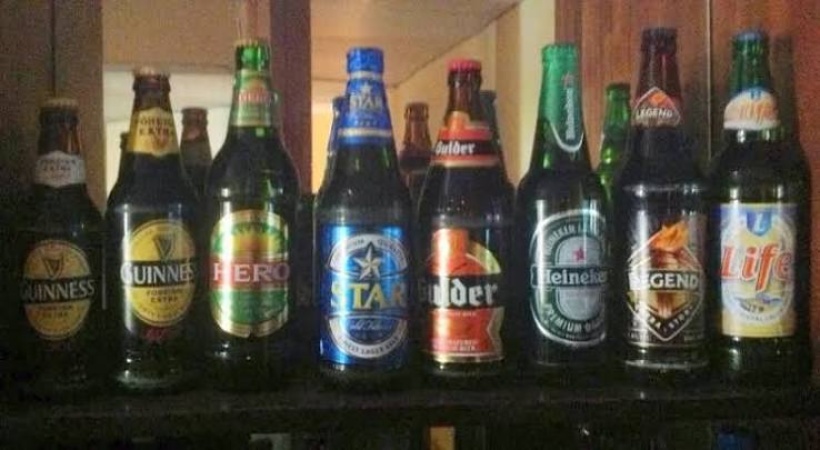







Bottles of beer
Nigerians spent an estimated N1.41 trillion on beer, malt and spirits during the first half of 2026, as the country’s three largest brewing companies recorded stronger revenues and improved profitability despite inflationary pressures and changing consumer preferences.
The figures, compiled from the half-year financial statements of Nigerian Breweries, International Breweries and Guinness Nigeria, represent about 90 per cent of Nigeria’s formal brewing industry.
The combined revenue of the three brewers reached approximately N1.41 trillion in H1 2026, supported by price adjustments introduced earlier in the year, sustained demand across beverage categories and continued investment in production and marketing.
Nigerian Breweries, the country’s largest brewer, generated N803.7 billion in revenue during the six-month period, representing a nine per cent increase from N738.1 billion recorded in the corresponding period of 2025.
International Breweries posted revenue of N342.1 billion, broadly unchanged from N341 billion reported a year earlier.
Guinness Nigeria, now managed by Tolaram Group following Diageo’s divestment, recorded an 11.8 per cent increase in revenue to N265 billion as it continued expanding its beverage portfolio and targeting younger consumers.
Although revenue growth varied across the companies, the combined performance underscored the resilience of Nigeria’s formal brewing industry despite softer beer consumption trends and a challenging macroeconomic environment.
Industry revenues were largely driven by price increases implemented in March 2026 as brewers sought to offset rising operating costs, raw material prices and other inflationary pressures.
The impact of the price adjustments became more evident in the second quarter, with combined revenue rising to N696 billion between April and June, compared with N640 billion in the corresponding period of 2025, representing nearly nine per cent growth.
Beer consumption during the quarter was also affected by seasonal demand, as Christian and Muslim fasting periods typically reduce sales before consumption recovers later in the quarter.
The three brewers also recorded a significant improvement in profitability.
Combined profit before tax rose by nearly 24 per cent to N269.4 billion in H1 2026 from N217.5 billion in the corresponding period of 2025, reflecting stronger pricing, lower financing costs and easing pressure from foreign exchange losses and raw material expenses.
The improved earnings marked a turnaround from the financial strain experienced in 2023 and 2024 following Nigeria’s adoption of a flexible exchange rate regime, when the sharp depreciation of the naira triggered substantial foreign exchange losses across the industry.
Nigerian Breweries reported pre-tax profit of N156.3 billion, with its pre-tax margin improving to 19.4 per cent from 17.9 per cent a year earlier.
International Breweries delivered the strongest margin expansion, posting pre-tax profit of N74.8 billion and a pre-tax margin of 21.9 per cent after raw material costs declined to N159.1 billion from N185.5 billion despite relatively flat revenue.
Guinness Nigeria also improved profitability, with its pre-tax margin rising to 14.5 per cent from 10.1 per cent, supported by a sharp decline in finance costs to N4.4 billion from N12.4 billion following lower borrowings and easing foreign exchange pressures.
Despite the stronger financial performance, the industry continues to face structural changes as younger Nigerians increasingly shift from traditional beer consumption to spirits, wine, ready-to-drink beverages and non-alcoholic alternatives.
To adapt, brewers have continued to diversify their product portfolios. Guinness Nigeria, for instance, has expanded beyond beer with brands including Captain Morgan, Gordon’s, Orijin, Smirnoff Ice, Malta Guinness and Dubic Malt.
The companies also maintained aggressive investment strategies during the period.
Collectively, they spent at least N130.6 billion on marketing and advertising, with Nigerian Breweries accounting for N71.9 billion, International Breweries N42.6 billion and Guinness Nigeria N16.1 billion.
Capital expenditure also remained robust, with combined investments of N103.3 billion. International Breweries led with N56.2 billion, followed by Nigerian Breweries at N30.3 billion and Guinness Nigeria at N16.8 billion.
At an average exchange rate of about N1,364 to the US dollar, the three brewers generated just over $1 billion in combined revenue during the first half of the year, highlighting both the scale of Nigeria’s beer market and the impact of the naira’s depreciation on the industry’s dollar value.
Competition within the sector continues to intensify as brewers compete across lager, stout, malt and ready-to-drink beverage categories while responding to evolving consumer tastes and increasing demand for spirits and flavoured alcoholic drinks.
Despite stronger earnings, investors reacted cautiously to the companies’ financial results.
Nigerian Breweries shares were trading at about N74, down 11 per cent over the past six months, giving the company a market capitalisation of approximately N2.1 trillion.
Guinness Nigeria traded around N376 per share, up seven per cent over six months and 221 per cent over the past year. The company also declared a dividend of N7 per share and had a market capitalisation of about N823 billion.
International Breweries traded at roughly N11 per share, representing a 27 per cent decline over the past six months despite its stronger profitability, leaving the company with a market capitalisation of approximately N1.65 trillion.
The mixed market reaction suggests investors remain cautious as they assess whether the industry’s improved profitability can be sustained amid shifting consumer preferences and broader economic uncertainties. (AriseNews TV)