Updating your news feed...
NEWS EXPRESS is Nigeria’s leading online newspaper. Published by Africa’s international award-winning journalist, Mr. Isaac Umunna, NEWS EXPRESS is Nigeria’s first truly professional online daily newspaper. It is published from Lagos, Nigeria’s economic and media hub, and has a provision for occasional special print editions. Thanks to our vast network of sources and dedicated team of professional journalists and contributors spread across Nigeria and overseas, NEWS EXPRESS has become synonymous with newsbreaks and exclusive stories from around the world.












Loading banners
Loading banners...

Petrol subsidy savings were deployed to servicing rising debt obligations, implementing the new national minimum wage and financing student loans, the Federal Government said yesterday.
It added that part of the savings were channelled towards sustaining critical social intervention programmes.
The government also defended its reforms.
It insisted that the removal of fuel subsidy and the liberalisation of the foreign exchange market were painful but necessary decisions that have helped stabilise Nigeria’s economy after years of structural distortions.
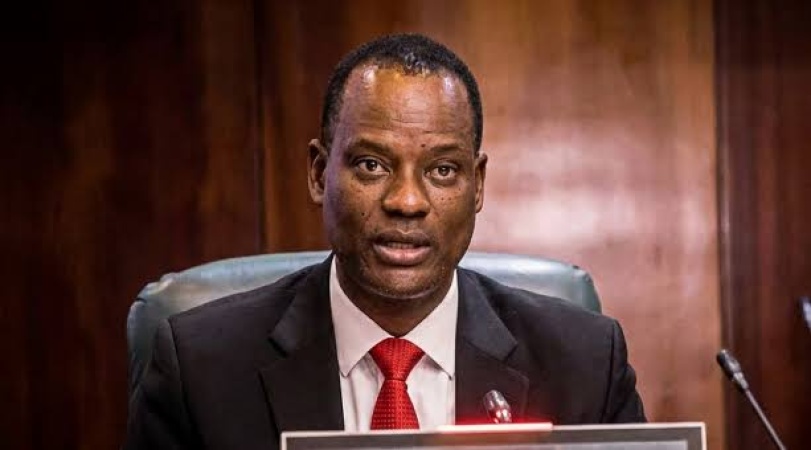
Minister of Finance and Coordinating Minister of the Economy, Mr. Taiwo Oyedele, spoke during a question-and-answer session at the Seventh Africa Emerging Market Forum in Abuja while responding to concerns over what became of the savings realised from the reforms.
He acknowledged that many Nigerians have repeatedly asked what happened to the funds saved from ending the subsidy regime and the multiple exchange-rate system.
“I’ve heard this question so many times, and guess what? It’s a valid question,” Oyedele said.
According to him, the combined cost of petrol subsidy and what he described as the “subsidy on foreign exchange” previously accounted for about five per cent of Nigeria’s Gross Domestic Product (GDP).
The minister added that the reforms were designed not merely to save money but to eliminate entrenched corruption, inefficiency and economic distortions.
The Minister disclosed that the Federal Government would soon publish a comprehensive account of how the savings had been utilised in the interest of transparency.
“But in the meantime, I can give you some of the highlights,” he said.
Oyedele explained that before the reforms, government financed part of its expenditure through deficit financing by the Central Bank, effectively printing money to fund spending.
With that option discontinued, government had to find alternative sources to finance existing obligations.
“Before the reforms, we were printing money to spend. If you stop printing, the spending doesn’t disappear. You need to finance the money you were printing before,” he said.
He noted that debt servicing costs had also risen sharply because interest rates increased significantly following the reforms.
“Instead of paying about eight per cent on our debts, we’re paying as high as 24 per cent. When you need to service debt, you don’t debate it. You pay, and you pay on time,” he said.
Another major destination of the savings, according to the minister, was the implementation of the new national minimum wage, which raised workers’ salaries from N30,000 to N70,000 and substantially increased the Federal Government’s wage bill.
He said substantial resources had equally been committed to the Nigerian Education Loan Fund (NELFUND), through which more than 1.5 million students now receive tuition support and monthly stipends.
According to him, the programme has eased the financial burden on millions of families, allowing parents to redirect money previously spent on school fees to businesses and other household needs.
Responding to criticism that the government continues to borrow despite improved revenue collection, Oyedele explained that exceeding revenue targets does not eliminate the need for borrowing where approved expenditure remains higher than total revenue.
“If your budget is 10, your revenue target is six and you eventually collect seven, you have exceeded your revenue target, but you still need to borrow three,” he explained.
He maintained that borrowing remains appropriate where the funds are invested in projects capable of generating returns greater than the cost of the loans.
The minister also rejected claims that the reforms had failed because poverty initially worsened, describing the temporary hardship as an inevitable consequence of correcting years of fiscal distortions.
According to him, removing subsidies could not instantly make citizens wealthier because the reforms represented a necessary economic reset after years of what he described as “fiscal illusions.”
Despite the initial pains, he said Nigeria recorded nearly 10 per cent real per capita income growth in dollar terms in 2025 and expressed confidence that poverty levels would decline as the reforms mature.
Oyedele also disclosed that the Federal Government is developing a framework to reduce borrowing costs for businesses without introducing fresh subsidies.
He explained that cheaper financing would stimulate investment, expand production and create more jobs while complementing the Central Bank of Nigeria’s efforts to tame inflation.
He said the Ministry of Finance and the Central Bank are strengthening policy coordination by aligning key economic assumptions before major policy decisions are taken.
The Minister further revealed that preliminary government studies showed that the economic cost of excessive regulation, policy inconsistency and bureaucratic bottlenecks exceeds the combined revenue generated from Company Income Tax, Personal Income Tax and Value Added Tax.
According to him, removing unnecessary obstacles to business would deliver greater economic gains than introducing additional tax incentives.
He also said the government’s employment strategy has shifted from merely creating jobs to creating productive and well-paying jobs capable of lifting Nigerians out of poverty.
Although official unemployment figures remain relatively low, he noted that millions of Nigerians remain poor because many are engaged in low-income sectors such as agriculture and retail trade.
Government, he said, would prioritise raising productivity and incomes in sectors where most Nigerians earn their livelihoods.
On social protection, Oyedele said cash transfers have been expanded to 15 million vulnerable households, while an estimated 7.5 million Nigerians have been lifted out of extreme poverty through various interventions.
He added that the recently launched NG-CARES, HOPE and SOLID programmes, valued at more than $3 billion, would strengthen primary healthcare, improve basic education and support vulnerable communities nationwide.
Turning to investment opportunities, the minister urged both local and foreign investors to take advantage of Nigeria’s ongoing economic reforms, insisting that Africa should play a leading role in shaping the changing global economic order rather than merely adapting to it.
He assured investors that the Federal Government is simplifying regulations, protecting investments and reducing the cost of doing business.
“Now is not the time to wait for perfect conditions,” he said. “The greatest opportunities of any generation emerge during periods of structural transformation, and we are living in one right now. We are working to simplify our regulatory environment, protect your capital and remove the friction that costs you time and money.”
Oyedele said international investors have often exaggerated the risks of investing in Africa despite the continent’s enormous economic potential, stressing that Nigeria’s reforms are aimed at making the country more competitive and attractive for long-term investment.
He added that the government’s long-term objective remains building a one-trillion-dollar economy by 2030 while ensuring that economic growth translates into improved living standards.
“A reform that shows up on national statistics but not on the household dining table hasn’t finished its job,” he said.
Minister speaks on IMF Article IV assessment
The Minister also defended the reforms while responding to the IMF’s 2026 Article IV assessment, saying the Fund’s latest review reinforces the difficult decisions taken by the administration to restore macroeconomic stability.
According to him, the removal of fuel subsidy was a difficult but necessary decision that significantly reduced risks to the economy, even though Nigerians experienced short-term hardship following the policy.
He described the subsidy removal as “a necessary, bold step,” stressing that much of the savings did not immediately translate into visible improvements because they were used to meet rising debt obligations and finance critical social programmes. (The Nation)
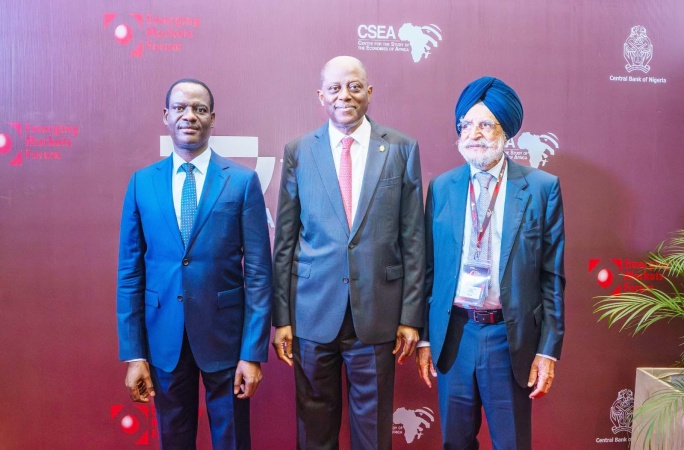
•PHOTO: Minister of Finance and Coordinating Minister of the Economy, Mr Taiwo Oyedele(left); Governor, Central Bank of Nigeria, Mr Olayemi Cardoso and Founding Director and Chief Executive, Emerging Markets Forum (EMF), Mr Harinder Kholi at the 7th Africa Emerging Markets Forum at the Central Bank of Nigeria Head Office, Abuja