Updating your news feed...
NEWS EXPRESS is Nigeria’s leading online newspaper. Published by Africa’s international award-winning journalist, Mr. Isaac Umunna, NEWS EXPRESS is Nigeria’s first truly professional online daily newspaper. It is published from Lagos, Nigeria’s economic and media hub, and has a provision for occasional special print editions. Thanks to our vast network of sources and dedicated team of professional journalists and contributors spread across Nigeria and overseas, NEWS EXPRESS has become synonymous with newsbreaks and exclusive stories from around the world.






Loading banners
Loading banners...

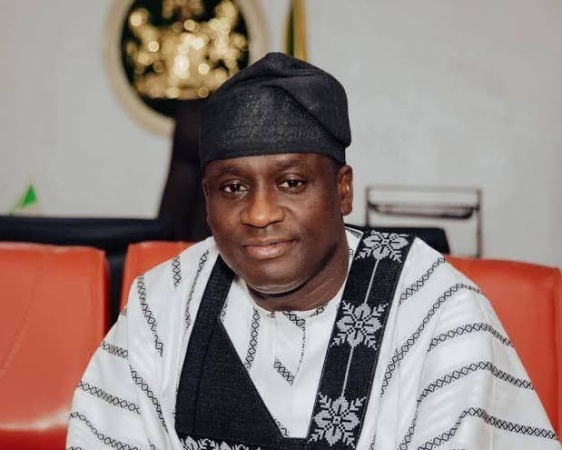
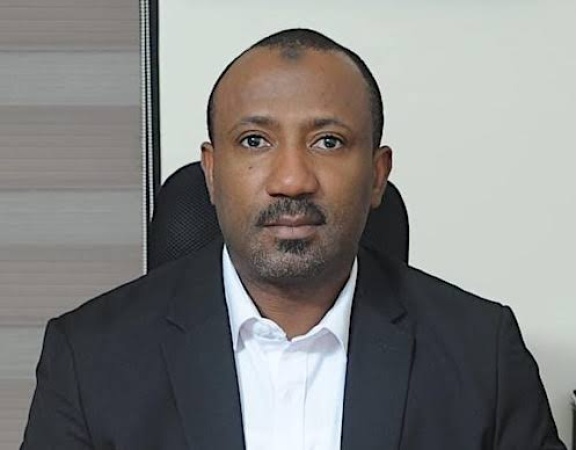
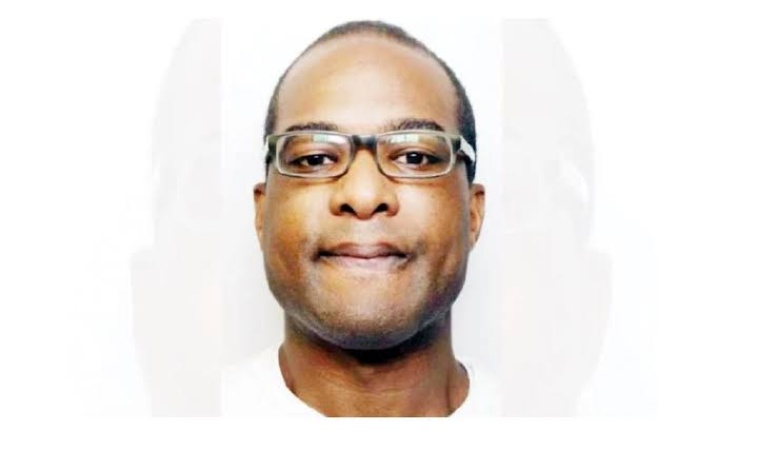
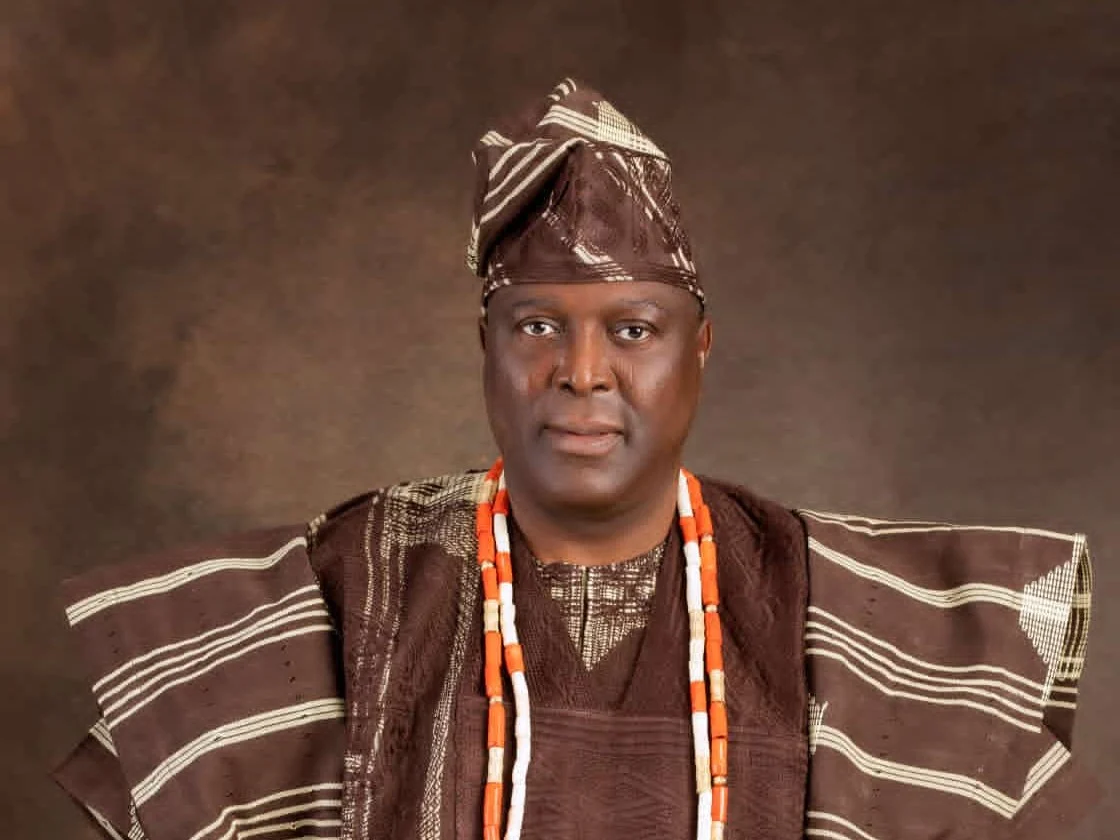
Kwara APC governorship candidate, Yakubu Danladi Salihu
The decision by the All Progressives Congress (APC) to upload the name of Speaker Yakubu Danladi Salihu as its governorship candidate for Kwara State has added a new dimension to the internal crisis that has shaken the ruling party since its primary.
While the development appears to confirm Danladi’s position as the party’s standard-bearer ahead of the 2027 election, it has not erased the grievances of the influential group of party leaders known as the G15, who continue to challenge the process that produced him.
Rather than bringing an end to the crisis, the submission of Danladi’s name to the Independent National Electoral Commission (INEC) may have only moved the contest into a new phase. The core question is no longer just about who emerged as the APC candidate, but whether the party can successfully unite its warring factions before the general election.
The Chairman of the party’s reconciliation committee in the state, Retired Col. Lukman Ademola Lawal, confirmed to Daily Trust that members of the G-15 have shunned meeting with the committee.
According to him, the aggrieved members said they prefer to meet directly with President Bola Ahmed Tinubu on the crisis.
Roots of the crisis
The disagreement that birthed the G15 developed over months of political calculations, consultations, and intense competition to succeed Governor AbdulRahman AbdulRazaq, who is completing his second term in office.
The APC governorship ticket became one of the most sought-after political prizes in the state, drawing 16 aspirants into the race. While that number reflected the strength of the party, it also highlighted the complexity of managing competing ambitions during a major transition.
As the contest progressed, attention shifted to the governor’s likely preferred candidate. Although several aspirants continued their campaigns, political observers closely tracked the governor’s engagements and alliances to see where the pendulum would swing.
When Speaker Yakubu Danladi Salihu emerged as the candidate, the outcome triggered a fresh political battle instead of cementing party unity. Aggrieved aspirants and their supporters began consultations, arguing that the primary lacked fairness and internal democracy.
What began as scattered dissatisfaction quickly consolidated into an organized movement. Initially forming as the G10, the group expanded into the G15 as more stakeholders joined the call for a review of the process.
The emergence of the G15 shifted the political landscape. Far from being a collection of ordinary members, the group brought together heavyweights—including former and serving lawmakers, ex-governorship aspirants, party leaders, and influential figures with structures spanning Kwara’s three senatorial districts.
The G15 insisted its fight was not merely about losing an election, but about protecting internal democracy. They warned that the APC’s strength in Kwara has historically depended on consultation and inclusion, and that ignoring those principles risks weakening the party’s foundation.
Conversely, supporters of the governor maintained that the primary followed party guidelines and produced a legitimate flag-bearer. They argued that internal contests naturally produce winners and losers, and that the party must now pivot toward preparing for the general election.
A stalled reconciliation effort
As both sides dug in, the rift grew into one of the APC’s stiffest internal challenges since taking power in Kwara in 2019. In response, the party constituted a reconciliation committee headed by retired Col. Lukman Ademola Lawal to resolve the dispute before campaign season reaches full swing.
However, the committee’s early work has underscored the depth of the divide.
Speaking with Daily Trust on Tuesday, Lawal disclosed that his committee had not yet engaged the G15 directly. Instead, it chose to start at the grassroots level by meeting aggrieved members across local governments.
According to Lawal, the committee is adopting a gradual approach because dissatisfaction extends far beyond the governorship race.
“The G15 are not the only aggrieved people,” Lawal said. “Many House of Assembly, House of Representatives, and Senate aspirants are also dissatisfied. Out of about 159 Assembly aspirants, only 24 emerged. We have grievances across the board and we must reconcile everyone.”
The chairman acknowledged that a deep deficit of trust remains their biggest obstacle. He noted that some G15 members view the committee as biased because it was constituted by the very party leadership they accuse of orchestrating the flawed primary.
“They believe we are partisans because we were set up by the same people they believe created the problem,” Lawal said. “We are trying to prove that we are neutral facilitators. This is a family misunderstanding and should be resolved within the family.”
The situation was further complicated when Lawal revealed that outreach to key leaders linked to the G15 had stalled. Some aggrieved leaders are insisting on dealing directly with President Bola Ahmed Tinubu or the APC national leadership, citing a complete lack of confidence in the state-level committee.
The submission of Danladi’s name to the INEC portal has changed the atmosphere. To party loyalists, it signals that the APC has made its choice and is pressing forward.
For the G15, however, the door is not entirely closed.
Senior Advocate of Nigeria and APC Elder Caucus leader in Kwara, Salman Jawondo, argued that the initial upload should not be read as the final word. He explained that while the upload was necessary to satisfy INEC’s immediate deadline, candidate nomination rules allow flexibility until September.
“The final stage is actually September. The process remains open until September 19—this upload is only an initial step,” Jawondo said. He added that he expects the national leadership to handle Kwara delicately, noting, “Our party will not risk entering the 2027 election divided.”
The road ahead
The coming weeks will be critical for all sides.
For Governor AbdulRazaq and his allies, the priority is building momentum around Danladi and steering the party past the primary fallout. For Danladi himself, the task goes beyond holding the ticket—he must persuade his detractors that his candidacy represents the entire party rather than a single political faction.
For the G15, the path ahead carries hard choices: maintain open resistance, accept reconciliation, or adopt a new political strategy to preserve their relevance. While their strength lies in deep political networks, maintaining long-term cohesion can prove difficult as individual members weigh their own political futures.
Political analysts warn that the APC leadership cannot afford to treat reconciliation as optional. “A party can win a primary and still lose a general election if internal fractures are left unhealed,” noted Dr. Mohammed Idris Danjuma, a political scientist.
Danjuma observed that the historic Otoge movement that brought the APC to power in Kwara was built on a coalition of varied political forces. Recreating that sense of unity will be the party’s true test.
On the possibility of the G15 defecting or backing alternative parties, Danjuma noted that any impact would depend on the strength of Kwara’s opposition landscape.
“The G15 could decide to align elsewhere, but where is the opposition currently?” Danjuma asked. “You have the PDP, ADC, and others, but how strong are their structures? The APC will not easily surrender its advantage of incumbency.”
He added that the 2027 contest will ultimately hinge on organizational structure, financial resources, and voter mobilization—though he cautioned that widespread economic hardship could make voters vulnerable to short-term financial inducements during election season.
For now, Danladi holds the ticket, but the main question lingers: Can the Kwara APC transform a fractured primary into a unified campaign? The answer may well shape the outcome of the 2027 elections in the state. (Daily Trust)