
Updating your news feed...
NEWS EXPRESS is Nigeria’s leading online newspaper. Published by Africa’s international award-winning journalist, Mr. Isaac Umunna, NEWS EXPRESS is Nigeria’s first truly professional online daily newspaper. It is published from Lagos, Nigeria’s economic and media hub, and has a provision for occasional special print editions. Thanks to our vast network of sources and dedicated team of professional journalists and contributors spread across Nigeria and overseas, NEWS EXPRESS has become synonymous with newsbreaks and exclusive stories from around the world.
















Loading banners
Loading banners...

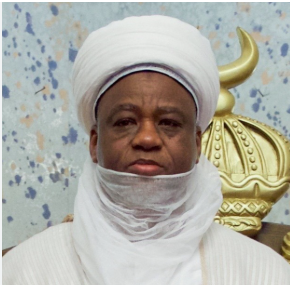
Sultan of Sokoto, Saad Abubakar III
The end may be in sight for terrorism in the North with yesterday’s pledge by Sultan of Sokoto, Sa’ad Abubakar III and traditional institutions in the region to back the Federal Government’s fight against the menace.
The Sultan declared that community leaders are ready to work “100 percent” with security agencies to flush out criminals from their enclaves.
He made the commitment at the opening of the 2006 National conference of the Miyetti Allah Cattle Breeders Association of Nigeria (MACBAN), in Abuja, where he also hailed President Bola Tinubu for establishing the Ministry of Livestock Development.
The conference, themed: “Advancing Peaceful Pastoralism and Livestock Transformation for Food Security, National Unity and Shared Prosperity,” was attended by security chiefs, development partners and other stakeholders.
He assured the President that traditional rulers and community leaders would mobilize support at the grassroots to deny terrorists and other criminal elements safe havens.
“We assure the President and all other stakeholders that we are ready 100 per cent to work with him and all security agencies to flush out criminals from our enclaves,” the Sultan said.
He also urged security agencies to sustain ongoing operations against terrorists, bandits and kidnappers, stressing that the fight against insecurity requires collective action.
The monarch challenged traditional rulers, and community leaders to return to their various communities and develop practical strategies to identify and eliminate criminal elements operating within their domains.
According to him, communities must take responsibility for confronting criminality instead of remaining silent while a few individuals tarnish the image of entire ethnic groups.
The Sultan also appealed to Nigerians and the media to stop referring to violent criminals as “Fulani herdsmen,” insisting that they should simply be described as criminals, kidnappers or terrorists.
“All those evil people carrying out so many atrocities, do not label them as Fulani herdsmen. Call them criminals who are abducting people, kidnapping, terrorizing and committing other crimes,” he said.
He noted that every ethnic group has both good and bad people, warning against ethnic profiling because of the actions of a few.
“In every family, you have bad people; in every family, you have good people. You cannot tell me that because I am Fulani, I am a bad man. I know I am not bad, and Almighty Allah knows that,” he added.
Drawing from Islamic teachings, the Sultan said God created people into different tribes and nations to foster understanding and peaceful coexistence rather than division.
He urged Nigerians to embrace mutual understanding instead of suspicion, saying unity remains essential to overcoming the country’s security challenges.
The Sultan also praised President Tinubu for prioritizing the livestock sector through the creation of the Ministry of Livestock Development and the Presidential Livestock Committee co-chaired by Professor Attahiru Jega.
“I want to thank Mr President. I will thank him one million times,” he said to applause.
He described the establishment of the ministry as a bold step that would transform the livestock industry and address long-standing challenges in the sector.
Using a metaphor to underscore the need to tackle criminality from within communities, the Sultan said a diseased finger should be treated rather than amputated, urging community leaders to identify and isolate criminal elements before they destroy their communities.
“We shouldn’t just go to sleep. Go back home, gather your people and ask yourselves how to stop the activities of these criminals. We are ready to work together to find the solution,” he said.
The Minister of Livestock Development, Idi Mukhtar Maiha said that the Federal Government had planned to begin mandatory digital registration, ear-tagging, and microchipping of all livestock across the country.
Under the new scheme, any cattle, sheep, or goat without a digital identifier or proof of ownership will be barred from transportation, livestock markets, abattoirs, and slaughter slabs nationwide.
Highlighting the urgency of the reform, the Minister declared that traditional open grazing is no longer sustainable due to rapid population growth, urban expansion, and environmental pressures.
He noted that infrastructure development over the last seven decades has drastically reduced available grazing land, making a transition to the National Ranching Policy imperative.
“The way we have been doing animal rearing for the past 200 to 300 years is no longer sustainable. Seventy years ago, Abuja was not there, nor were the expressways linking Abuja, Kaduna, Zaria, and Kano. Population explosion and climate change mean we must change our approach,” the Minister said.
To support the shift toward ranching and commercialized livestock production, the Federal Government is rolling out a major infrastructure drive.
This includes the building of 20 model veterinary hospitals across the states, equipped with state-of-the-art technology, as well as regional vaccine storage facilities capable of holding up to 40 million doses.
The Minister also said that pilot ranching projects have begun, starting at the Wase Grazing Reserve in Plateau State, to demonstrate integrated models featuring veterinary clinics, schools, pasture production, milk processing centers, and basic utilities.
Lamenting the immense economic value currently lost to raw, unorganized livestock transport, the Minister cited figures from the commercial hub of Lagos to emphasize the potential of local value addition.
According to him, Lagos alone consumes 2.9 million cattle annually worth N1.7 trillion and representing 274,000 metric tons of red meat yet most animals arrive emaciated and sick after being driven long distances from border towns like Gamboru Ngala, Mai’Adua, Illela, and Banki.
“Animals should be slaughtered at their base under cold chain conditions. We keep the blood, faeces for biogas and electricity, bones, hooves, and hides for leatherworks, while red meat is transported safely under refrigeration,” he explained, adding that a single modern abattoir processing 500 bulls daily can generate up to 10,000 jobs.
Calling on MACBAN and other pastoral groups to partner with the ministry, the Minister assured the conference that the digital tracking system accessible via mobile platforms will enable security agencies to trace lost or stolen livestock, arrest rustlers, and protect herders’ investments.
Earlier, National President of the MACBAN, Baba Ngelzarma declared its support for President Bola Tinubu’s livestock reform agenda, while strongly condemning terrorism, banditry, kidnapping and cattle rustling across the country.
The association also urged Nigerians to stop linking criminality to any ethnic group, insisting that criminals should be treated as individuals and prosecuted in accordance with the law.
Ngelzarma, described the establishment of the Federal Ministry of Livestock Development as a landmark decision capable of transforming Nigeria’s livestock industry and boosting food security.
Ngelzarma said insecurity remains the greatest challenge confronting pastoral communities, noting that cattle rustling, kidnapping, banditry and other criminal activities had claimed lives, displaced families and destroyed livelihoods.
“MACBAN reiterates its unequivocal condemnation of terrorism, banditry, kidnapping, cattle rustling and every form of violent criminality. Criminals must never be identified with any ethnic group, religion or occupation,” he said.
He urged members of the association to cooperate fully with security agencies by providing credible intelligence and rejecting all forms of criminality.
The MACBAN president also acknowledged that farming communities had equally suffered from insecurity, stressing that the challenge required a united national response rather than ethnic profiling.
On the proposed establishment of state police, Ngelzarma said the association supports efforts to strengthen community security but insisted that any policing structure must operate with professionalism, impartiality and constitutional safeguards to guarantee equal protection for all Nigerians.
He identified climate change, desertification, shrinking grazing land, prolonged drought and encroachment on grazing reserves, stock routes and watering points as major threats to livestock production. (The Nation)




