Updating your news feed...
NEWS EXPRESS is Nigeria’s leading online newspaper. Published by Africa’s international award-winning journalist, Mr. Isaac Umunna, NEWS EXPRESS is Nigeria’s first truly professional online daily newspaper. It is published from Lagos, Nigeria’s economic and media hub, and has a provision for occasional special print editions. Thanks to our vast network of sources and dedicated team of professional journalists and contributors spread across Nigeria and overseas, NEWS EXPRESS has become synonymous with newsbreaks and exclusive stories from around the world.




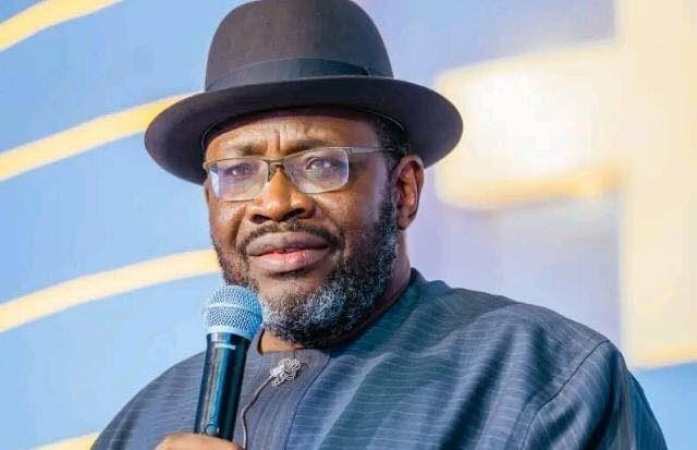










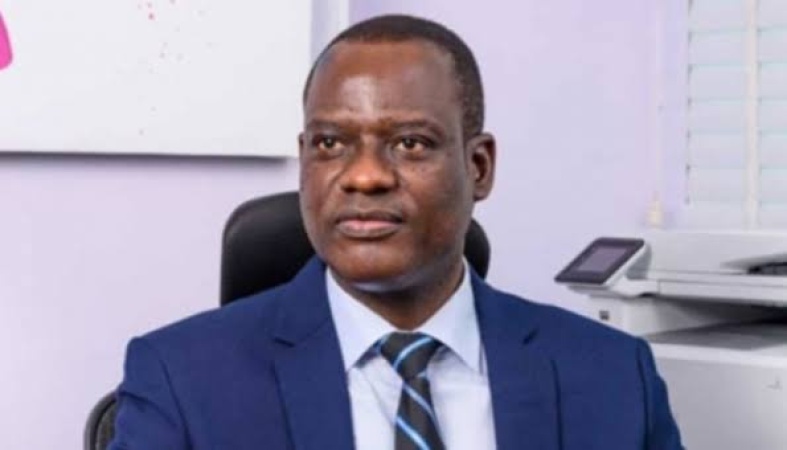
Minister of Finance and Coordinating Minister of the Economy, Taiwo Oyedele
The Federal Government exceeded its 2024 borrowing target by N4.79tn after weaker-than-expected revenue forced it to raise substantially more debt than originally budgeted, according to the Budget Office of the Federation’s Fourth Quarter and Consolidated Budget Implementation Report for 2024.
The report showed that new borrowings climbed to N12.62tn during the fiscal year, surpassing the approved borrowing plan of N7.83tn by 61.2 per cent. The increase followed a wider fiscal deficit of N13.51tn, compared with the budgeted deficit of N9.18tn, as revenue underperformed while government spending remained largely on track.
Federal Government revenue stood at N20.98tn against a budget target of N25.88tn, leaving a shortfall of N4.90tn. Total expenditure reached N34.49tn, only N561.29bn below the approved estimate of N35.06tn, indicating that the widening deficit resulted primarily from lower revenue rather than excessive spending.
“The revenue and expenditure outturn of the Federal Government resulted in a fiscal deficit of N13.51tn in the 2024 fiscal year. This was ?4.34tn (47.33 per cent) above the projected budget deficit estimate for the year,” the report stated.
The Budget Office noted that the deficit also exceeded the N10.55tn recorded in 2023, underscoring growing pressure on the country’s public finances.
An analysis of the financing profile showed that domestic borrowing remained in line with the budget at N6.06tn. However, foreign borrowing increased from the projected N1.77tn to N3.37tn, while the Federal Government also secured N3.19tn in budget support, despite making no provision for such financing in the approved budget.
Combined, domestic borrowing, foreign borrowing and budget support raised total new borrowings to N12.62tn, exceeding the approved borrowing programme by N4.79tn. The report also revealed that the Federal Government relied on new debt to finance about 36 per cent of its 2024 expenditure, reflecting continued dependence on borrowing to fund public spending.
Beyond these borrowings, multilateral and bilateral project-tied loans totalled N1.98tn, almost double the budget estimate of N1.05tn. Meanwhile, expected privatisation proceeds of N298.49bn failed to materialise, with no revenue realised from asset sales during the fiscal year.
The report attributed the wider financing gap largely to weaker oil earnings. Gross oil revenue stood at N15.07tn, falling ?4.93tn below the budget estimate of N19.99tn, as average crude oil prices settled at $74.65 per barrel, below the benchmark of $77.96, while average daily production of 1.54 million barrels per day trailed the budget assumption of 1.78 million barrels.
In contrast, non-oil revenue exceeded expectations, rising to N16.09tn, which was N5.29tn or 48.91 per cent above the budget estimate of N10.81tn. The stronger performance was driven by improved collections from Company Income Tax, Value Added Tax, the Electronic Money Transfer Levy and Customs revenue.
Although expenditure remained broadly within budget, debt servicing placed additional strain on public finances. Total debt expenditure reached N12.36tn, exceeding the budgeted N8.27tn by 52.71 per cent.
“A total of N12.36tn was committed as total debt expenditure for the year, 52.71 per cent above the N8.27tn budgeted for the period,” the report stated.
Capital expenditure also fell short of expectations. While N5.81tn was released and cash-backed for capital projects, Ministries, Departments and Agencies utilised only N3.27tn, representing 81.91 per cent of the amount released as of June 30, 2025.
The report further showed that Nigeria’s total public debt rose to N144.67tn by December 2024, pushing the debt-to-GDP ratio to 61.22 per cent. The Budget Office warned that the figure had exceeded both Nigeria’s self-imposed threshold of 40 per cent and the 56 per cent benchmark commonly used for comparable economies.
Despite the fiscal challenges, the Budget Office expressed confidence that ongoing reforms, including improved tax administration, stronger non-oil revenue mobilisation, tighter fiscal incentives, reduced revenue leakages and enhanced remittances from government-owned enterprises, would help reduce borrowing and strengthen fiscal sustainability over the medium term.
Economic experts, however, expressed mixed views on the growing debt profile. Chief Executive Officer of CSA Advisory, Aliyu Ilias, warned that the rapid increase in borrowing could worsen inflation and deepen cost-of-living pressures if the funds were not deployed productively.
“The fact is that it has negative and positive impacts. But the negative impact is that we already have issues of debt service. You look at our budget, about ?15tn is needed to service debt, and now we’re incurring more,” he said.
He added that increased borrowing could inject excess liquidity into the economy, fuelling inflation if not properly managed, while stressing that the critical issue was how borrowed funds were utilised.
Chief Economist and Director of Research at the Nigerian Economic Summit Group, Dr Olusegun Omisakin, argued that borrowing itself was not the central problem but rather the effectiveness of spending.
“The challenge is what we use the money for. If Nigeria borrows and you see the impact on infrastructure, nobody will really be concerned about the rate of borrowing,” he said.
Similarly, the Chief Executive Officer of the Centre for the Promotion of Private Enterprise, Dr Muda Yusuf, urged the government to contain the pace of debt accumulation and improve revenue generation to reduce dependence on loans.
The report comes amid renewed debate over Nigeria’s rising debt burden, following recent exchanges between the Emir of Kano, Muhammadu Sanusi II, and the Presidency. While Sanusi questioned the need for continued borrowing after the removal of petrol subsidy, the Presidency defended the loans as necessary to finance critical infrastructure projects.
Minister of Finance and Coordinating Minister of the Economy, Taiwo Oyedele, also maintained that borrowing should be assessed based on its purpose and returns rather than the size of the debt alone.
“The relevant question is never simply how much debt. It is always debt for what and at what cost, against what return, and repaid on what terms? A nation that borrows to finance productive assets generating returns above the cost of capital is behaving rationally,” Oyedele said.
He nevertheless acknowledged that Nigeria could no longer rely primarily on borrowing to fund development, insisting that the country must strengthen its fiscal framework to sustainably finance infrastructure, education, healthcare, security and social protection. (The Sun)