Updating your news feed...
NEWS EXPRESS is Nigeria’s leading online newspaper. Published by Africa’s international award-winning journalist, Mr. Isaac Umunna, NEWS EXPRESS is Nigeria’s first truly professional online daily newspaper. It is published from Lagos, Nigeria’s economic and media hub, and has a provision for occasional special print editions. Thanks to our vast network of sources and dedicated team of professional journalists and contributors spread across Nigeria and overseas, NEWS EXPRESS has become synonymous with newsbreaks and exclusive stories from around the world.












Loading banners
Loading banners...

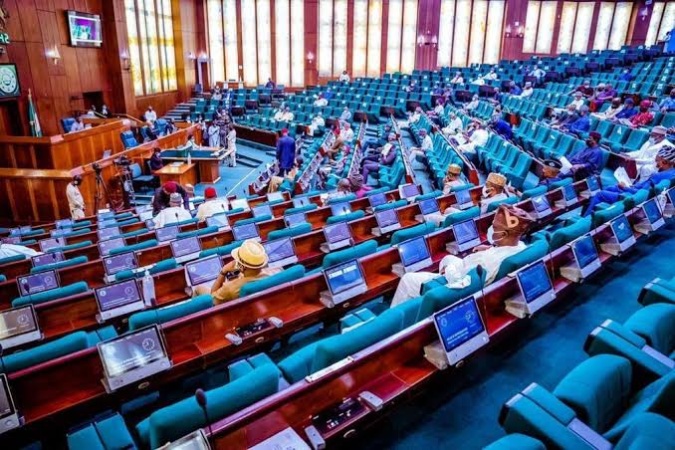
House of Reps
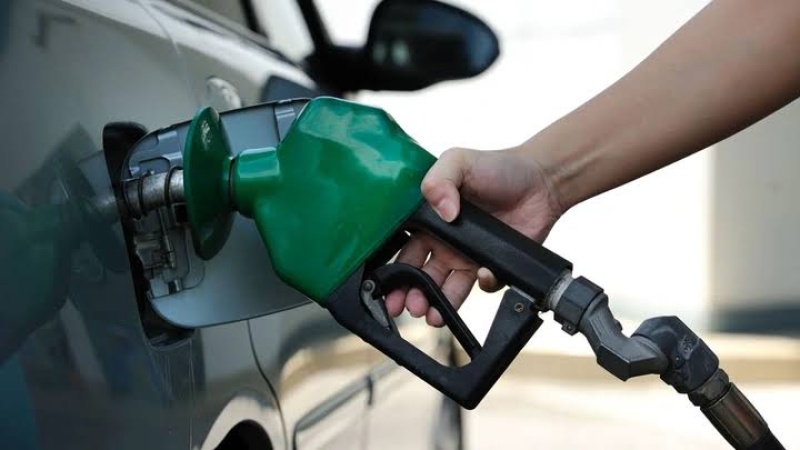
The House of Representatives Committee on Petroleum Resources (Downstream) has taken steps to address growing tensions between petroleum importers and domestic refiners, with a view to charting a common path for energy security, a stable fuel supply and sustainable industry reforms.
The House Committee brought together stakeholders in the downstream sector, including the leadership of the Depot and Petroleum Products Marketers Association of Nigeria (DAPPMAN), the Independent Petroleum Marketers Association of Nigeria (IPMAN) and the Major Energies Marketers Association of Nigeria (MEMAN).
The interactive session, held at the National Assembly, centred on balancing support for local refining with the need to ensure an uninterrupted fuel supply across the country.
Speaking at the session, Chairman of the committee, Ikenga Imo Ugochinyere, emphasised the House’s commitment to inclusive lawmaking, stating that reforms in the downstream petroleum sector would be driven by dialogue rather than confrontation.
Ugochinyere said, “We are here not to interrogate, not to accuse and not to put anyone on trial. We are here to listen. We are here to talk to one another as partners who share one common destiny, a Nigeria where energy is affordable, supply is stable, and no citizen suffers because petroleum products are out of reach.”
He assured them that no policy affecting the downstream sector would be formulated without broad consultations with operators whose investments sustain Nigeria’s petroleum distribution network.
The Imo lawmaker said that Nigeria is at a defining stage in its energy transition, with increasing domestic refining capacity, evolving import dynamics and renewed efforts to improve pipeline security and distribution efficiency.
“The marketers, depot owners, independent operators and major marketers remain the bridge between government policy and the pump. When that bridge is strong, Nigerians enjoy stable prices and reliable supply. When it is weak, the entire nation feels the consequences,” he said.
He assured that the committee would carefully consider submissions from all stakeholders when developing legislative interventions to encourage investment, strengthen domestic refining, deepen competition and guarantee an affordable, uninterrupted supply of petroleum products.
The lawmaker further assured industry operators that the committee would continue to prioritise constructive engagement over confrontation in carrying out its oversight and legislative responsibilities.
In their presentation, Executive Secretary, DAPPMAN, Olufemi Adewole said the Nigerian Midstream and Downstream Petroleum Regulatory Authority (NMDPRA) should develop practical operating-stock guidelines under Section 182 of the Petroleum Industry Act (PIA).
According to him, the guidelines should clearly define standards for stock measurement, reporting, quality assurance and accessibility, adding that strategic stockholding should not be measured merely by product volume but also by the industry’s capacity to finance, transport and release products quickly during emergencies or supply disruptions.
Adewole proposed the establishment of a joint market-monitoring framework involving the NMDPRA and the Federal Competition and Consumer Protection Commission (FCCPC) to monitor supply concentration, product availability, transparent allocation, fair treatment of operators and early warning indicators of market stress.
He said the Federal Government should prioritise investment in critical infrastructure, including roads, railways, inland waterways, pipelines and petroleum depots, to reduce the sector’s heavy dependence on long-distance trucking from a few coastal supply hubs.
It also advocated a permanent government-industry consultative platform, bringing together regulators, marketers, refiners, NNPC Limited, transport agencies and security institutions to periodically review supply conditions, infrastructure gaps and emerging risks.
IPMAN National President, Abubakar Maigandi Shettima, described the downstream petroleum industry as one of Nigeria’s most strategic sectors, saying it remains central to powering households, industries, agriculture, transport, healthcare and national security.
According to Shettima, the implementation of the Petroleum Industry Act, deregulation of fuel prices, the rehabilitation of government-owned refineries and the emergence of large-scale private refineries have positioned Nigeria to evolve from a major importer of refined petroleum products into Africa’s leading refining and distribution hub.
He stressed that, despite these opportunities, IPMAN identified several challenges slowing the sector’s growth, including high financing costs, multiple taxation, foreign exchange volatility, inadequate storage and transport infrastructure, pipeline vandalism, limited access by independent marketers to refinery products, delayed payment of bridging and NTA claims, and insufficient stakeholder engagement.
He appealed to the House committee to support reforms that would improve logistics, deepen market competition, reduce distribution costs, encourage investment and guarantee the sustainable availability and affordability of petroleum products nationwide.
Also speaking, MEMAN’s Executive Secretary, Clement Isong, said Nigeria now has the capacity to refine petroleum products locally, meet domestic demand and export refined products to international markets.
Isong cautioned against imposing blanket restrictions on fuel imports, arguing that the government must retain the flexibility to approve imports whenever necessary to safeguard national energy security.
He said strategic Imports remain indispensable during supply shortages or unexpected market disruptions, helping protect consumers from sharp price increases and supply crises.
He recommended that Nigeria establish a strategic petroleum reserve capable of sustaining at least 60 days of national consumption to cushion the country against global supply shocks and price volatility.
He cited the recent Liquefied Petroleum Gas (LPG) market as an example in which increased imports successfully bridged supply shortages and moderated prices, demonstrating how timely regulatory intervention can stabilise the market.
While reaffirming MEMAN’s support for the Federal Government’s drive to strengthen domestic refining, Isong maintained that decisions on petroleum product imports should remain the exclusive responsibility of the Federal Government and the NMDPRA to ensure adequate supply, preserve healthy competition and protect consumers. (The Nation)