ADAD
ADAD
Updating your news feed...
NEWS EXPRESS is Nigeria’s leading online newspaper. Published by Africa’s international award-winning journalist, Mr. Isaac Umunna, NEWS EXPRESS is Nigeria’s first truly professional online daily newspaper. It is published from Lagos, Nigeria’s economic and media hub, and has a provision for occasional special print editions. Thanks to our vast network of sources and dedicated team of professional journalists and contributors spread across Nigeria and overseas, NEWS EXPRESS has become synonymous with newsbreaks and exclusive stories from around the world.
















Loading banners
Loading banners...

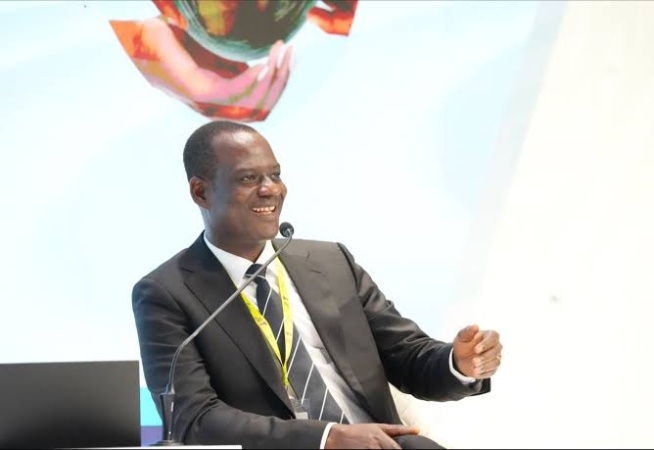
Finance Minister, Taiwo Oyedele
The federal government has said it is turning to independent experts to improve the quality of economic decision-making, noting that Nigeria’s complex economic challenges require objective advice to strengthen ongoing reforms and deliver better results for citizens.
Speaking at the inauguration of the Ministerial Advisory Committee in Abuja, Minister of Finance and Coordinating Minister of the Economy, Mr Taiwo Oyedele, said the committee was created to provide independent, evidence-based advice that would help the government identify risks early, improve policy implementation and ensure that reforms translate into real benefits for Nigerians.
According to him, Nigeria’s economy is too complex for the government to rely only on internal perspectives.
“Nigeria’s economic landscape is intricate, and our fiscal space is constrained. Every policy lever we pull affects multiple stakeholders in ways that are not always predictable,” he said.
Oyedele explained that governments often face pressure to act quickly and announce new initiatives, but warned that policies introduced without careful analysis could create fresh problems while trying to solve existing ones.
“This committee exists to provide independent, evidence-based and constructive external counsel. We need you to think through the second- and third-order effects of our policies, identify vulnerabilities and risks before they become crises, bring international best practice into our decision-making and tell us how our reforms are actually affecting factories, shops and communities so that we can make adjustments where necessary,” he said.
He made it clear that the committee would not interfere with the responsibilities of government agencies or exercise executive authority.
“Let me be explicit about what this committee is not. It does not exercise executive authority, nor does it duplicate or replace the existing work of any statutory institution. Your role is simply to advise. Your independent perspective will strengthen our decisions and help us remain focused on achieving results,” he stated.
Oyedele said the committee’s assignment would focus on four major areas critical to Nigeria’s economic future.
The first, he said, is economic policy advisory, where members are expected to provide data-driven recommendations to support job creation, stronger economic growth, higher productivity, and improved government revenue.
He said the government’s ambition to achieve seven per cent annual economic growth and build a one-trillion-dollar economy by 2030 would require fresh thinking, innovative ideas, and practical strategies rooted in economic realities.
The second pillar focuses on public financial management. Oyedele said the government wants stronger fiscal discipline across public institutions through better revenue generation, improved quality of public spending, responsible borrowing and greater transparency.
“We want to strengthen fiscal governance across all government institutions. How we generate revenue, the quality and priority of our spending, responsible borrowing and transparent reporting must improve so that we can build institutions that earn the confidence of citizens, investors and the international community,” he said.
The third pillar is economic coordination. According to him, reforms cannot succeed if ministries, agencies, state governments and the private sector work independently of one another.
“Reforms cannot succeed in isolation. They require alignment across government agencies, close coordination with sub-national governments and a genuine partnership with the private sector,” he said.
The fourth pillar centres on ensuring that reforms produce visible improvements in people’s lives.
Oyedele said the government would judge its reforms by their practical impact on businesses and ordinary Nigerians rather than by policy documents or official announcements.
“A fiscal reform that looks flawless on paper but fails to improve conditions for Nigerian businesses is not reform. It is disguised bureaucracy. Your focus must remain on practical, real-world impacts,” he said.
He also outlined three expectations for members of the advisory committee. First, he urged them to be courageous and objective in their recommendations by relying on evidence rather than politics or popular opinion.
“We do not need this committee to validate what we have already decided. We need you to challenge our assumptions, point out the trade-offs we may be overlooking and tell us the truth we may not want to hear. Healthy, fact-based disagreement is an advantage,” he said.
Oyedele also urged members to simplify complex economic issues so that policymakers, businesses and ordinary Nigerians can clearly understand how government decisions affect them.
“The best advice in the world is worthless if it cannot be clearly understood and acted upon by those who need it most,” he said, noting that members should explain what changes in taxes, tariffs and other economic policies mean for manufacturers, traders and small businesses.
He further encouraged the committee to remain connected to realities on the ground by engaging directly with manufacturers, exporters, entrepreneurs and ordinary citizens instead of relying only on official reports.
“Do not let this committee become an ivory tower exercise. Speak with manufacturers, exporters and everyday citizens. Understand where policy is creating friction and how it can open doors. They are the living metrics of whether our policies succeed or fail,” he said.
Addressing the organised private sector, Oyedele said the government alone cannot build the prosperous economy Nigerians desire.
He said that while the government would continue to create predictable policies, macroeconomic stability, and a stronger legal environment, sustainable growth would depend largely on private investment, innovation, and job creation.
“The government’s role is to clear the path by creating predictable policies, macroeconomic stability and a functioning rule of law. The rest depends on your investments, your hiring and your willingness to take risks”, he said.
Responding on behalf of the committee, its Chairman, Managing Director of Sterling Bank, Mr. Abubakar Suleiman, assured the Minister that members would focus on delivering practical recommendations rather than lengthy reports.
He said the committee understood that government officials were often too occupied with managing day-to-day responsibilities to devote enough time to exploring new ideas.
“Our job is to free you to continue running this ministry and coordinating the economy while we take time to think about issues that may not yet be on the table. We will not come to you with advice on things you already know or recommendations your team has already considered,” Suleiman said.
He promised that members would first seek to understand the realities facing the government before offering suggestions, adding that they would avoid making recommendations that waste the government’s time.
Suleiman also said the committee would concentrate on practical ideas that can be implemented quickly and produce measurable results.
He pledged that members would serve as a bridge between government and Nigerians by listening to genuine concerns from communities, businesses, factories and farms.
“We will try to hear what Nigerians are really saying, where they are truly feeling the pain, which policies are working and then bring that back to you in a way that the government can use,” he said.
He assured the Minister that the advisory committee would provide practical, useful recommendations to support the government’s efforts to strengthen the economy and improve Nigerians’ lives. (The Nation)