Updating your news feed...
NEWS EXPRESS is Nigeria’s leading online newspaper. Published by Africa’s international award-winning journalist, Mr. Isaac Umunna, NEWS EXPRESS is Nigeria’s first truly professional online daily newspaper. It is published from Lagos, Nigeria’s economic and media hub, and has a provision for occasional special print editions. Thanks to our vast network of sources and dedicated team of professional journalists and contributors spread across Nigeria and overseas, NEWS EXPRESS has become synonymous with newsbreaks and exclusive stories from around the world.






















Loading banners
Loading banners...


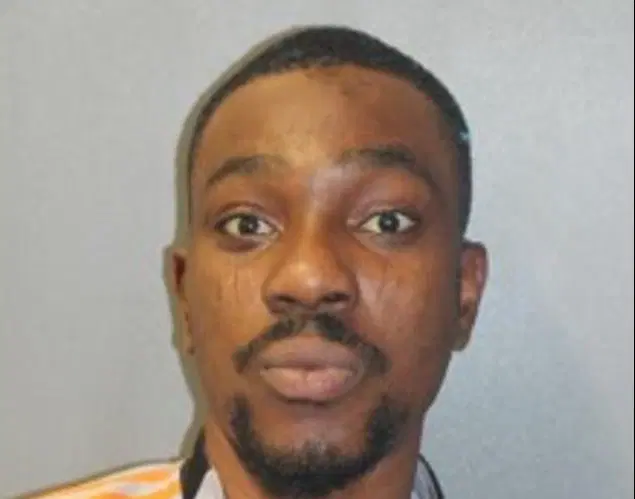
The suspect being led away after the court remand order
By PAMELA EBOH, Awka
The Anambra State Magistrate Court I, sitting at Amawbia, Awka South Local Government Area of the state, on Monday ordered the remand of the publisher of Igbo Times Magazine and INews blog, Ejike Ofoegbu, over allegations bordering on criminal defamation against the State Governor, Prof Chukwuma Soludo, members of his family, and his son, Ozonna Soludo.
The remand order came on the heels of an ex parte application moved by the prosecuting counsel, A.A. Nwanri, in Suit No. M/W/3136/2026.
The application is seeking an order remanding the defendant at the Awka Correctional Centre pending the conclusion of police investigations and the transmission of the case file to the Office of the Attorney General and Commissioner for Justice for legal advice.
Appearing before the court were A.A. Nwanri for the prosecution, the Chief Security Officer to the Governor, O.K. Nkuma, and Inspector Tochukwu Echemagu of the D-4 Section, State Criminal Investigation Department (CID), Awka, in support of the ex parte application for the defendant’s remand.
According to the prosecution team, the defendant allegedly deliberately created and published fabricated stories, defamatory content, and “satanic works of fiction” across various online platforms for the sole purpose of generating internet traffic, attracting readership, and deriving financial benefit through digital engagement.
"The principal target of the defendant’s publications was the Governor of Anambra State, Prof Chukwuma Charles Soludo, together with members of his immediate family, particularly his son, Ozonna Soludo.
"The defendant published several false and defamatory reports, including claims that Governor Soludo had publicly disowned his son; that Ozonna allegedly described his father as “a drunkard who beat my mom”; and that the Governor engaged in a “drinking competition” with a serving minister of the Federal Republic of Nigeria.
"These publications were entirely false, malicious, and deliberately designed to injure the reputation, character, and public image of the Governor and members of his family", the prosecution stated.
It further described the defendant’s conduct as one that constituted offences under the Cybercrimes (Prohibition, Prevention, etc.) Act, 2015, as amended by the Cybercrimes (Prohibition, Prevention, etc.) (Amendment) Act, 2024, particularly Section 24(1)(b) relating to cyberstalking and Section 38 concerning identity theft and impersonation.
The prosecution also relied on Sections 373 and 375 of the Criminal Code Act, which criminalise the publication of defamatory matter.
Ruling on the matter, the presiding Magistrate, C.O. Ezekwere, ordered that the original police case file, together with all exhibits relating to the matter, be compiled and transmitted to the Office of the Attorney General and Commissioner for Justice, Anambra State, for legal advice.
The court also directed that the complete record of proceedings before the Magistrate Court be forwarded to the Director of Public Prosecutions (DPP), Awka.
The Magistrate stressed that the court lacked jurisdiction to entertain or determine the substantive charges against the defendant, hence, the court declined jurisdiction over the bail application and advised the defendant to approach the High Court of Anambra State, Awka Judicial Division, for the determination of his application for bail.
Magistrate Ezekwere further said: “The Chief Security Officer to the Anambra State Government, O.K. Nkuma, and Inspector Tochukwu Echemagu, attached to the State Criminal Investigation Department (CID) of the Anambra State Command of the Nigeria Police Force, are hereby entered into recognizance in the sum of ₦50,000.00 each to testify on behalf of the prosecution before the Anambra State High Court of Justice whenever required, until the final determination of this matter.
“It is further ordered that the prosecution shall compile and transmit the original police case file, together with all exhibits relating to this matter, to the Office of the Attorney General and Ministry of Justice, Awka.
“The prosecution is equally directed to transmit the original record of proceedings in this case, alongside the original police case file, to the Office of the Director of Public Prosecutions, Awka, for legal advice.
“The application for bail before this Court is hereby refused for want of jurisdiction.
“If you understand your rights, you should immediately proceed to the High Court in Awka to apply for bail. You are represented by a counsel; consult your lawyer, who knows the appropriate legal steps to take.”
The matter was however adjourned to July 27, 2026 for a report on compliance with the court’s orders.
News Express reports that the defendant had previously issued a Public Apology and Full Retraction in respect of the disputed publications, saying that his action was only borne out of need to get online dollar payment.
He explained that he usually deleted the publications immediately after they generated enough viewership and financial gratification.
The blogger in a video interview sighted by News Express explained that he picked on the Soludos because he noticed that Ozonna was trending on social media due to his dance moves uploaded online.
But, notwithstanding the apology and retraction, the prosecution proceeded with the criminal proceedings, maintaining that the defendant remains criminally liable under the Cybercrimes Act and the Criminal Code for alleged offences including criminal defamation, cyberstalking, identity theft, and impersonation.
The prosecution contended that the subsequent retraction and apology neither extinguish nor absolve any criminal liability arising from the alleged commission of the offences and therefore do not preclude prosecution where the State considers that sufficient evidence exists to sustain the charges.