ADAD
ADAD
Updating your news feed...
NEWS EXPRESS is Nigeria’s leading online newspaper. Published by Africa’s international award-winning journalist, Mr. Isaac Umunna, NEWS EXPRESS is Nigeria’s first truly professional online daily newspaper. It is published from Lagos, Nigeria’s economic and media hub, and has a provision for occasional special print editions. Thanks to our vast network of sources and dedicated team of professional journalists and contributors spread across Nigeria and overseas, NEWS EXPRESS has become synonymous with newsbreaks and exclusive stories from around the world.
















Loading banners
Loading banners...

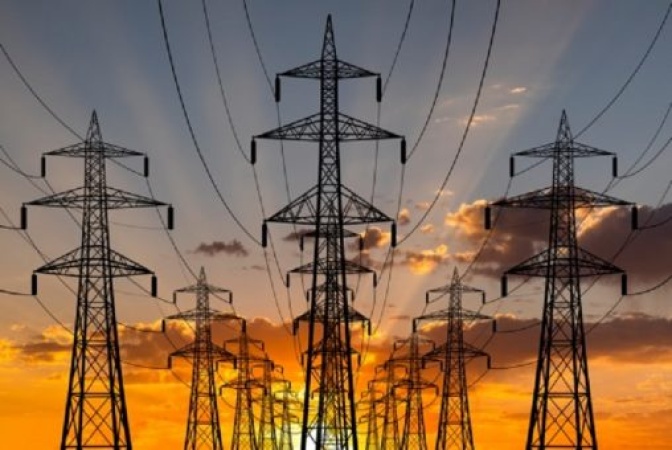
State Governments that have established their Electricity Regulatory Commissions are still reluctant to invest in generation because they cannot recoup their money.
Former Abuja Electricity Distribution Company (AEDC) Managing Director, Mr. Victor Ojelabi, at the weekend said absence of cost-reflective tariff is hindering investment in the electricity sector.
Ojelabi spoke against the background of concerns about implementation of the amended 2023 Electricity Act.
Admitting that some states have set up their regulatory commissions, he revealed that unless there is a cost-reflective tariff, the Nigerian Electricity Supply Industry (NESI) cannot make any headway with subsidy support from government.
He said that aside from Lagos State which is certain about its electricity market environment, no other state can venture into generation for uncertainty of Return on Investment.
His words: “So government should allow cost electricity tariff so that the states can invest so that any state that can generate know the money will be recouped.
“Most states have started now but they cannot start that generation because they are not sure they will recoup the investment.
“Only Lagos state has gone so far because they know the market is there. So when you say the two most performing DisCos, it is Eko Disco and Ikeja because of the environment and the cost of the cluster area that is not wide unlike the DisCos that have three to four states they are managing.
City& Local Guides
“But if they allow the sector to charge the right tariff people will invest. Power will be available and the price will come down to what band A is paying now.”
Responding, the Electricity Consumer Protection Advocacy Centre, Executive Director, Chief Princewill Okorie, insisted that no law without the enforcement of consumer right can turn around the electricity market.
He alleged that the DisCos are extorting the consumers without taking responsibility.
“So the distribution companies, they are just to be extorted and be collected money without taking responsibility. How can that sector work? So there’s no amendment that will work except there is enforcement. And that enforcement has to address consumer rights protection in the sector,” he said.
Okorie, who accused the DisCos of energy theft due to fraudulent billings and refusal to meter the customers for accurate billing, concluded that the 2023 Act has not effected any change.
According to him, the states that have set up their regulatory commissions have no sufficient manpower to address customers complaints.
Also speaking on phone, AEDC Managing Director,
Chijioke Okwuokenye said owing to the implementation of the amended 2023 Electricity Act, 16 States have established their Electricity Regulatory Commission, and the are now bringing the solutions to the Nigeria’s energy crisis are closer home.
He added that the participation of the states in electricity matters has improved.
According to him, the states are now designing the solutions to their peculiar energy issues.
The AEDC boss explained that somes states are already regulating electricity generation in relation to their kind of production, while some of them are still on the national grid, where that the Nigerian Electricity Regulatory Commission (NERC) regulates.
He revealed that they are presently designing the financing solutions and revenue projections around their states.
With the implementation of the Act, the states now develop their electricity marketers at their own pace, he said, noting that the law has engendered competition in the industry.
His words: “So I would say that what has changed most significantly is the states now have greater participation in the issue of electricity within their states. The states are now regulating
generation, depending on the kind of generation, because if you are generating to the grid, you are still on that NERC.
“But if you are doing a better generation within your state, the state regulates that. The state also regulates distribution of electricity within their state. What this has meant is the solutions are now closer home.
“So we are able to sit now with the states and develop solutions that are tailored to their state and also build financing solutions, revenue projections around the state.
“So we are not going to have a situation anymore where the whole country is backward because one place is backward. Now everybody will have the opportunity to develop at their own pace.
“ And it is also interesting because now it is also going to engineer healthy competition among the states. So some state governments are taking it very seriously.” (The Nation)