ADAD
ADAD
Updating your news feed...
NEWS EXPRESS is Nigeria’s leading online newspaper. Published by Africa’s international award-winning journalist, Mr. Isaac Umunna, NEWS EXPRESS is Nigeria’s first truly professional online daily newspaper. It is published from Lagos, Nigeria’s economic and media hub, and has a provision for occasional special print editions. Thanks to our vast network of sources and dedicated team of professional journalists and contributors spread across Nigeria and overseas, NEWS EXPRESS has become synonymous with newsbreaks and exclusive stories from around the world.




Loading banners
Loading banners...

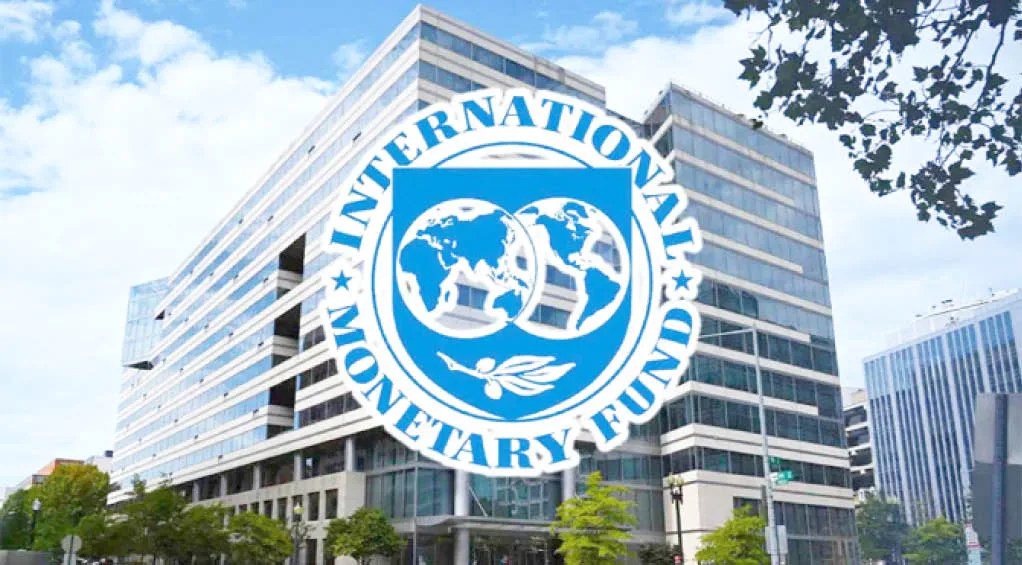
The Federal Government has come under fresh scrutiny following controversy surrounding observations by the International Monetary Fund (IMF) regarding over N8 trillion in unreported public spending.
The controversy erupted after comments attributed to the IMF’s Resident Representative in Nigeria, Christian Ebeke, during a public event in Lagos, where he reportedly stated that public expenditure equivalent to about two per cent of Nigeria’s Gross Domestic Product (GDP) had not been reflected in the country’s fiscal accounts.
Based on Nigeria’s rebased nominal GDP estimate of approximately N441.5 trillion for 2025, the figure translates to roughly N8.83 trillion.
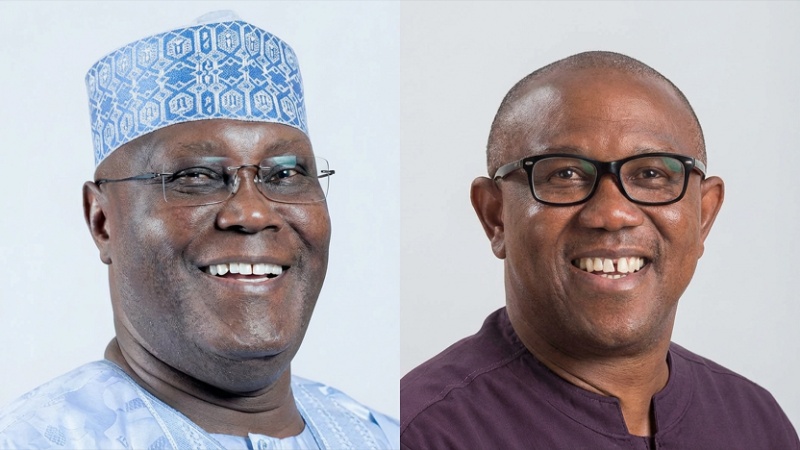
While the federal government has denied the allegation, opposition figures have pounced on the federal government, describing the allegation as disturbing.
Presidential Candidate of the Nigeria Democratic Congress (NDC), Mr. Peter Obi, reiterated his call on President Bola Ahmed Tinubu to resign.
What IMF says
Speaking at an industry event in Lagos, Christian Ebeke, resident representative of IMF in Nigeria said, “So far we think that there are about two per cent of expenditures that were not reported that should be reported and should be recorded, so that this statistical discrepancy will disappear,” Ebeke said.
Ebeke attributed the discrepancy largely to capital projects executed outside the formal budget framework, noting that the omission had distorted assessments of Nigeria’s fiscal position and public investment profile.
He explained that some government spending was neither captured in approved budget documents nor reflected in budget implementation reports, resulting in an understatement of the country’s actual fiscal deficit.
According to him, the lack of comprehensive reporting also complicates coordination between fiscal and monetary authorities, as policymakers are left without a complete picture of government finances.
Ebeke warned that off-budget spending raises broader concerns about accountability, procurement processes and institutional oversight, stressing that improving fiscal transparency should remain a priority for the government.
The IMF representative, however, acknowledged that the Federal Government has begun taking steps to address the problem through legislative reforms aimed at bringing previously unreported expenditures within the formal budget framework.
Atiku, Obi fault FG
Former Vice President Atiku Abubakar described the IMF’s observations as deeply disturbing, arguing that the reported discrepancy represented one of the most significant questions about fiscal accountability in recent years.
In a statement, Atiku alleged that the reported expenditure pointed to the existence of a parallel fiscal structure operating outside the scrutiny of the National Assembly and oversight institutions.
He argued that if trillions of naira were indeed spent without being fully reflected in official budget documents, it would raise serious constitutional and governance concerns.
He further claimed that the situation demonstrated a pattern of fiscal opacity and called for urgent intervention by democratic institutions.
According to the former presidential candidate, the National Assembly should immediately convene investigative hearings into the IMF’s findings, while the Auditor-General of the Federation should conduct a comprehensive audit of all expenditures referenced by the IMF.
Atiku also urged the Economic and Financial Crimes Commission (EFCC), the Independent Corrupt Practices and Other Related Offences Commission (ICPC), and other anti-corruption agencies to commence investigations into the reported discrepancy and any related financial transactions.
Beyond the issue of the reported expenditure, the former vice president also alleged that about N800 billion had been deducted from statutory allocations due to state governments without adequate explanation, calling for the immediate restoration of such funds if the allegations were substantiated.
He maintained that the Federal Government should publicly disclose every project financed through the expenditures in question, identify the contractors involved, explain the procurement processes followed and indicate the legal authorities under which such expenditures were approved.
“The Tinubu administration is awarding multi-trillion naira contracts, moving massive public capital, and commissioning infrastructure projects entirely beyond the reach of the Auditor-General, the nation’s procurement laws, and the legitimate oversight of the National Assembly. It is a parallel fiscal universe, one governed by executive whim, shielded from the constitutional accountability that the Nigerian people are owed.”
According to Atiku, the conduct “follows a pattern that is unmistakably familiar to anyone who has studied the fiscal governance of Lagos State under Bola Ahmed Tinubu as Governor.”
The ADC Presidential candidate added, “The only question that now confronts every Nigerian citizen, every elected representative, and every democratic institution in this republic is whether we will summon the collective will to demand accountability, or whether we will allow N8.8 trillion in unrecorded public expenditure, built on the same architecture of fiscal concealment that defined Lagos under Tinubu to become the accepted, unremarkable condition of governance in Nigeria.”
On his part, NDC presidential candidate Peter Obi, also joined the growing criticism, renewing his call for President Bola Ahmed Tinubu to resign from office.
Obi argued that the IMF’s reported observations reinforced long-standing concerns regarding transparency, accountability and public finance management under the current administration.
Describing the reported N8.83 trillion expenditure as alarming, Obi noted that the amount represented more than one-third of Nigeria’s capital expenditure budget and exceeded the combined allocations to the education and health sectors.
He contended that resources of such magnitude, if transparently managed, could have significantly transformed key sectors of the economy, improved healthcare delivery, expanded educational opportunities and stimulated employment through investments in productive sectors.
According to Obi, the latest development supports his earlier criticisms of the administration’s economic management, which he has consistently argued has failed to adequately address rising poverty, unemployment, inflation and insecurity.
FG denies N8trn claim
However, the Federal Government has strongly rejected suggestions that it operates a “shadow budget” or spends public funds outside constitutional and legal provisions.
In a statement issued by the Minister of Finance, Taiwo Oyedele, the government described media reports and public commentary suggesting that over N8 trillion had been secretly spent outside approved budgets as inaccurate and misleading.
The minister stressed that Nigeria’s Constitution clearly regulates the withdrawal and expenditure of public funds, noting that federal expenditures are incurred pursuant to Appropriation Acts, Supplementary Appropriation Acts and other statutory authorities enacted by the National Assembly.
According to the government, the existence of multi-year capital projects, statutory transfers, first-line charges, intervention funds and other legally established expenditure mechanisms should not be interpreted as evidence of unlawful spending.
The ministry explained that several categories of government expenditure are authorised under various Acts of the National Assembly and may not always be presented in exactly the same manner as annual appropriations under international fiscal reporting standards.
He argued that differences in presentation or statistical classification do not amount to secret spending or illegal expenditure.
The Minister also disputed claims that the reported discrepancy automatically translates into a larger fiscal deficit, explaining that deficits are determined by the relationship between government revenue and expenditure rather than by the presentation format adopted in annual budget documents.
According to the minister, the IMF’s comments relate primarily to improving the comprehensiveness and consistency of fiscal reporting rather than questioning the legality of government expenditure.
‘It de-markets Nigeria’
Economic expert, Dr. Marcel Okeke, in a chat with our correspondent, said the revelation smacks of corruption and lack of transparency in government.
He also called for reconciliation of figures between the federal government and the IMF.
He said, “This shows the level of corruption in the system or some kind of inefficiency. Now the government is saying that it is not correct. This calls for serious reconciliation between the IMF and the government.
“This kind of story de-markets the country a lot, both locally and globally, and if the government or the administration is not able to keep its financial record properly, what else can they do properly?
“I don’t want to go political, but there is a suspicion that this thing is happening a few months before the general election. It is like somebody is hiding something somewhere; somebody could be building a war chest somewhere in terms of billions or trillions for electoral purposes. The government should do everything to come clean.” (Daily Trust)