ADAD
ADAD
Updating your news feed...
NEWS EXPRESS is Nigeria’s leading online newspaper. Published by Africa’s international award-winning journalist, Mr. Isaac Umunna, NEWS EXPRESS is Nigeria’s first truly professional online daily newspaper. It is published from Lagos, Nigeria’s economic and media hub, and has a provision for occasional special print editions. Thanks to our vast network of sources and dedicated team of professional journalists and contributors spread across Nigeria and overseas, NEWS EXPRESS has become synonymous with newsbreaks and exclusive stories from around the world.












Loading banners
Loading banners...


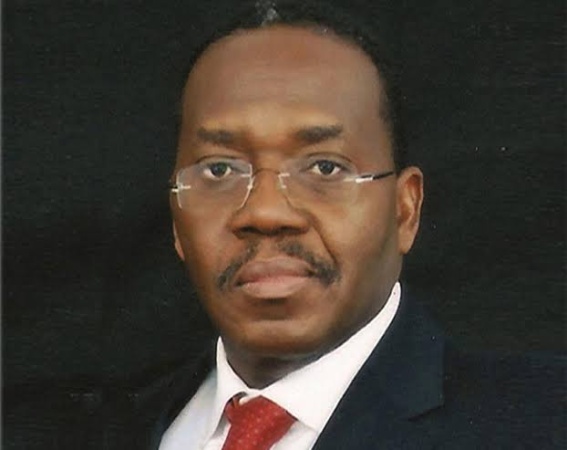
Doctor Agbakoba SAN
By BONIFACE AKARAH
Senior Advocate of Nigeria, Dr. Olisa Agbakoba, has urged the Federal Government to go beyond the proposed creation of state police by introducing constitutional reforms that would insulate critical national institutions from executive interference.
Agbakoba made the call in a letter addressed to the Secretary to the Government of the Federation, George Akume, commending President Bola Ahmed Tinubu for transmitting to the National Assembly a bill seeking to amend Section 214 of the 1999 Constitution to establish state police.
He argued that while the proposal represents a major step towards improving security, its success would depend on whether the institutions responsible for implementing it are constitutionally protected from political control.
Agbakoba also called for broader devolution of powers, saying responsibilities such as drivers' licence issuance, prison administration, marriage registration, arbitration, trade regulation and business name registration should be transferred to states and local governments.
According to him, such reforms would reduce the burden on the Federal Government and improve efficieny at the sub-national level.
"Devolution without institutional protection is reform in name only, and history has shown that where institutions lack genuine constitutional protection, they inevitably become instruments of executive power rather than servants of the people and the Constitution," he said.
The former Nigerian Bar Association president warned that state police could suffer the same fate as State Independent Electoral Commissions and local governments, which he said have largely been captured by state executives.
To avoid such a scenario, Agbakoba pointed to South Africa's constitutional model, where independent institutions derive their authority directly from the constitution rather than the executive arm of government.
"Nigeria should adopt this model. Critical institutions such as the Nigeria Police Force, INEC, the EFCC, the ICPC, the CBN, the National Judicial Council, the Attorney General, the Accountant General, the National Human Rights Commission, the Code of Conduct Bureau, and the Office of the Public Defender... should be insulated from executive control," he stated.
He proposed that these institutions should enjoy guaranteed tenure, receive funding directly from the Consolidated Revenue Fund and be accountable to the National Assembly or state Houses of Assembly instead of the President or state governors.
Citing constitutional scholar Ben Nwabueze, Agbakoba said the reforms align with the doctrine of "limited government," under which executive authority is restrained by independent constitutional institutions.
The senior lawyer further recommended an interlocking appointment and removal process for state police chiefs similar to that of the judiciary.
Under the model, he said, the Police Service Commission would nominate qualified candidates, governors would appoint them, while state Houses of Assembly would confirm the appointments. The same three-tier process, he added, should apply to their removal.
"If state police are simply handed to governors without these protections, they will inevitably become tools of oppression, and Nigeria will have traded one problem for a far worse one," Agbakoba warned.
He expressed hope that the Federal Government would give serious consideration to the proposals as part of ongoing constitutional reforms, saying stronger independent institutions are essential to deepening democracy and preventing executive overreach.