ADAD
ADAD
Updating your news feed...
NEWS EXPRESS is Nigeria’s leading online newspaper. Published by Africa’s international award-winning journalist, Mr. Isaac Umunna, NEWS EXPRESS is Nigeria’s first truly professional online daily newspaper. It is published from Lagos, Nigeria’s economic and media hub, and has a provision for occasional special print editions. Thanks to our vast network of sources and dedicated team of professional journalists and contributors spread across Nigeria and overseas, NEWS EXPRESS has become synonymous with newsbreaks and exclusive stories from around the world.























Loading banners
Loading banners...

By PAMELA EBOH, Awka
The National Human Rights Commission (NHRC) in Anambra State has pledged closer collaboration with civil society organisations to tackle stigma, discrimination, gender-based violence and other human rights violations undermining access to Malaria, Tuberculosis and HIV healthcare services across the state.
The pledge was made by the State NHRC Coordinator, Mr Obinna Maduforo, on Tuesday during an advocacy visit by the State Advocacy Team (SAT) of the HIV/AIDS, Tuberculosis and Malaria (HTM) Networks under the Global Fund-supported Integrated Community-Led Monitoring (i-CLM) Project to the NHRC State Secretariat.
According to the advocacy team, findings from community monitoring had revealed widespread human rights concerns affecting beneficiaries of HIV, TB and Malaria programmes.
It stressed that those violations were discouraging many vulnerable persons from seeking healthcare and adhering to treatment.
On her part, the Anambra State Coordinator of the Tuberculosis Network and State Advocacy Team Focal Lead on the i-CLM Project, Mrs. Ify Unachukwu, identified gender-based violence, stigma and discrimination against people living with HIV and TB, breaches of patient confidentiality, unequal treatment of vulnerable persons and weak referral systems as some of the major barriers to quality healthcare.
She also pointed cited poor awareness of patients’ legal rights, fear of reporting abuses because of stigma and retaliation, and weak accountability mechanisms within some health facilities as factors contributing to persistent violations.
Unachukwu said: “The situation has serious implications for public health, as many affected persons delay seeking medical care, interrupt treatment or fail to adhere to prescribed medications, resulting in poorer health outcomes.
“These issues are not only violations of fundamental human rights but also major obstacles to achieving better health outcomes for people living with HIV, TB and those at risk of malaria.”
She however stressed the need for stronger institutional collaboration to ensure that victims of rights violations have access to justice while healthcare providers are held accountable for discriminatory practices.
In his speech, the State Programme Officer of the TB Network, Mr. Onyekachi Ololo, called for a more robust partnership between the NHRC and civil society organisations implementing the i-CLM Project.
He enjoined the Commission to work with health advocacy groups to establish effective referral pathways for victims of human rights violations, strengthen public awareness on patients’ rights, improve documentation of abuses and enhance accountability in healthcare service delivery.
In his response, the Anambra State Coordinator of the National Human Rights Commission, Mr Maduforo, described the concerns raised by the advocacy team as consistent with the Commission’s mandate to protect and promote the rights of all citizens without discrimination.
He acknowledged that stigma, gender-based violence, discrimination and denial of access to healthcare stands as serious human rights challenges requiring coordinated action by government agencies, civil society organisations and community stakeholders.
While reaffirming the Commission’s commitment to receiving and investigating complaints of human rights violations, providing mediation where necessary, conducting public enlightenment campaigns, monitoring compliance with national and international human rights standards and promoting equal access to essential public services, including healthcare, Maduforo called for sustained engagement between the Commission and the State Advocacy Team to improve public awareness of available complaint mechanisms.
He noted that such engagement will strengthen referrals involving discrimination and gender-based violence cases, and deepen advocacy for the protection of the rights and dignity of persons affected by HIV, TB and Malaria.
Both organisations however agreed to strengthen collaboration through human rights education for healthcare workers, community sensitisation on patients’ rights and responsibilities, improved referral systems between health facilities and the NHRC.
It also gave a nod to joint advocacy against stigma as well as gender-based violence, capacity building for community monitors and policy dialogue aimed at improving accountability within the health sector.
The advocacy visit was part of ongoing efforts under the Global Fund-supported Integrated Community-Led Monitoring Project to integrate human rights into public health programming and ensure that vulnerable populations have equitable access to quality healthcare services.
Other members of the advocacy delegation included the Anambra State Coordinator of the Network of People Living with HIV/AIDS in Nigeria (NEPWHAN), Mrs. Gladys Ezembu, and the State Coordinator of the Association of Civil Society Organisations for Malaria Control, Immunisation and Nutrition (ACOMIN), Mrs. Chioma Okeke.
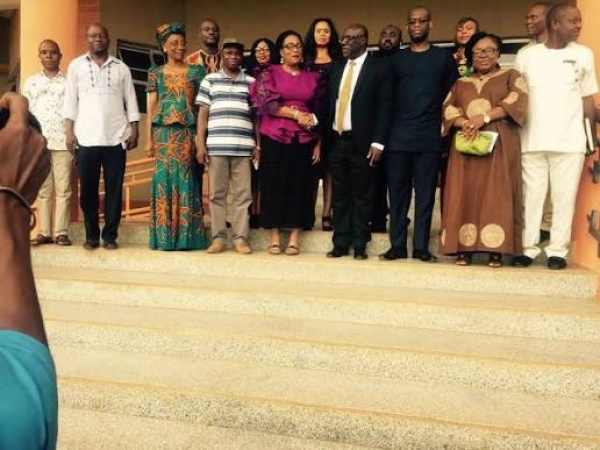
•PHOTO: Anambra NHRC Coordinator Obinna Maduforo (Middle), with the visiting delegation of activists on Tuesday