 ADAD
ADADUpdating your news feed...

NEWS EXPRESS is Nigeria’s leading online newspaper. Published by Africa’s international award-winning journalist, Mr. Isaac Umunna, NEWS EXPRESS is Nigeria’s first truly professional online daily newspaper. It is published from Lagos, Nigeria’s economic and media hub, and has a provision for occasional special print editions. Thanks to our vast network of sources and dedicated team of professional journalists and contributors spread across Nigeria and overseas, NEWS EXPRESS has become synonymous with newsbreaks and exclusive stories from around the world.
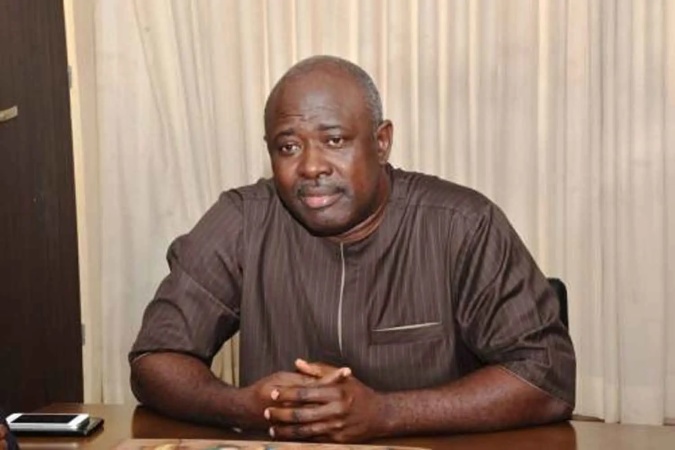
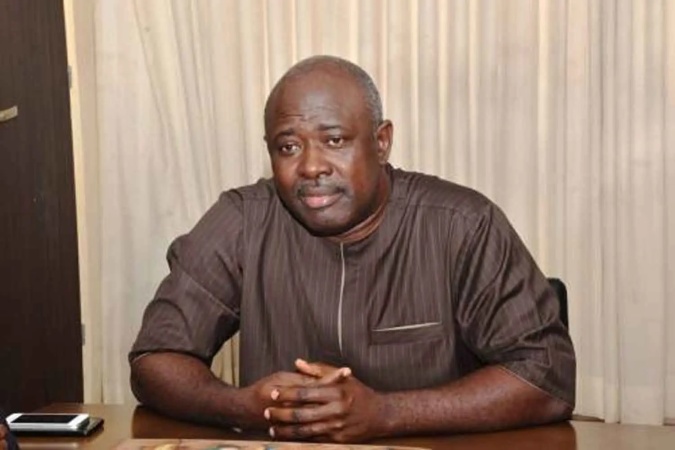
Minister of State for Petroleum Resources Oil, Senator Heineken
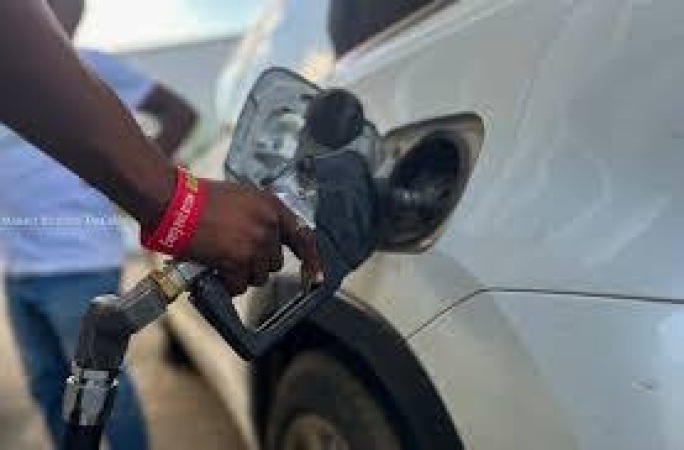
Owing to the de-escalation of the US-Israel-Iran war, which had pushed crude oil and Premium Motor Spirit (PMS) petrol prices to as high as $126 per barrel and N1,400 per litre, the Minister of State for Petroleum Resources (Oil), Senator Heineken Lokpobiri, on Monday called for a proportional reduction in petrol prices.
The call followed a crash in crude oil prices to as low as $72 per barrel, while petrol still sells at an average of N1,320 per litre in Nigeria. EITIValidation Support
Lokpobiri made the call during the Nigerian Midstream and Downstream Petroleum Regulatory Authority (NMDPRA) General Counsel and Legal Advisers Forum 2026 in Abuja.
The theme of the event was “Beyond Compliance: Driving Regulatory Certainty and Investment Confidence in Nigeria’s Petroleum Sector.”
The minister said, “Furthermore, following the de-escalation of tensions between Iran and the United States, we expected to see commensurate downward adjustment in the prices of PMS and other petroleum products.
However, that has not yet happened.”
Lokpobiri expressed surprise that, despite the restoration of peace on the war front, PMS prices have yet to dip in Nigeria.
He, however, warned that while petrol market forces are expected to bring about an equilibrium, NMDPRA must not allow deregulation to lead to profiteering.
He insisted that the market must comply with the stipulations of the Petroleum Industry Act (PIA).
Lokpobiri added, “However, that has not yet happened. While we believe that market forces will eventually restore equilibrium, the regulator also has a statutory responsibility to ensure that deregulation does not become an avenue for profiteering.
“This must be done in line with the extant provisions of the Petroleum Industry Act (PIA).”
The minister also raised concerns about the dispensation of the correct quantities of products.
He asked what the NMDPRA is doing to ensure that the actual quantity the consumer pays for is sold.
“Beyond allowing prices to be determined by market forces, the question is: what is the regulator doing to ensure that consumers receive the correct quantity of product?
“When someone pays for 10 litres of Premium Motor Spirit (PMS), they should receive exactly 10 litres, not less,” the minister stressed.
He insisted that compliance is fundamental, noting that the lawyers advising licensed operators also have a critical responsibility to ensure that their clients comply with all applicable laws and regulations, thereby safeguarding their licences and avoiding regulatory sanctions.
He said it is the role of lawyers to ensure their clients play by the rules of the law and meet commercial realities.
Lokpobiri put it to the lawyers that they are not simply interpreters of rules but architects of the investor experience.
Explaining the role of the judiciary in the petrol market, he said, “When a regulation is ambiguous, you are the ones investors call. When a guideline creates more questions than it answers, you are the ones who must navigate it.
“When a compliance obligation is technically met but commercially absurd, you are often the only people in the room who see both sides of that contradiction. That is not a burden. That is strategic influence. The modern General Counsel is not a gatekeeper.
“The modern General Counsel is a strategic partner in commercial decision-making, in regulatory design, and in national development.
“Your role is not only to ask, ‘Is this lawful?” It is to ask, “Does this regulation achieve its stated objective? Does it enable responsible investment or frustrate it? Does it create certainty or ambiguity?”
“These are not legal questions alone. They are governance questions. And you are uniquely positioned to answer them.
I therefore say this clearly: do not become stumbling blocks. Do not allow the instinct toward caution, which is entirely legitimate in legal practice, to harden into an instinct toward obstruction.
“We will not be judged by the number of regulations we produce or the volume of guidelines we issue. We will be judged by the investments we attract, the businesses we enable, the jobs we create, and the value we leave behind for future generations.”
In his opening remarks, the NMDPRA Chief Executive, Malam Rabiu Abdullahi Umar, recalled that last year’s Forum successfully established compliance as a shared value between the Authority and the legal leadership of licensed operators.
He said it was an important achievement.
Umar said, however, that compliance, while essential, is not an end in itself. Compliance, according to him, was and remains the foundation.
The NMDPRA boss said the broader objective is to create a petroleum Industry characterised by certainty, predictability, transparency and confidence.
He called for the attainment of a sector in which investors can commit capital with clarity, a sector in which operators can make long-term business decisions with confidence, a sector in which regulatory expectations are clearly understood and consistently applied, and ultimately, a sector capable of supporting Nigeria’s broader economic aspirations.
The Petroleum Industry Act 2021, he said, fundamentally altered the legal and regulatory landscape of our industry.
Continuing, he said, “The Act created new institutions. It established new market frameworks. It introduced new compliance obligations. It created new opportunities for investment, and it placed new responsibilities on regulators, operators and legal practitioners alike.
“Five years into the implementation of the PIA, we have reached an important stage in our journey. The focus is no longer solely on what the law says.
” The focus is increasingly on how the law is being implemented, how regulations are operating in practice, how markets are responding to reforms, how investors are assessing opportunities, and how institutions are working together to achieve the objectives that the legislation envisioned.
“These questions sit at the heart of this Forum. Over the next two days, we will explore them from multiple perspectives across six sessions that promise to be engaging.” (The Nation)