ADAD
ADAD
Updating your news feed...
NEWS EXPRESS is Nigeria’s leading online newspaper. Published by Africa’s international award-winning journalist, Mr. Isaac Umunna, NEWS EXPRESS is Nigeria’s first truly professional online daily newspaper. It is published from Lagos, Nigeria’s economic and media hub, and has a provision for occasional special print editions. Thanks to our vast network of sources and dedicated team of professional journalists and contributors spread across Nigeria and overseas, NEWS EXPRESS has become synonymous with newsbreaks and exclusive stories from around the world.

















Loading banners
Loading banners...

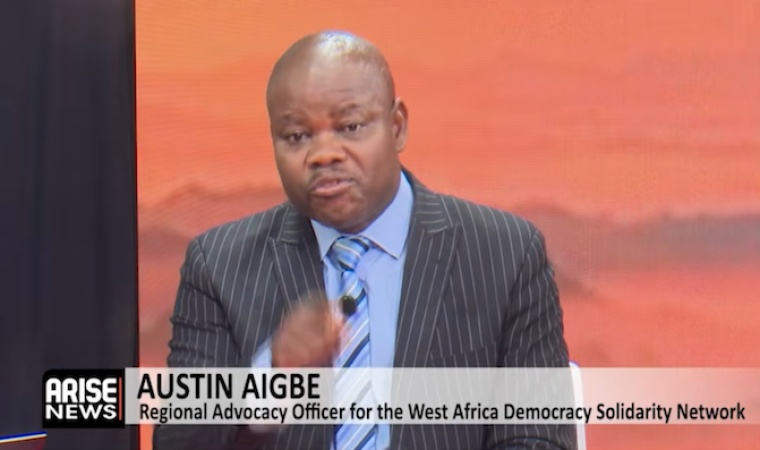
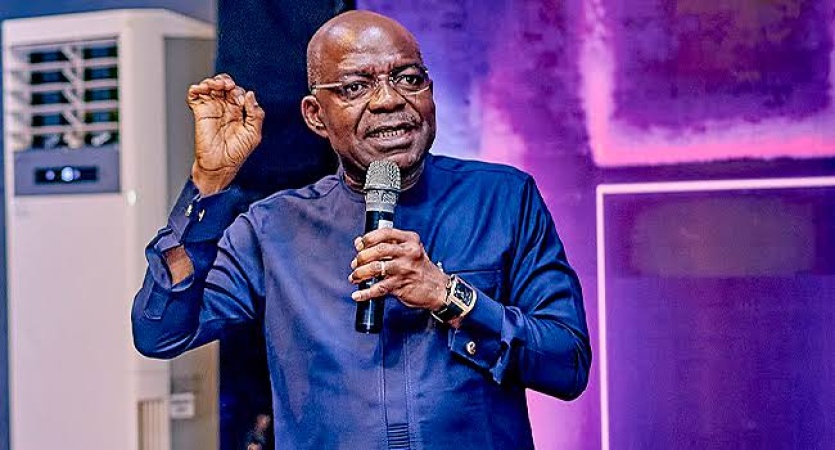
The regional advocacy officer for the West Africa Democracy Solidarity Network, Austin Aigbe, has described the recently concluded Ekiti State governorship election as “free with fear,” raising concerns over vote buying, alleged voting without Permanent Voter Cards (PVCs), and isolated BVAS failures.
Speaking with ARISE NEWS on Monday, Aigbe warned that if the reported irregularities are not thoroughly addressed by relevant authorities, similar challenges could emerge in the forthcoming Osun governorship election and the 2027 general elections.
“For me, Ekiti election came out a bit fairly. Somebody said it was free and fair, credited to the governor of Kaduna State. I would rather say it was free with fear because there were certain aspects that people could not just stop—for instance, vote buying. That’s something that we need to deal with. But we can’t put that at the doorstep of INEC; it is squarely at the doorstep of security, architecture to handle that.
“There were trending videos the day before, or even yesterday, on Saturday’s election, that there were deliberate Permanent Voter Cards (PVCs) that were given to voters, or would-be voters, or unknown people. People voted without the PVC, with some form of slip. INEC needs to totally clarify that. It is important. We do not have incident forms in our electoral architecture; it does not exist today. So which form was that that was issued to voters to vote? We must prefer that. In 14% of polling units? That is huge.
“Beyond that is the BVAS failure in 10%. And, of course, the Situation Room report that talked about the inability of certain persons with disability to access polling units freely and fairly, or the issues around the inability of some voters to access their polling units—the same case that we saw in the FCT election. These are not good for electoral architecture. But the one that actually pricked my mind, which I think is important, is the voting without PVC because what has happened in this election has the possibility of happening in the Osun election, and once it can set a trend in Ekiti, it will set a trend in Osun, and it will go to the 2027 general election, and then it may create some chaos that may not be very good for Nigeria,” he warned.
Speaking further, Aigbe said the outcome of the Ekiti governorship election did not come as a surprise to him, arguing that Governor Biodun Oyebanji had spent years building strategic political alliances ahead of the poll. According to him, the governor engaged opposition figures and former governors across the state in efforts that helped consolidate support and weaken resistance ahead of the election.
“That result is not surprising at all. I was expecting that the way the governor had pulled out in the last one to two years, you expect that he had prepared for the election sincerely. I mean, he started meeting opposition candidates far back, a year ago. He has met with the former governor—in fact, all the former governors he had met with. He has tried as much as possible to draw those forces that were against him in the election,” he explained.
However, he alleged that reports of vote-buying activities cast a shadow over the exercise. Referencing claims that large sums of cash were moved around the state on the eve of the election, Aigbe questioned why anti-corruption agencies and security operatives did not take stronger action against alleged vote buyers.
“A day before the election, there were reports of one of the hotels, the Elite Hotel, having movement of ‘Ghana-Must-Go’ bags, and people were moving. There were observers who were leaving, that were staying in the facility, who were almost having challenges accessing their hotel rooms because a very important Excellency was in the hotel, and there was all manner of security there because ‘Ghana-Must-Go’ was going in and out. And that flag was on on a Friday. And I thought that the EFCC, having a state office in Ekiti, ought to have arrested or prepared more to deal with vote buyers,” he claimed.
On the issue of vote buying, Aigbe insisted that the responsibility does not lie with the Independent National Electoral Commission (INEC) but with security agencies and citizens themselves.
“But in that conversation, I told some folks: citizens have a direct responsibility to deal with vote buyers. Since we’ve lost confidence in the police’s ability to arrest or to deal with vote buying—because it’s largely at the doorstep of security architecture—you cannot put the arresting of vote buyers or vote sellers at the doorstep of INEC. It is not the responsibility of INEC, and we must put that on record,” he insisted.
Expressing concern over the “weaponisation of poverty,” Aigbe urged voters to reject financial inducements and vote buying.
“Because of vote buying and the weaponization of poverty, voters are beginning to think of election day because that’s the only time they collect money from these politicians. On that vote buying, it is the duty of the police. And I want to extend that duty—that to prevent crime, it is a citizen’s responsibility. Citizens have a right to say no to vote buying, in fact, to kick against it at the polling unit.
“But we cannot just keep saying kick against it; citizens must unite. If you want a fair election, go ahead and create an environment that will make it almost impossible, because it’s a difficult thing to say you stop it at a go—almost impossible that anybody brings money to the polling unit or around the polling unit, you chase them out. If they cannot see and buy, there won’t be vote buying. Create that scene,” he urged.
Calling on INEC to clarify reports that some voters were allegedly allowed to vote using forms despite not presenting Permanent Voter Cards (PVCs), Aigbe said such incidents, if confirmed, could undermine confidence in the electoral process and create discrepancies between accreditation records and the total number of votes cast.
“Then two, for BVAS, I’m truly worried. The Electoral Act did not say INEC will use—when BVAS failed, INEC will then move to the use of some form, maybe they call it whatever form they want to call it. The BVAS failure is squarely at the doorstep of INEC, and INEC must, of necessity, explain why it failed because there was a failure in the FCT election. That is outrageous, that people were given forms like incident forms to vote with the absence of—maybe those PVCs that were handed over to people to go to vote because they know they are already aware that these numbers are coming, allowed them when they get there, they just give them a form. Which means the record on BVAS will not correlate with the vote cast,” he lamented.
On the state of the opposition, Aigbe said political parties must focus on organisation rather than lamentation, stressing that they cannot effectively challenge election outcomes without deploying agents across polling units and providing credible, polling-unit-specific evidence of alleged irregularities.
“It is very important. Opposition must organize; they must stop agonizing. The Nigerian jurisprudence may not be very good for that kind of trajectory wherein if you must prove beyond reasonable doubt that there’s a substantial issue with the polling unit to be able to counter that polling unit,” he said.
Aigbe further rejected any justification for INEC’s use of vote slips, arguing that electoral procedures cannot be altered on election day and that contingency measures already exist for BVAS failure.
“There’s a rule. INEC cannot produce a rule on election day. The rule is that where the BVAS failed, there will be replacement within the registration center, so it comes in quickly.
“However, if within the period of the election, of the voting process up to 2:30 or thereabout, there is no replacement, the presiding officer will inform the voter that this election has been postponed to the next day because everybody must go through their accreditation process. And the accreditation process is the use of the device to ascertain that the person who came with the PVC is the owner of that PVC,” he argued. (Arise News)