Updating your news feed...
NEWS EXPRESS is Nigeria’s leading online newspaper. Published by Africa’s international award-winning journalist, Mr. Isaac Umunna, NEWS EXPRESS is Nigeria’s first truly professional online daily newspaper. It is published from Lagos, Nigeria’s economic and media hub, and has a provision for occasional special print editions. Thanks to our vast network of sources and dedicated team of professional journalists and contributors spread across Nigeria and overseas, NEWS EXPRESS has become synonymous with newsbreaks and exclusive stories from around the world.














Loading banners
Loading banners...

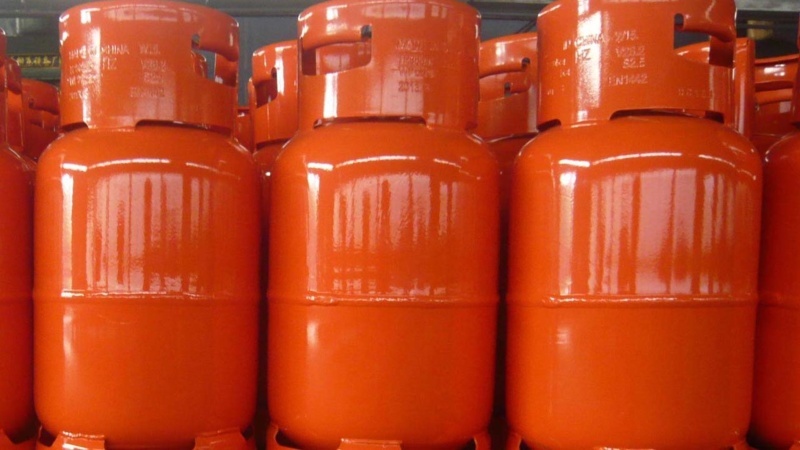
Cooking gas cylinders
By BONIFACE AKARAH
The Human Rights Writers Association of Nigeria (HURIWA) has condemned the soaring cost of cooking gas across the country, warning that the continued rise in prices is pushing millions of Nigerians deeper into poverty and threatening their right to life and human dignity.
The group expressed concern over reports that Liquefied Petroleum Gas (LPG), commonly known as cooking gas, is selling for as much as N2,000 per kilogram in several parts of the country, describing the development as both an economic and human rights crisis.
In a statement issued on Friday and signed by its National Coordinator, Comrade Emmanuel Nnadozie Onwubiko, HURIWA said the escalating cost of cooking gas has placed a basic household necessity beyond the reach of many Nigerians already struggling with rising food prices, transportation costs, electricity tariffs and healthcare expenses.
According to the association, the situation is particularly troubling given Nigeria's vast natural resources and the constitutional obligation of government to protect the welfare of citizens.
HURIWA argued that the consequences of making household energy unaffordable extend beyond economics and have direct implications for public health and human survival.
"The astronomical rise in the price of cooking gas is not merely an economic issue but a fundamental human rights concern," Onwubiko stated.
"The direct consequence of making essential household energy unaffordable is mass hunger, malnutrition, disease and avoidable deaths among vulnerable populations."
The rights group noted that many households are increasingly being forced to choose between cooking their meals and meeting other basic needs, a situation it said reflects the severity of the country's cost-of-living crisis.
HURIWA further maintained that the development runs contrary to the spirit of the Constitution, particularly provisions relating to the protection of life and the welfare of citizens.
"A government that watches helplessly while essential commodities become inaccessible to the majority of citizens cannot claim to be fully discharging its constitutional and moral responsibilities," the statement said.
The association stressed that the right to life should not be narrowly interpreted as protection from violence alone but should also encompass conditions necessary for citizens to live in dignity.
"When citizens are pushed into extreme deprivation through unchecked economic hardship, the consequences are often fatal," Onwubiko added.
The organisation also expressed concern over what it described as the absence of effective regulatory measures to prevent profiteering and exploitative pricing in the cooking gas market.
According to HURIWA, responsible governments across the world deploy consumer protection mechanisms, market interventions and anti-monopoly measures to shield citizens from excessive price increases in essential commodities.
The group accused authorities of leaving Nigerians vulnerable to profit-driven market actors whose activities, it said, are worsening poverty and social hardship.
"It is unacceptable that Nigerians are being left at the mercy of market forces and profit-driven actors whose actions are deepening social misery," the association stated.
HURIWA therefore called on the administration of President Bola Ahmed Tinubu to immediately investigate the factors driving the increase in cooking gas prices and implement measures aimed at stabilising the market.
The group urged relevant regulatory agencies to identify and sanction individuals or companies engaged in exploitative pricing practices and consider targeted interventions capable of reducing the burden on consumers.
The association warned that continued inaction could trigger wider social and environmental consequences, including increased dependence on firewood and charcoal, environmental degradation, worsening public health conditions and deeper hardship for low-income households.
Reiterating its position, HURIWA said governance should ultimately be judged by its impact on the lives of ordinary citizens.
"Any economic policy or regulatory failure that results in widespread hunger, suffering and preventable deaths cannot be justified under any democratic system," Onwubiko said.
The organisation added that Nigerians deserve a government that actively protects citizens from economic exploitation, safeguards their welfare and upholds constitutional guarantees relating to life and human dignity.