Updating your news feed...
NEWS EXPRESS is Nigeria’s leading online newspaper. Published by Africa’s international award-winning journalist, Mr. Isaac Umunna, NEWS EXPRESS is Nigeria’s first truly professional online daily newspaper. It is published from Lagos, Nigeria’s economic and media hub, and has a provision for occasional special print editions. Thanks to our vast network of sources and dedicated team of professional journalists and contributors spread across Nigeria and overseas, NEWS EXPRESS has become synonymous with newsbreaks and exclusive stories from around the world.























Loading banners
Loading banners...


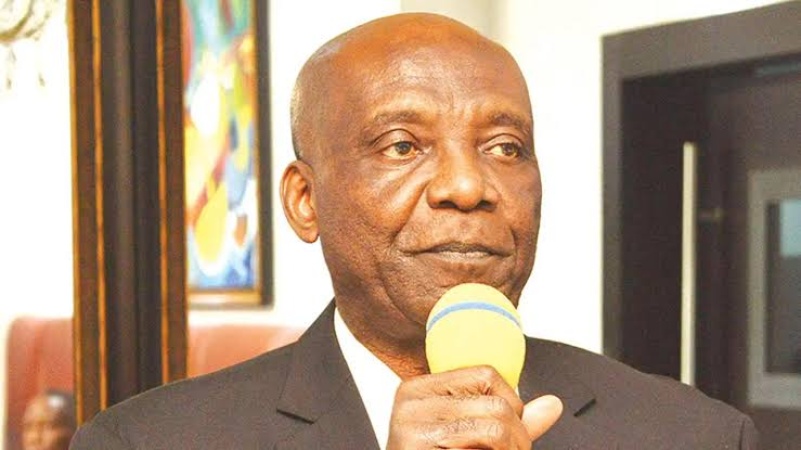
CBN Gov Yemi Cardoso
International students from Nigeria are facing renewed financial pressure after the Central Bank of Nigeria (CBN), introduced a $25,000 per semester cap on foreign exchange payments for tuition, tightening access to official funding channels for overseas education.
According to the CBN Foreign Exchange (FX) Manual, 4th Edition, released on Wednesday, the policy, issued through updated guidelines to authorised dealer banks, restricts the amount of foreign exchange that can be remitted for tuition payments and strengthens documentation requirements for students studying in universities and polytechnics abroad.
The move is part of broader efforts by the apex bank to manage foreign exchange demand and preserve external reserves amid continued pressure on the naira.
Under the new framework, tuition payments for both undergraduate and postgraduate students will only be approved upon submission of a completed Form ‘A’ alongside supporting documents.
These include evidence of admission and course programme, a detailed tuition breakdown for the relevant academic period, the international passport biodata page of the student, and a student identity card for returning students.
Also, postgraduate applicants must also present a first degree certificate or a certified true copy of their academic results.
The CBN said authorised dealer banks will only process payments when all requirements are satisfied, effectively increasing scrutiny over student-related foreign exchange requests.
In addition to tuition limits, the regulator clarified rules governing maintenance allowances for students abroad. Where tuition and living expenses are combined in a single invoice, payments will be made directly to the educational institution, and no separate living allowance will be provided to the student.
However, where maintenance costs are billed separately or the student is living off-campus, a maintenance allowance may be paid directly to the student, capped at $5,000 per quarter.
The tightening measures have raised concerns among Nigerian students and parents, particularly those enrolled in institutions in high-cost education markets such as the United Kingdom, United States, and Canada.
In many cases, tuition fees at universities in these countries exceed the new cap, leaving families to bridge significant funding gaps through personal savings, loans, or scholarships. Aisha Olumegbon, a Nigerian postgraduate student in Manchester, described the new cap as “worrying and confusing,” saying it adds uncertainty to already tight budgets.
“My tuition alone is more than the cap per semester. That means my family now has to find additional funding quickly or I risk delays in payment,” she said.
Ade Olaoluwa, a Lagos-based education consultant, who advises students applying to universities in the UK and Canada, said the cap introduces “a serious funding gap for many middle-income families already stretched by exchange rate volatility.”
He added that while the policy may not stop students from going abroad, it would “force families to restructure plans, look for cheaper universities, or delay admission altogether.”
“These students may increasingly rely on alternative funding sources such as domiciliary accounts, private foreign transfers, or diaspora support networks to meet financial obligations.
For returning students, the stricter verification process may also introduce delays in tuition payments, adding administrative uncertainty to already tight academic timelines”, Olaoluwa explained.
Financial institutions processing Form ‘A’ applications are expected to exercise greater caution in verifying documentation before approving remittances.
Although the CBN has not issued additional commentary beyond the directive, but the move aligns with its broader foreign exchange management strategy, which has seen gradual tightening across several segments of the FX market in recent years.
The Monetary Policy Committee (MPC) have repeatedly emphasized the need to prioritise critical imports and reduce pressure on external reserves.
While the policy does not prohibit international education for Nigerian students, this directive could deepen inequality in access to overseas education, as only students with substantial private funding or scholarship support will be able to fully bridge the gap.
As the new rules take effect, families and students are now recalculating budgets, with many bracing for higher out-of-pocket costs to sustain studies abroad. (The Sun)