ADAD
ADAD
Updating your news feed...
NEWS EXPRESS is Nigeria’s leading online newspaper. Published by Africa’s international award-winning journalist, Mr. Isaac Umunna, NEWS EXPRESS is Nigeria’s first truly professional online daily newspaper. It is published from Lagos, Nigeria’s economic and media hub, and has a provision for occasional special print editions. Thanks to our vast network of sources and dedicated team of professional journalists and contributors spread across Nigeria and overseas, NEWS EXPRESS has become synonymous with newsbreaks and exclusive stories from around the world.


























Loading banners
Loading banners...

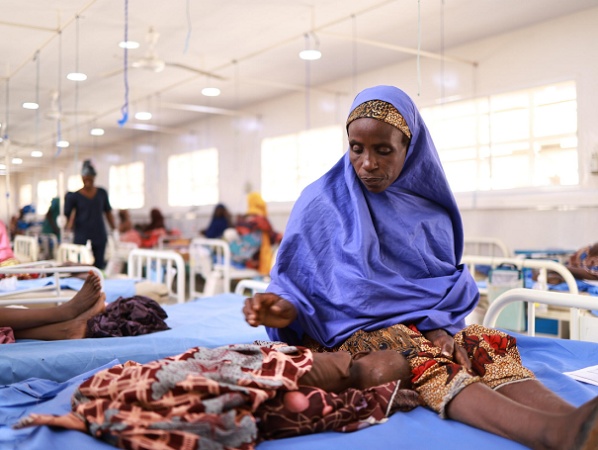
Healthcare setting amid concerns over hospital malnutrition
Health experts have raised concerns over the growing burden of hospital malnutrition in Nigeria, revealing that between 30 and 45 per cent of patients admitted into tertiary healthcare facilities are already malnourished.
They warned that the situation is contributing to prolonged hospital stays, increased treatment costs, higher rates of complications and avoidable deaths, underscoring the need for stronger nutrition screening and intervention measures within the healthcare system.
The experts disclosed on Monday while announcing the 5th Annual Clinical Nutrition Conference of the West African Society of Parenteral and Enteral Nutrition (WASPEN), scheduled to hold from June 22 to 25, 2026, at the Federal Medical Centre (FMC), Asaba, Delta State.
Speaking during a virtual press conference, Founder and President of WASPEN, Teresa Isichei Pounds, described hospital malnutrition as a “silent epidemic” that remains one of the most overlooked threats to patient safety and recovery in Nigeria’s healthcare system.
According to her, malnutrition affects patients across all age groups, including premature babies in neonatal intensive care units, children suffering severe illnesses, and adults battling chronic conditions such as HIV, tuberculosis, cancer and surgical complications.
She noted that evidence has consistently shown that malnourished patients are more likely to experience delayed wound healing, increased infections, prolonged hospitalisation, higher healthcare expenses, repeated hospital admissions and elevated mortality rates.
“Hospital malnutrition is a silent epidemic in Nigeria. Studies show that between 30 and 45 per cent of patients in tertiary hospitals are malnourished on admission, while the figure rises to as much as 71 per cent among elderly patients in some hospital wards,” she said.
Pounds also cited reports indicating that more than 800 children suffering severe malnutrition died in health facilities in Katsina State in 2024 alone, stressing that inadequate nutrition screening and the absence of multidisciplinary nutrition support teams in many hospitals continue to worsen outcomes.
Read Also: Protest rocks Ibadan over Oyo school abduction
She lamented that despite its critical role in recovery and patient survival, nutrition care has yet to be fully integrated into routine clinical practice in many healthcare facilities across Nigeria and the wider West African region.
To address the challenge, WASPEN said this year’s conference will focus on developing sustainable clinical nutrition systems capable of improving access to nutrition care, ensuring patient safety and strengthening collaboration among healthcare professionals and institutions.
The conference, themed “Sustainable Clinical Nutrition Services: Ensuring Access, Safety and Collaboration,” is expected to attract more than 300 participants, including physicians, pharmacists, nurses, dietitians, researchers, policymakers and international experts from within and outside Nigeria.
Pounds said special attention would be given to neonatal and paediatric nutrition, noting that newborns and children remain among the most vulnerable groups whose survival and long-term development depend heavily on timely and appropriate nutritional support.
She disclosed that the event would feature scientific presentations, policy discussions, practical workshops, community outreach activities and an expert roundtable on safe parenteral nutrition for neonates in resource-limited settings.
Related News
Court grants final forfeiture of N335m, hospital, five filling stations, others to Fed Govt
Abduction: Injured monarch’s wife discharged from hospital
Lawmaker renovates Mushin General Hospital
The WASPEN president said the conference would also serve as a platform to review progress made over the past five years in advancing clinical nutrition practice in West Africa.
Founded in 2019, WASPEN was established to promote education, research, advocacy and interdisciplinary collaboration in clinical nutrition. According to Pounds, the organisation has since expanded into a regional network involving doctors, pharmacists, nurses, dietitians, researchers, policymakers and industry stakeholders.
She highlighted some of the society’s achievements including the establishment of multidisciplinary Nutrition Support Steering Committees in major healthcare institutions such as Lagos University Teaching Hospital, Ahmadu Bello University Teaching Hospital, National Hospital Abuja, Army Command and NAOWA Hospital Abuja, and Niger Delta University Teaching Hospital.
The organisation has also coordinated regional Malnutrition Awareness Week campaigns in partnership with international nutrition bodies and contributed to research aimed at improving nutrition outcomes, reducing hospital readmissions and strengthening evidence-based healthcare policies.
Also speaking, Medical Director of Federal Medical Centre Asaba, Ekeneam Omo, said the institution was fully prepared to host the conference and hoped to leverage the event to strengthen its response to malnutrition.
“We are actually very excited that we are going to be the ones hosting the event. Before now, we had specialists handling issues of malnutrition in their various units and departments, but with the awareness created by WASPEN, we hope to have a hospital-wide approach to malnutrition issues,” he said.
Omo disclosed that the Delta State Government had indicated support for the conference and that necessary arrangements were being made to ensure its success.
Similarly, Chairman of the conference, Paul Osogbe Enebeli, called for clinical nutrition to be treated as an essential component of healthcare rather than a supplementary service.
According to him, poor nutrition continues to undermine treatment outcomes, prolong recovery periods and place additional financial burdens on patients, families and healthcare institutions.
He noted that many of these consequences could be prevented through routine nutrition screening, early intervention and coordinated multidisciplinary care.
“What is often overlooked is that many of these outcomes are preventable. With timely nutrition screening, early intervention and coordinated multidisciplinary care, many patients recover faster, respond better to treatment and experience fewer complications,” Enebeli said.
He added that the conference would seek to strengthen multidisciplinary nutrition support teams, encourage the adoption of standardised nutrition screening practices, promote policy dialogue and stimulate research and innovation in clinical nutrition across West Africa.
Enebeli further commended the Federal Ministry of Health and Social Welfare and international partners, including the American Society for Parenteral and Enteral Nutrition and International Society for Pediatric and Adolescent Nutrition, for supporting efforts to improve patient outcomes through enhanced nutrition care systems.
Stakeholders at the briefing called on governments, healthcare institutions, professional bodies, development partners and the media to support efforts aimed at improving nutrition screening, expanding access to nutrition therapy and integrating nutrition care into mainstream healthcare delivery across the region. (The Nation)