ADAD
ADAD
Updating your news feed...
NEWS EXPRESS is Nigeria’s leading online newspaper. Published by Africa’s international award-winning journalist, Mr. Isaac Umunna, NEWS EXPRESS is Nigeria’s first truly professional online daily newspaper. It is published from Lagos, Nigeria’s economic and media hub, and has a provision for occasional special print editions. Thanks to our vast network of sources and dedicated team of professional journalists and contributors spread across Nigeria and overseas, NEWS EXPRESS has become synonymous with newsbreaks and exclusive stories from around the world.

























Loading banners
Loading banners...


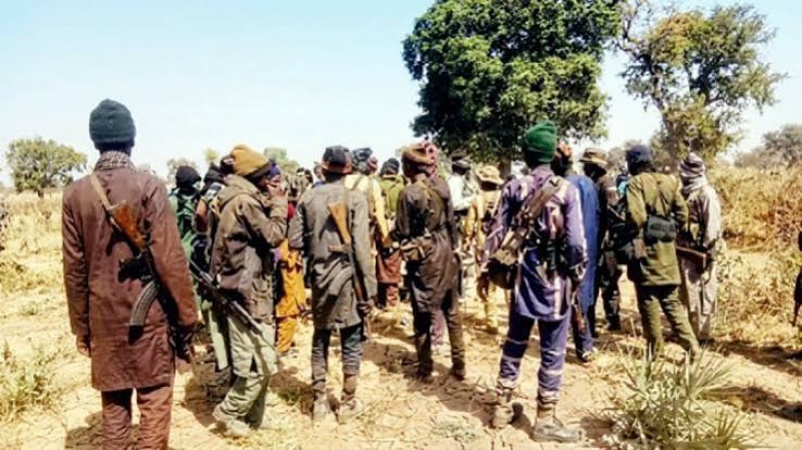
Nigerian troops in a forest during an operation
Forests and porous border corridors stretching across Oyo, Osun, Ogun and Ekiti States have become major infiltration routes for bandits and kidnappers entering the South-West, Saturday PUNCH findings have revealed.
Credible sources, including hunters, operatives of the Oodua Peoples Congress and local residents, disclosed that armed groups fleeing military operations in the North were exploiting weak surveillance across forest reserves and boundary communities to launch attacks, abduct residents and escape undetected.
Findings further revealed that the Old Oyo National Park linking Oyo and Kwara States, as well as forests connecting Osun and Ekiti through Imesi-Ile, had become major security threats in the South-West.
According to security operatives, many suspected bandits had been dislodged from the areas.
They lamented that the vast woodland belts supporting farming, hunting and other economic activities had become difficult terrains for security agencies to effectively police, thereby creating opportunities for criminal groups involved in kidnapping, cattle rustling and other violent crimes.
The development comes amid rising cases of kidnappings and attacks in parts of Oyo, Ogun, Ondo, Osun and Ekiti States in recent months.
On May 15, bandits attacked three schools in Esinele, Yamota and Alawusa in Oriire Local Government Area of Oyo State, killing teachers and abducting 47 pupils and teachers.
The incident has heightened concerns over the growing activities of armed groups in rural communities across the region.
The attackers reportedly escaped through the Old Oyo National Park, with local sources alleging that the vast forest corridor had become a major route for criminal groups operating within the region.
Old Oyo National Park
Findings by Saturday PUNCH showed that the Old Oyo National Park in Oyo State covers about 2,512 square kilometres or 251,200 hectares.
The park is about 160 kilometres from Ilorin, the Kwara State capital.
Saturday PUNCH gathered that forests around parts of Oriire, Ogbomoso, Kishi and adjoining communities form part of a larger vegetation corridor stretching across Oyo, Kwara, Osun and parts of northern Nigeria, thereby providing multiple escape routes for armed groups operating within the region.
Security operatives, who spoke on condition of anonymity, said the criminals had been taking advantage of the dense and interconnected forests stretching through the Kainji National Park in Niger State, the Old Oyo National Park axis and the Gbugbu/Babanla forest in Kwara State to launch attacks and move abducted victims between locations.
The Defence Headquarters linked the Oyo school kidnapping incident to terrorists of the JAS group displaced from other parts of the country due to intensified military operations nationwide.
“The recent incidence of kidnapping in Oyo State was clearly perpetrated by terrorists of the JAS group that have been dislodged from other parts of the country due to high-intensity operations being conducted all over,” the Director, Defence Media Operations, Maj. Gen. Michael Onoja, said in a recent statement.
Terrorists leveraged weak surveillance, border security — Gani Adams
Speaking with Saturday PUNCH, the Aare Ona Kakanfo of Yorubaland, Gani Adams, said the Old Oyo National Park constituted a serious threat to regional security.
He said the park, which shares proximity with Niger State, had long served as a strategic entry point for armed groups operating across the region.
Adams disclosed that he led members of the Oodua Peoples Congress, hunters and vigilantes in 2020 to dislodge bandits in the forest.
He, however, said the groups had returned to the same forest corridors, taking advantage of what he described as weak coordination in forest surveillance and border security.
“The Oyo National Park, at a particular area, is just about 60 kilometres to Niger State, and terrorists have been in that forest since 2020. We dislodged them when the people of Kishi invited members of the OPC, local hunters and vigilantes to flush them out. We recovered about four AK-47 rifles and some vehicles from them and handed the items over to the police area commander in the place. After that operation, kidnapping incidents in Kishi, Oriire and Ago-Are reduced.
“It is a very thick forest, and the terrorists have returned there and started terrorising our people. They know the terrain more than residents. They can trek from that forest to Sokoto State, both day and night. They have chased our hunters out of the forest.
“Most of the forests in the South-West, where these bandits operate, are reserved areas. These terrorists are infiltrating the South-West through the Niger forest,” Adams said.
Adams had earlier raised the alarm that 40 of the 164LGAs in the South-West had been infiltrated by terrorists.
According to him, the dense and interconnected nature of the forests had made it easier for armed groups to move across state boundaries undetected and establish hideouts.
He blamed governors in the region for what he described as a slow and reactive response to the growing security threats.
Adams said the spread of armed groups could have been contained earlier if governors in the region had taken more proactive steps to strengthen surveillance in forests and rural border communities.
“If the South-West governments allow collaboration with South-West Security Stakeholders made up of 14 groups, which we put together over 14 years ago, to work with the government, we will be able to flush out the terrorists from all our forests.
“The situation is so bad that some villages around these troubled areas have been deserted. Our governors should be blamed for the insecurity in the region. They are not proactive and have politicised the issue of security,” he added.
Speaking with Saturday PUNCH, the Vice-Principal of Community Grammar School, Olokoto, in Oriire LGA, Oyegun Sangotoye, said the Old Oyo National Park in the council area bordered Olounsogo, Irepo and Oorelope LGAs.
He alleged that the park and surrounding bushes had served as a haven for criminals for many years.
“It is a forest reserve acquired by the government since 1976. The landmass stretches over 70 kilometres in length, breadth and diagonal. It was acquired by the military administration of the late Gen. Murtala Muhammed before February 13, 1976. It harbours crimes and criminality. It ends at Oriire Local Government.
“The problem is that hunters are not allowed to hunt there, and farming is also prohibited. This allows criminals to hide and strategise for their heinous acts. The restriction has made the forest deadly.
“My advice to the state and Federal Governments is to open up the area for residential or farming purposes. The government should dispose of it by allowing people to build houses, farm or establish tertiary institutions there. It is good to preserve forest reserves as heritage for future generations, but with the current insecurity, the government should allow farming activities there or dispose of them,” Sangotoye added.
Bandits’ flashpoints in Ogun, Oyo
Meanwhile, residents of Ogun State have identified forest routes through which bandits reportedly infiltrate the state to perpetrate crimes.
Speaking on the recent rise in kidnapping cases in the state, the National Coordinator of Food and Farmers’ Rights Campaign, John Eko, said forests around Imodi/Imosan, Ago-Iwoye, Imope/Oke-Eri, Ijebu-Ijesa, Okun-Owa and Ikangba/Agoro in the Ijebu Ode axis had become hotspots and safe havens for criminal elements to operate unhindered.
According to him, bandits and kidnappers gain access to the forests through routes such as the Ijebu Ode-Ibadan Expressway, Ago-Iwoye-Imodi Road and the Old Lagos-Benin Road along the Ikangba/Agoro-Okun-Owa axis, among others.
One of our correspondents gathered that a vast uncultivated land bordering Oyo Forest was believed to be serving as a hideout for bandits.
It was also gathered that more than five abduction incidents had been recorded around the Ijebu axis in recent times, with millions of naira paid as ransom.
Extensive forest-combing ongoing – Ogun govt
However, the Special Adviser to Governor Dapo Abiodun on Information and Strategy, Kayode Akinmade, said the state government had adopted proactive and intelligence-driven security measures to prevent criminal elements from gaining footholds in any part of the state.
He said security agencies had intensified inter-agency deployments, coordinated patrols, stop-and-search operations, surveillance and bush-combing exercises across vulnerable locations.
“In recent days, combined security operatives carried out extensive forest-combing operations within identified flashpoints, leading to the neutralisation of some suspected kidnappers, the arrest of several others and the rescue of kidnapped victims held within forest corridors.
“Particular attention is being paid to border communities, forest corridors, isolated settlements and suspected infiltration routes between Ogun and neighbouring states,” Akinmade said.
On his part, the spokesperson for the Ogun State Police Command, Omolola Odutola, said the command had continued to strengthen the state’s security architecture.
He said, “As a strategic gateway state, the command has continued to tighten all loose ends through coordinated policing strategies, enhanced surveillance, aggressive patrols and sustained intelligence gathering aimed at denying criminal elements the opportunity to infiltrate or operate within the state.”
23 boundaries threaten Osun security
In Osun State, no fewer than 23 boundaries are said to pose security threats.
The Osun State Commander of the Nigeria Forest Security Service, Hammed Nureni, said the boundaries must be properly monitored to prevent infiltration by criminals.
He said forests linking Osun and Ekiti states through Oke-Imesi and Imesi-Ile also required close monitoring, adding that forests around the Osun-Kwara boundary in Ora, Oyan and Ila-Odo were vulnerable to infiltration.
“Some time ago, bandits used the boundary between Osun and Ekiti through Oke-Imesi to enter Otan, Ilare and Ijebu-Jesa. There is also a forest around Lagbada in the Ile-Ife axis. Some criminals recently crossed the Sasa River, but our operatives moved there to stop them.
“Residents alerted us, and our operatives responded, but the criminals had left before they arrived. Two days later, they struck in Oyo State. Once the river dries up, they can move from Oyo to Osun and vice versa,” Nureni said.
He disclosed that forests from Papa in Iwo to forest reserves linking Osun and Ogun states through Orile-Owu and Apomu currently had “illegal inhabitants” who could become willing tools for bandits.
“Another dangerous place where they can hide is the Awolowo Reserve at Orile-Owu, which links Ogun State, because no drone can effectively penetrate that area.
“In Oyo State, forests around Aawe to Iwo can also be unsafe. Through the Kwara-Osun boundary, criminals can infiltrate through Ila, Oyan, Konta and Ora. Along the Osun boundary with Ondo State, gunmen often attack through Erinmo, Omo-Ijesa, Iwaraja and Ijebu-Jesa,” Nureni added.
Asked what the group was doing to prevent infiltration, he said the organisation lacked adequate government support, adding that operatives regularly entered vulnerable forests under the guise of hunting while monitoring activities in the areas.
“From time to time, our hunters go into these forests to hunt animals. While doing that, we monitor movement and activities in the forest. We also have informants across the state. Once they notice strange movements, they alert us, and we respond immediately.
“There was a time we confronted bandits in one location, and they attempted to fight us, but we chased them away. We reported the incident at the Imesi-Ile Police Division.
“The major challenge confronting us is the lack of government support. We have trained about 6,000 hunters in Osun NFSS drawn from communities across the state. We can build a 30,000-man force and, with proper remuneration, these men are ready to live in the forests and prevent criminal activities,” he said.
Ekiti embarks on bush-combing
In Ekiti State, boundaries linking the state with Kogi and Kwara states have been identified as flashpoints posing security threats.
Saturday PUNCH gathered that victims of kidnapping incidents in Ekiti were often released or rescued in neighbouring Kwara and Kogi states, indicating that criminals gain access through the borders and retreat after operations.
Communities sharing boundaries and expansive forests with neighbouring states include the Irele/Oke-Ako axis with Kogi State; Erinmope-Moba axis with Kogi; Eda Oniyo/Ilejemeje axis with Kwara; Ise axis with Ondo; and Ikere axis with Ondo State.
The Ekiti State Commissioner for Information, Taiwo Olatunbosun, said the state government had adopted several measures to push back bandits.
He added that Governor Biodun Oyebanji had adopted an emergency approach to security issues to ensure the safety of lives and property.
The Special Adviser to the Governor on Security Matters, Brig. Gen. Ogundana (retd.) said efforts were ongoing to ensure safety in schools and churches across the state.
He said that, as part of efforts to secure the state, the government had continued to adopt bush-combing operations to keep forests and border communities safe from bandits and kidnappers.
According to Ogundana, the operations are being carried out by a joint team of conventional and non-conventional security agencies, including personnel of the Nigerian Army, Department of State Services, police, Nigeria Security and Civil Defence Corps, Amotekun Corps, Ekiti State Agro Marshal Corps, vigilante groups and local hunters.
Porous borders
Speaking with Saturday PUNCH, a top OPC official in Osun, who requested anonymity for security reasons, said several border communities in the South-West remained vulnerable to attacks by armed groups operating across state boundaries.
He identified flashpoints such as Ora-Igbomina in Ifedayo Local Government Area of Osun State and border corridors linking Ekiti and Kwara states, where several kidnapping incidents had been recorded.
The OPC official also identified the Ogbomoso axis as vulnerable, noting that its porous rural roads and forest links made it accessible to criminal groups.
According to him, even areas without large forest reserves remained at risk because of weak security presence and poor surveillance in rural communities.
“Most forests are located in border communities. For instance, Ora-Igbomina, which borders Ekiti and Kwara states, has experienced repeated kidnapping incidents.
“Ogbomoso is also vulnerable to attacks by bandits. So, attention must be focused on border towns, not only forests but also boundary communities. Even where there are no large forests, bandits can still strike because security in such areas remains porous,” he said.
The local security operative called for urgent reinforcement of security deployment in border communities, saying improved patrols would help prevent further infiltration and attacks.
He also alleged that arrested suspects were sometimes released shortly after being handed over to security agencies, a development he said was discouraging local operatives.
“There have been arrests of bandits in these areas, and they were handed over to the police, but what we often discover is that within 24 hours, they are released. I don’t know if there is a standing order from the top that any armed Fulani person arrested should be released. This is discouraging our men from guarding the forests,” he said.
The OPC official described the government’s response to insecurity in the region as inadequate and called for a more coordinated and sustained approach to tackling the growing threat in border communities and forest corridors.
Dangerous trend – Hunters Association
Meanwhile, the National Secretary of the Professional Hunters Association of Nigeria, Igyem Dalandi, expressed concern over the growing insecurity in the South-West, warning that the situation pointed to a collapse of the country’s security system.
He said the development was initially believed to be a spillover from insecurity in the North, but noted that the spread of banditry to states such as Kwara and Oyo indicated a more dangerous trend.
Dalandi lamented that conventional security agencies appeared unable to contain the threat, warning that the situation should worry all Nigerians.
“If bandits can operate in the South-West and conventional security agencies cannot curtail them, then everybody should be worried. We do not even know what to do again because if the conventional security agencies are not fighting them and stopping them from operating, I don’t see how we can cope with the situation,” he said.
Dalandi urged the Federal Government to take proactive steps to address the situation before it spreads further across the country. (Saturday PUNCH)