ADAD
ADAD
Updating your news feed...
NEWS EXPRESS is Nigeria’s leading online newspaper. Published by Africa’s international award-winning journalist, Mr. Isaac Umunna, NEWS EXPRESS is Nigeria’s first truly professional online daily newspaper. It is published from Lagos, Nigeria’s economic and media hub, and has a provision for occasional special print editions. Thanks to our vast network of sources and dedicated team of professional journalists and contributors spread across Nigeria and overseas, NEWS EXPRESS has become synonymous with newsbreaks and exclusive stories from around the world.








Loading banners
Loading banners...

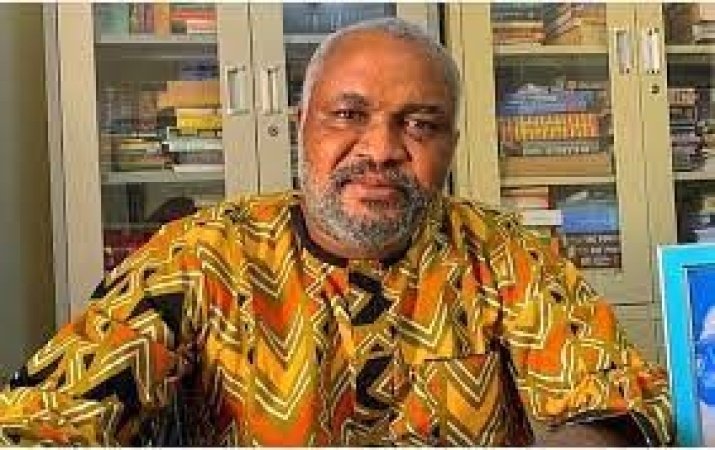
HURIWA National Coordinator, Comrade Onwubiko
By BONIFACE AKARAH
The Human Rights Writers Association of Nigeria (HURIWA) has raised fresh concerns over a potential Ebola epidemic in Africa, calling on the Federal Government to urgently activate a national emergency preparedness framework to prevent possible transmission into Nigeria.
The civil rights advocacy group warned that Nigeria could face serious health risks if authorities fail to act swiftly amid warnings by continental and global health bodies about the spread of the deadly virus in parts of Africa.
In a statement signed by its National Coordinator, Comrade Emmanuel Nnadozie Onwubiko, and made available to journalists on Sunday, HURIWA expressed alarm over what it described as insufficient public communication regarding Nigeria’s preparedness against Ebola.
The group cited reports from the Africa Centres for Disease Control and Prevention indicating that at least 10 African countries have been identified as being at risk of Ebola transmission due to ongoing outbreaks in Central and East Africa.
According to HURIWA, the countries listed include Angola, Burundi, Central African Republic, Republic of the Congo, Ethiopia, Kenya, Rwanda, South Sudan, Tanzania and Zambia.
The association noted that porous borders, increased population movement, insecurity in conflict-prone areas and weak health infrastructure in some countries have heightened the risk of cross-border transmission.
HURIWA said the warnings followed earlier alerts by the World Health Organization, which classified the Ebola outbreak as a public health emergency of international concern because of its high fatality rate and rapid transmission potential.
“Ebola remains one of the most dangerous viral diseases known to humanity, spreading through direct contact with infected bodily fluids and often progressing rapidly to severe hemorrhagic illness, organ failure and death if not contained early,” the statement said.
The group expressed concern that Nigeria had yet to publicly unveil a “structured, visible and coordinated” national preparedness plan similar to the response mechanisms adopted during the COVID-19 pandemic.
“HURIWA recalls that during the COVID-19 crisis, Nigeria demonstrated that coordinated federal-state collaboration, daily public briefings and mass sensitisation campaigns were essential in limiting the spread of the virus. That same urgency and transparency must now be replicated without delay,” the statement added.
The rights group said there was inadequate public information on the Federal Government’s Ebola preparedness strategy, readiness of isolation centres, border surveillance systems, deployment of emergency response teams and sensitisation measures for vulnerable communities.
“We are particularly concerned that there is currently insufficient public-facing information outlining the Federal Government’s updated Ebola preparedness strategy, the readiness of isolation centres nationwide, the state of border surveillance and screening mechanisms, deployment of rapid response teams across states and communication strategies for rural and high-risk communities. Silence or ambiguity at this stage is unacceptable,” HURIWA stated.
The group urged the Federal Government to immediately activate a comprehensive National Ebola Prevention and Preparedness Framework to be coordinated by the Nigeria Centre for Disease Control and Prevention in collaboration with state governments
HURIWA further called for strengthened screening at airports, seaports and land borders, regular public enlightenment campaigns in major Nigerian languages, disclosure of the readiness of isolation centres and laboratories, as well as adequate protection and training for frontline health workers.
Onwubiko stressed that Ebola should be treated not only as a health emergency but also as a national security and economic concern.
“Ebola is not merely a medical issue; it is a national security threat, an economic disruption risk and a humanitarian emergency in waiting. Any delay in response could result in devastating consequences for Nigeria’s healthcare system and economy,” he said.
The association also advocated the return of structured national briefings to curb misinformation and public anxiety.
“We demand the reintroduction of structured, regular national briefings to keep citizens informed and prevent misinformation, panic or rumour-driven anxiety,” the group said.
Warning against complacency, HURIWA maintained that waiting for confirmed local cases before acting could prove costly.
“The lessons of past outbreaks are clear: early detection, rapid communication and aggressive containment save lives. Delay, denial and silence cost lives,” the statement noted.
“Nigeria must move immediately from passive observation to active prevention. Anything less would be a failure of leadership and a betrayal of public trust,” HURIWA stated.