ADAD
ADAD
Updating your news feed...
NEWS EXPRESS is Nigeria’s leading online newspaper. Published by Africa’s international award-winning journalist, Mr. Isaac Umunna, NEWS EXPRESS is Nigeria’s first truly professional online daily newspaper. It is published from Lagos, Nigeria’s economic and media hub, and has a provision for occasional special print editions. Thanks to our vast network of sources and dedicated team of professional journalists and contributors spread across Nigeria and overseas, NEWS EXPRESS has become synonymous with newsbreaks and exclusive stories from around the world.


Loading banners
Loading banners...

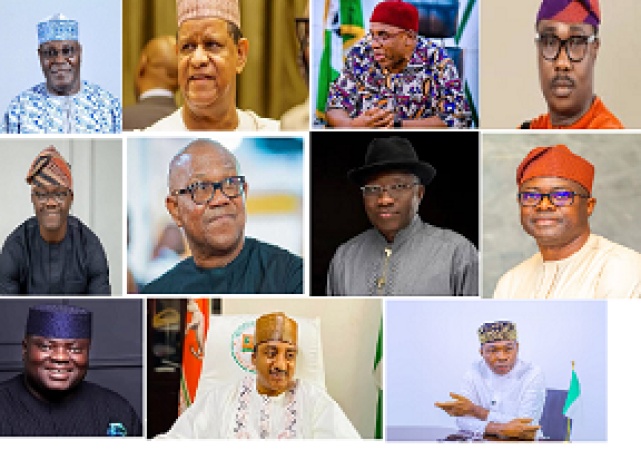
Exactly 237 days to the January 16, 2027, presidential polls, how the race will pan out is gradually taking shape.
Unless the Independent National Electoral Commission, INEC, re-tools its timeline to align with a Federal High Court verdict of Thursday that ordered extension of the window for primaries, submission of party membership registers and others to September, only 13 aspirants are in the presidential race as of now.
The INEC’s guidelines fixed May 10 as deadline for submission of party membership register and May 30 for conduct of primaries, a reason the parties are in a mad rush to complete their primaries before month end.
If INEC adjusts the timetable to September, a host of politicians especially no fewer than 75 federal lawmakers who lost re-election tickets in the ruling All Progressives Congress, APC, may seek other political platforms to realize their ambitions.
Until then, only 13 aspirants including President Bola Tinubu are interested in the presidential election and have paid millions of naira to obtain nomination forms.
There is no woman among the 13 aspirants. Governor Seyi Makinde of Oyo State is the only governor among the lot.
Presidential aspirants at a glance
Atiku Abubakar – ADC
2. Mohammed Hayatu-Deen – ADC
3. Rotimi Amaechi – ADC
4. Bola Tinubu – APC
5. Osifo Stanley – APC
6. Peter Agada – LP
7. Samuel Nwaigwe – LP
8. Peter Obi – NDC
9. Goodluck Jonathan – PDP
10. Seyi Makinde – PDP/APM
11. Sandy Onor – PDP
12. Abimbola Atanda – SDP
13. Adewole Adebayo – SDP
Heavyweights, dark horses test might
Currently, Nigeria’s political landscape is witnessing intense maneuvering as established political heavyweights, former office holders, technocrats and political newcomers position themselves for a shot at President Tinubu’s job.
Though the ruling APC, insists President Tinubu remains its undisputed candidate for 2027, it has to convince another aspirant, Osifo Stanley, who also bought form to step down or accept consensus.
Indeed, the party has scheduled its presidential primaries in 8,809 wards of the country, today as opposition parties and emerging coalitions intensifies strategic moves aimed at unseating the ruling APC.
At the moment, no fewer than 12 aspirants and potential contenders have openly indicated interest in the presidency across the Peoples Democratic Party, PDP, African Democratic Congress, ADC, Nigeria Democratic Congress, NDC, Labour Party, LP, and Social Democratic Party, SDP.
Among the prominent names in the race are former Vice President Atiku Abubakar, former President Goodluck Jonathan, former Rivers State Governor Rotimi Amaechi, former Anambra State Governor and 2023 LP Presidential Candidate, Peter Obi, Oyo State Governor Seyi Makinde, SDP candidate in the 2023 election Adewole Adebayo, businessman Stanley Osifo and a handful of technocrats and businessmen seeking to leverage the growing dissatisfaction with Nigeria’s economic situation.
Political analysts say the emerging contest may eventually boil down to three major factors — coalition politics, regional calculations and the ability of aspirants to build broad national alliances capable of matching the APC’s structure and incumbency advantage.
Atiku’s long road to Aso Rock
Of all the contenders, Atiku remains the most persistent presidential aspirant in Nigeria’s democratic history.
The former vice president has contested for the presidency six times since 1993 and appears set for a seventh attempt in 2027, which he said would be his last attempt..
His political journey began in the transition years of the late 1980s under the late Shehu Musa Yar’Adua political machine.
Atiku first sought the presidency during the aborted Third Republic under the Social Democratic Party, but stepped down for late Chief MKO Abiola after intervention from Yar’Adua.
Since then, he has remained a recurring figure in Nigeria’s presidential politics.
He was elected governor of Adamawa State in 1999 but was immediately picked as running mate to former President Olusegun Obasanjo.
As vice president between 1999 and 2007, Atiku supervised Nigeria’s privatization programme and built strong political networks across the country.
However, his relationship with Obasanjo later collapsed over succession politics and the controversial third-term agenda.
That disagreement triggered Atiku’s first major defection from the PDP to the Action Congress, AC, in 2006.
Since then, he has moved repeatedly between political parties — PDP, AC, APC and now ADC — while sustaining his presidential ambition(1993, 2007, 2011, 2015, 2019 and 2023).
After leaving the PDP again in 2025 over what he called “irreconcilable differences,” Atiku aligned with the ADC-led opposition coalition.
Supporters see him as one of the few opposition figures with national spread, financial strength and political structure.
Critics, however, argue that age, repeated defections and multiple failed attempts may weaken his chances.
Atiku’s greatest challenge may not even be Tinubu but how to unite a fragmented opposition around a single candidacy.
Jonathan returns
Former President Goodluck Jonathan has also returned to the centre of political calculations. In court to fight eligibility rule, which his opponents are latching on to to stop him, the Tanimu Turaki-led PDP has already granted him a waiver from screening and endorsed him as a presidential aspirant.
Next week, May 26, a Federal High Court will rule on whether or not Jonathan is eligible based on the constitutional amendment that bars anyone sworn-in twice as president, vice president, governor and deputy governor from contesting the same position.
Jonathan was sworn as president after late President Musa Yar’Adua’s death in 2010 and again after he won his own election in 2011. He contested again in 2015 but lost to late President Muhammadu Buhari.
Jonathan’s supporters said he is not affected by the law because it came into being after he left office. This is left for the courts to decide.
Former Niger State Governor Babangida Aliyu said the party considered Jonathan over qualified for screening because of his previous experience as deputy governor, governor, vice president and president.
Jonathan’s possible return has already generated sharp debate within the political class.
Supporters believe his image as a moderate politician and elder statesman may attract voters disenchanted with rising hardship and political tension.
Besides, his return, they argue, is in tandem with power rotation between North and South as he can only do a term of four years and allow power rotate to the North after Tinubu’’s four years.
Tinubu and APC confidence
Despite economic hardship, rising inflation and public discontent over reforms, APC leaders insist President Tinubu remains firmly in control of the political structure.
Party governors and stakeholders have repeatedly endorsed him for a second term.
Tinubu’s camp is banking heavily on incumbency power, control of federal structures and ongoing infrastructure projects.
APC sources also believe the fragmented opposition may ultimately work in Tinubu’s favour, especially if opposition parties fail to unite behind one strong candidate.
However, insiders admit that worsening economic conditions, insecurity and public anger over the cost of living could become major threats if not effectively managed before the election year.
Obi and coalition permutations
Former Vice Presidential and candidate Peter Obi remains one of the biggest opposition figures.
Now linked with the NDC, Obi continues to command significant support among urban youths and sections of the middle class.
Obi’s challenge remains converting social media popularity into nationwide political structures capable of matching APC’s machinery.
His supporters believe his social media strength can be translated into actual votes as witnessed in 2023 when “without political structures he got 6.1million votes after much suppression”
However, his opponents doubt his promise of doing one term of four years and quitting even though his party, NDC, also zoned the ticket to the South for a term and its 2031 ticket to the North.
Amaechi’s calculations
Former Transportation Minister Rotimi Amaechi is also positioning within the ADC coalition.
Amaechi remains influential within sections of northern political blocs and retains strong networks from his years as governor and minister.
Political observers say his strategy may depend on whether the opposition settles for a consensus candidate or open primaries.
SDP bets on Adebayo
The SDP has again presented Adewole Adebayo as its consensus presidential candidate while a rival faction chose Abimbola Atanda.
Adebayo, who flew the party’s flag in 2023, says Nigeria urgently needs an inclusive government focused on poverty reduction, industrial revival and job creation.
He has repeatedly warned against attempts to turn Nigeria into a one-party state and urged opposition parties to unite.
Though regarded as intellectually sound and articulate, analysts say Adebayo still faces the challenge of limited political structure and grassroots reach.
Dark horses in 2027 race test waters against heavyweights
Beyond established political heavyweights like President Bola Tinubu, Atiku Abubakar, Peter Obi and Rotimi Amaechi, a number of lesser-known politicians, technocrats and businessmen are also positioning for the 2027 presidential race.
Though many political analysts regard some of them as long shots, they insist they possess the ideas and leadership qualities needed to reposition Nigeria.
Among them are Stanley Osifo of the APC, Sandy Onor of the PDP, economist Mohammed Hayatu-Deen of the ADC, and Labour Party aspirants Peter Agada and Samuel Nwaigwe.
Osifo challenges APC establishment
Stanley Osifo, a businessman from Edo State, stirred political interest after purchasing the APC presidential nomination and expression of interest forms despite President Tinubu’s overwhelming control of the ruling party structure.
Osifo, from Ovia North-East Local Government Area of Edo State, first gained national attention around the 2019 election cycle when he sought the presidency on the platform of the Peoples Democratic Party, PDP, projecting himself as a pro-youth and economic reform candidate.
He later defected to the APC and continued his presidential ambition within the ruling party.
The businessman has consistently argued that every qualified Nigerian has the constitutional right to contest for the presidency irrespective of endorsements for incumbents.
In his latest push, Osifo dismissed insinuations that his ambition was being sponsored by President Tinubu or political godfathers, insisting he was funding the project independently.
He said his agenda would focus on economic recovery, security reform, healthcare improvement and youth empowerment.
Describing his programme as a “metamorphosis agenda,” Osifo said Nigeria requires bold reforms and fresh leadership ideas to overcome worsening hardship and insecurity.
However, despite his visibility, political observers say he still lacks the national political structure and grassroots influence required to compete effectively against established political heavyweights.
Sandy Onor banks on experience
Former senator and academic, Professor Sandy Onor, has also joined the presidential race on the PDP platform. He belongs to the FCT Minister, Nyesom-Wike backed PDP.
Born in Ikom, Cross River State, Onor represented Cross River Central Senatorial District in the Senate between 2019 and 2023 after defeating former Senate Leader Victor Ndoma-Egba.
Before joining the National Assembly, he served as chairman of Etung Local Government Area, Cross River ALGON chairman, commissioner for agriculture, commissioner for environment and chairman of the state Local Government Service Commission.
He was PDP governorship candidate in Cross River State in 2023 but lost to APC’s Bassey Otu.
Onor said his decision to seek the presidency followed pressure from party stakeholders and his conviction that Nigeria requires purposeful leadership.
Analysts say his challenge may revolve around limited national reach beyond the South-South and the PDP’s internal crisis.
Hayatu-Deen offers technocratic option
Economist and banker Mohammed Hayatu-Deen is projecting himself as a technocratic alternative in the 2027 contest.
The Borno State-born economist built his reputation largely in banking, development economics and public policy.
He previously served as Director-General of the National Economic Planning Commission and later became Managing Director of FSB International Bank before its merger into Fidelity Bank.
Hayatu-Deen also served on several corporate boards and advisory bodies, gaining recognition as one of Nigeria’s respected financial sector experts.
After contesting for the PDP presidential ticket ahead of the 2023 election, he has now moved to the ADC coalition where he hopes to build support as a reform-minded candidate.
He is campaigning on economic restructuring, institutional reforms and national stability.
Political observers, however, say Hayatu-Deen faces the challenge common to technocrats in Nigerian politics — limited grassroots structures and weak electoral machinery.
Labour Party’s emerging faces
Labour Party has also attracted new presidential hopefuls ahead of its 2027 primaries.
Among them is Abuja-based businessman and architect, Peter Agada, who became the first aspirant to purchase the party’s presidential nomination forms.
Agada, a former Director of Finance of the Obedient Movement, said his ambition was driven by patriotism and the desire to restore Nigeria’s global standing.
Under his “Labour Direct” blueprint, he identified insecurity, unemployment, naira depreciation, infrastructure decay and public distrust in governance as key national challenges.
He proposed community-based intelligence systems backed by technology to tackle insecurity and promised industrial hubs across the geopolitical zones to create jobs through agro-processing and solid minerals development.
“Nigeria needs execution, not excuses,” Agada declared while unveiling his programme.
Nwaigwe’s push
Another Labour Party aspirant, businessman and philanthropist Samuel Nwaigwe from Ebonyi State, has also entered the race after purchasing the party’s nomination forms.
Nwaigwe, Chief Executive Officer of Omni Group, is known for philanthropic activities and grassroots support initiatives in Ebonyi State and parts of the South-East.
Though not yet a major national political figure, he has maintained visible involvement in sociopolitical activities and party mobilisation.
Technocrat and banker Mohammed Hayatu-Deen is equally positioning within the ADC as a reform-minded candidate focused on economic restructuring and institutional reforms.
Makinde factor
Oyo State Governor Seyi Makinde, last week joined the race on the plank of an alliance between the PDP and Allies People’s Movement, APM.
Makinde’s growing national profile, financial strength and southern support base have placed him among possible consensus figures if opposition parties pursue a fresh face strategy. That will depend on his up pending Jonathan in the race for Turaki-led PDP ticket and who eventually emerges as the authentic PDP when the dust settle. (Saturday Vanguard)
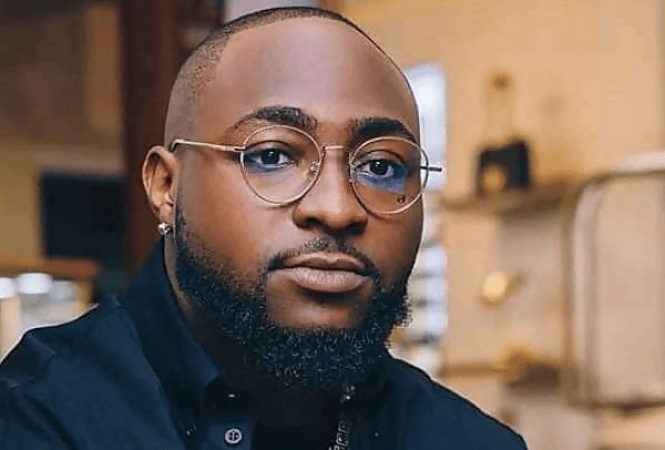
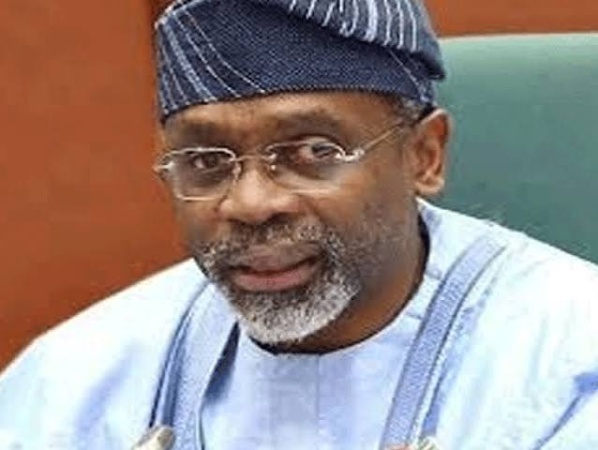
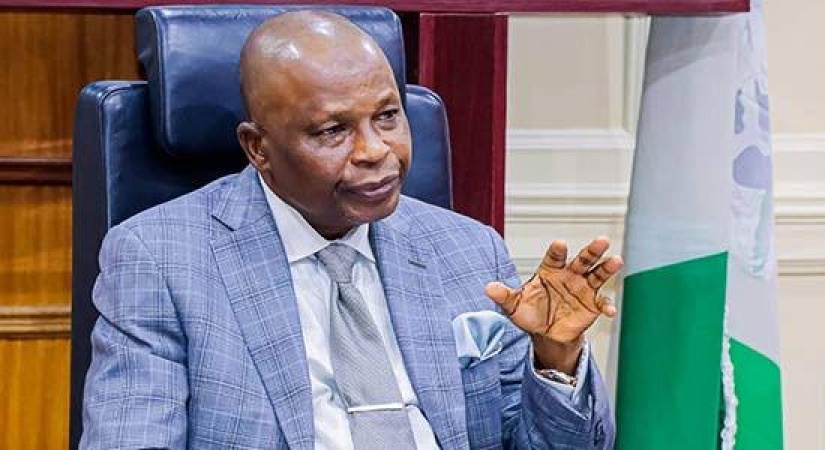
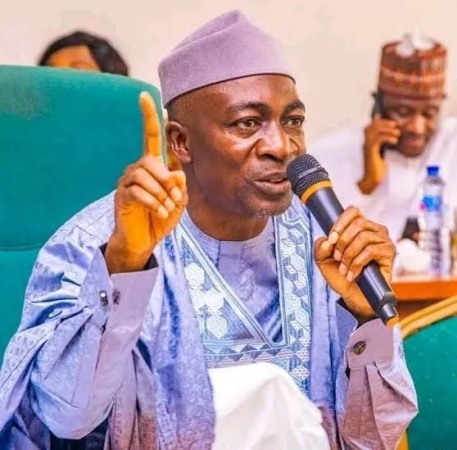
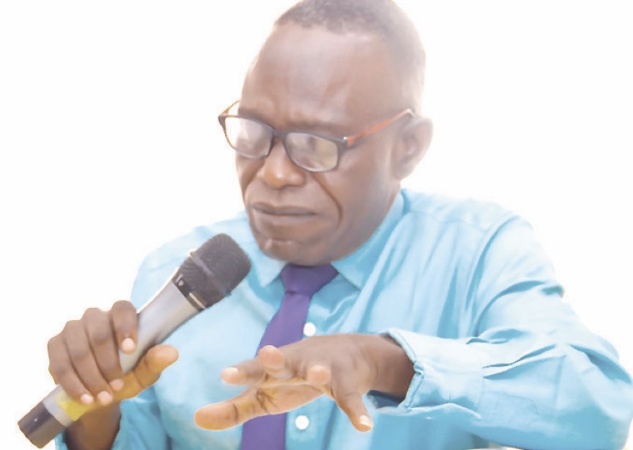
•The 12 gladiators seeking Tinubu's job: Atiku Abubakar, Mohammed Hayatu-Deen, Rotimi Amaechi, Osifo Stanley, Peter Agada, Samuel Nwaigwe, Peter Obi, Goodluck Jonathan, Seyi Makinde, Sandy Onor, Abimbola Atanda, Adewole Adebayo