ADAD
ADAD
Updating your news feed...
NEWS EXPRESS is Nigeria’s leading online newspaper. Published by Africa’s international award-winning journalist, Mr. Isaac Umunna, NEWS EXPRESS is Nigeria’s first truly professional online daily newspaper. It is published from Lagos, Nigeria’s economic and media hub, and has a provision for occasional special print editions. Thanks to our vast network of sources and dedicated team of professional journalists and contributors spread across Nigeria and overseas, NEWS EXPRESS has become synonymous with newsbreaks and exclusive stories from around the world.

























Loading banners
Loading banners...

Cancer cells
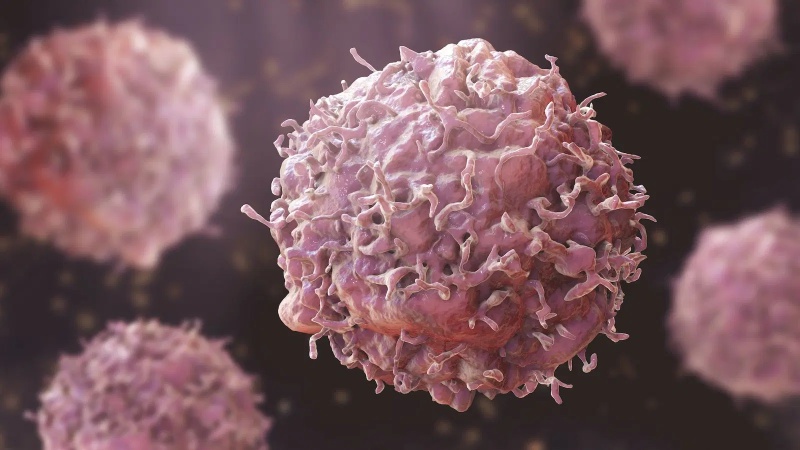
Renowned cancer specialist and Director of the University of Chicago Medicine Comprehensive Cancer Centre, Prof. Kunle Odunsi, has raised fresh concerns over Nigeria’s growing cancer burden, warning that one in every four people will develop cancer in their lifetime.
Odunsi, a Fellow of the Nigerian Academy of Science, NAS, said the frightening statistics underscore the urgent need for stronger investment in cancer prevention, early detection, modern treatment facilities and precision medicine in Nigeria.
He spoke in Abuja during a public lecture organised by the Nigerian Academy of Science alongside the induction of new Fellows and the public unveiling of the NAS-T.Y. Danjuma Science Museum and Library.
Delivering a lecture titled, “Redefining Cancer Care in the Era of Immunotherapy and Precision Oncology: Implications for Research, Treatment and Policy in Nigeria,” the professor described cancer as one of the greatest public health challenges confronting the world today, but stressed that the disease is no longer a death sentence if detected early and treated properly.
“About one in four people will develop cancer in their lifetime. The older one gets, the higher the risk. Most cancers occur in older people, but increasingly we are now seeing cancers among younger individuals,” he said.
The cancer expert, who is also the AbbVie Foundation Distinguished Service Professor of Obstetrics and Gynaecology at the University of Chicago, emphasised the growing role of genetics in identifying individuals at high risk.
According to him, genetic screening and surveillance can help doctors detect cancer early and stop it from spreading.
“This is where genetics becomes very important , to identify those at risk, place them under close surveillance and, if possible, intercept the disease before it advances,” he explained.
Odunsi lamented the poor state of cancer care infrastructure in Nigeria, noting that access to life-saving treatment remains beyond the reach of many patients due to high costs and inadequate facilities.
“There are standard treatment options, but they are extremely expensive and difficult for many Nigerians to afford. We also have very limited infrastructure for radiation therapy. Nigeria has only about 10 radiation therapy centres, which is grossly inadequate for a country of this size and population,” he said.
He called for urgent expansion of cancer treatment infrastructure, improved access to essential drugs and greater investment in modern therapies driven by precision medicine and immunotherapy.
According to him, advances in global cancer treatment have significantly improved survival rates, with some cancers now recording nearly 100 per cent cure rates.
“The field is changing very rapidly. We now have precision drugs based on a patient’s genetic profile. Cancer is no longer an automatic death sentence. Nigeria must not be left behind as cancer care continues to evolve globally,” he added.
Odunsi also stressed the importance of routine screening and early detection, outlining recommended screening procedures for common cancers affecting men and women.
He advised women to undergo regular Pap smear tests and annual mammography from ages 40 to 45, while men should be screened for prostate cancer through clinical examination and blood tests.
For colon cancer, he recommended colonoscopy screening from age 50, with earlier and more frequent checks for high-risk individuals.
“If we carry out these screenings consistently, cancers can be detected before they spread, thereby improving the chances of cure,” he stated.
Earlier, President of the Nigerian Academy of Science, Prof. Abubakar Sambo, announced that the newly inaugurated NAS-T.Y. Danjuma Science Museum and Library had officially been opened to the public.
He said the facility would preserve Nigeria’s scientific history and promote greater public interest in science, technology and innovation.
“We have started populating the museum with historical materials related to science and national development. What we have now is just the beginning; it will continue to grow,” Sambo said.
Speaking on the induction of new Fellows into the academy, he urged them to uphold the academy’s mandate of promoting scientific excellence and encouraging young Nigerians to embrace science and technology.
“The new Fellows are expected to promote scientific culture at the highest level and continue advising the government on science and technology development, particularly in education,” he said.
The newly inducted Fellows include Prof. Omotayo Arotiba, Prof. Festus Okoye, Prof. Olufunmilayo Fawole, Prof. Kemi Amodu, Prof. Emeka Oguzie, Prof. Martins Emeje, Prof. Ibrahim Abubakar and Prof. Muktar Aliyu. (Vanguard)