ADAD
ADAD
Updating your news feed...
NEWS EXPRESS is Nigeria’s leading online newspaper. Published by Africa’s international award-winning journalist, Mr. Isaac Umunna, NEWS EXPRESS is Nigeria’s first truly professional online daily newspaper. It is published from Lagos, Nigeria’s economic and media hub, and has a provision for occasional special print editions. Thanks to our vast network of sources and dedicated team of professional journalists and contributors spread across Nigeria and overseas, NEWS EXPRESS has become synonymous with newsbreaks and exclusive stories from around the world.









Loading banners
Loading banners...

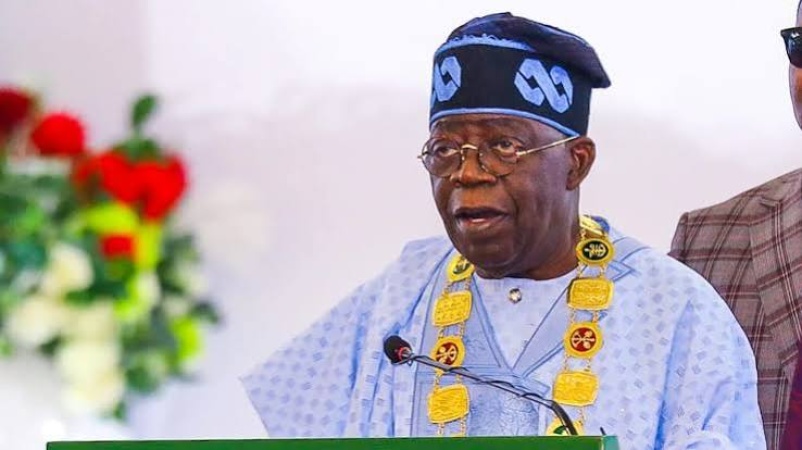
APC logo Insert: President Tinubu
As the ruling All Progressives Congress (APC) prepares to begin its candidate nomination process, the struggle for tickets between the Progressives Governors’ Forum (PGF) and the 10th National Assembly caucus is set to test the party’s ability to withstand both internal and external pressures ahead of the 2027 polls, LEO SOBECHI reports.
If APC federal lawmakers thought they had the last laugh through the direct primary-cum-consensus provisions in the 2026 Electoral Act, the party’s National Convention has provided reasons for a rethink. It is becoming clear that state governors, long regarded as the party’s electoral foot soldiers, bided their time to strike back and decisively.
The simmering internal combustion within the ruling party is a worrisome development, one that only a few stakeholders discuss in hushed tones. The battle among entrenched interests goes beyond the deep-seated schism between federal lawmakers and the powerful state governors. There are also visible fault lines across the various geopolitical caucuses.
Boxed into a tight corner by the rigid provisions of the 2026 Electoral Act, National Assembly members from the North, who had worked on the assumption that President Bola Ahmed Tinubu’s settled second-term aspiration would guarantee them easy access to party nominations, have begun making alternative calculations.
One distraught federal lawmaker from the North-West told The Guardian that he and others like him have started “looking across the perimeter fence”, a humorous euphemism for anti-party collaboration with the opposition.
He disclosed that beyond “looking across the fence”, lawmakers from his zone are mobilising to fight back by ensuring that President Tinubu retains Vice President Kashim Shettima as his running mate after the presidential primary.
It is increasingly apparent that the Electoral Act, which APC federal lawmakers believed would guarantee them unencumbered return tickets and smooth victories at the general election, may have become their greatest undoing.
The stipulation that political parties must submit both digital and hard copies of their membership registers to the Independent National Electoral Commission (INEC) has been hailed as an antidote to cross-carpeting after failed nominations.
However, with the effective return of full control to state governors, the hunters appear to have become the hunted. That stringent provision has made it difficult for lawmakers who are not in their governors’ good graces to seek political refuge elsewhere. How far the ongoing covert designs to work against their party’s electoral interests can go in mitigating anticipated losses remains unclear.
Perhaps in response to troubling reports about governors’ opposition to the proposed automatic return tickets for National Assembly members, seen as compensation for what was described as “a job well done” in the passage of the highly partisan Electoral Act 2026, President Tinubu convened a recent Villa conclave with governors.
Yet, many party faithful have expressed reservations about whether the President’s intervention has succeeded in calming tensions.
While Tinubu may have sought to avert a potential rebellion by governors, there is a growing consensus among APC bigwigs that his intervention has done little to unify the competing centres of power within the party.
For instance, by disavowing the promise of automatic tickets, the President effectively took away with the left hand what lawmakers had secured with the right hand through the Electoral Act.
A broad section of party members believes that the direct primary option, as envisaged by lawmakers, would have restored confidence in the system by allowing members to choose candidates, rather than leaving decisions to the whims of governors and political godfathers.
One dimension of the supremacy battle, particularly the rivalry between state governors and the National Assembly, is also reflected in the quiet manoeuvres surrounding the leadership of the 11th National Assembly. Insiders maintain that the signal reportedly given by the President for outgoin g governors to contest Senate seats has opened up new fronts for political contestation.
At the centre of this unfolding intrigue is the race for the Senate Presidency. It was gathered that shortly after indications emerged about the strategic move to usher outgoing governors into the Senate, the chairman of the PGF, Senator Hope Uzodimma, began nursing the ambition to succeed the incumbent Senate President, Godswill Akpabio.
Before this shift, it was widely believed that former Edo State governor, Comrade Adams Oshiomhole, now representing Edo North as a first-term senator, was positioning himself for the role.
Meanwhile, as the quiet contest for leadership of the 11th National Assembly unfolds across both the governors’ and lawmakers’ camps, there are indications that President Tinubu’s strategists are also weighing the option of pacifying the North-West with the Senate Presidency.
This is said to be the case if the APC presidential ticket is adjusted to accommodate a Christian running mate from the same region.
That possibility has further intensified the quiet contest between the current Deputy Senate President, Barau Jibrin, and former Zamfara State governor, Senator Abdulaziz Yari.
It has also triggered calculations over who will lead the President’s campaign in the vote-rich North-West.
However, even as the President assured governors that any arrangement for automatic tickets was untenable, there are indications that, behind the scenes, influential blocs such as the Mandate Group and Justice Forum are identifying lawmakers considered loyal to the Renewed Hope agenda whose return tickets should not be subjected to negotiation.
It was gathered that with inputs from these groups, lawmakers, including newly defected governors, whose politics and policy preferences align with the President’s determination to “finish strong” are being profiled, with efforts made to protect their interests at zonal and subnational levels.
However, the President’s apparent resolve not to trade loyalty and experience for broader considerations of fairness is seen as a potential hurdle as the primaries approach.
A first-term governor from one of the northern states lamented that organising a credible primary process remains a daunting task, given the tension between longstanding party members and recent defectors. “Now, how do you balance the interest of the party against the existing power rotation in certain constituencies in the states?” he queried.
Amid concerns over party supremacy, electoral expediency, and experience, the issue of sharing political space between original members and politically displaced entrants also looms large. For instance, in situations where incumbent governors control up to 60 per cent of party structures and elective positions, questions arise as to how experienced lawmakers will be accommodated alongside loyalists of defecting governors.
At the end of the day, indications are that state governors, backed by Tinubu’s position, may push through the consensus option, especially given the high cost of direct primaries. Party faithful hint at the possibility that national leadership and governors may guide primary election committees with pre-determined lists of candidates to “deliver” across constituencies.
Convention battle lines
Not many observers would miss the connection between the current power play within the APC and the dynamics that shaped the party’s last National Convention. When nomination forms went on sale, a total of 92 aspirants purchased them, priced between N10 million for the national chairman and N200,000 for the zonal offices.
From the sale of forms and expression of interest (priced at N100,000), the party realised a total of N215.9 million.
However, tensions between the PGF and the National Assembly caucus persisted, particularly around the role of defecting governors. The divide between longstanding members and new entrants loomed large, with original PGF members allegedly seeking to limit the influence of defected governors in nominations into the National Working Committee (NWC).
Although the President had directed that NWC members emerge through consensus, disagreements among governors persisted, particularly around zoning arrangements and the integration of former non-APC governors. In the resulting contest, three positions were left open: Deputy National Chairman (South), National Financial Secretary, and National Welfare Secretary.
The supremacy battle between Uzodimma and Akpabio found expression in the contest for the Deputy National Organising Secretary (DNOS) position. Still aggrieved by the role played by the then incumbent, Nze Chidi Duru, in the emergence of Senator Monday Okpebholo as the APC governorship candidate for Edo State in 2024, the Imo State governor reportedly waited for an opportunity to strike.
Party insiders say that while Akpabio preferred Okpebholo, Uzodimma and Oshiomhole backed Dennis Idahosa. However, insisting on adherence to zoning principles, Duru invalidated the primary conducted by Uzodimma and constituted a fresh committee, which eventually returned Okpebholo.
It should also be noted that, in a demonstration of political accommodation, Delta State governor Sheriff Oborevwori supported the return of the National Publicity Secretary, Felix Morka, thereby preventing other aspirants from contesting the position.
Oborevwori was said to have taken that decision as a gesture of respect for longstanding APC members in Delta State and in deference to former Deputy Senate President, Senator Ovie Omo-Agege, who had initially nominated Morka.
However, while the Delta scenario unfolded smoothly, the situation in the South-East was markedly different. Before Governor Peter Mbah’s defection to the APC, Uzodimma, also chairman of the South-East Governors’ Forum, had been overseeing party affairs in Abia, Anambra, and Enugu.
Of the three positions slated for election, two were zoned to the South-East.
While Uzodimma sought to replace Donatus Nwankpa with Nduka Anyanwu, both of whom purchased nomination forms at N5.1 million, his efforts met resistance, particularly due to his disagreements with Deputy Speaker of the House of Representatives, Benjamin Kalu.
Governor Mbah, relying on his personal relationship with President Tinubu, strongly opposed attempts to override his nominee, Benjamin Obi Nwoye, for the position of Deputy National Chairman (South). Uzodimma, however, preferred that the incumbent, Emmanuel Eneukwu, retain the position.
Although Ambassador Haruna Ginsau eventually emerged as National Financial Secretary by consensus, controversies persisted. Uzodimma reportedly prevailed on the national chairman, Prof. Nentawe Yilwatda, to approve the last-minute substitution of Duru’s name with Barrister Emeka Okafor, despite the latter not purchasing nomination forms or undergoing screening by Governor Biodun Oyebanji’s committee.
Having ensured that dissenting voices were largely neutralised, party stakeholders now fear that the governors’ tendency towards imposition and procedural breaches could trigger contentious primaries.
Already, there are concerns that National Assembly members, unable to defect due to regulatory constraints, may resort to underhanded tactics that could undermine the party’s electoral prospects.
These concerns were echoed by Senator Ibrahim Lamido, who, in his resignation letter from the APC, cited internal crises and leadership challenges.
“This decision has not been taken lightly. However, the ongoing internal party crisis, mutual suspicion, and unfair leadership style within the party in Sokoto State have made it increasingly difficult for me to continue my membership in good conscience.
“The persistent divisions, lack of cohesion, and unresolved disputes have significantly hindered the progress and unity that the party once stood for.”
Similar tensions are reportedly playing out in Jigawa State, where supporters of Governor Namadi and former Defence Minister Muhammadu Badaru remain locked in a fierce struggle over party control.
An aide to one of the senators told The Guardian that state governors allegedly describe the national chairman, Prof. Yilwatda, as a “baby chairman,” suggesting that his lack of prior experience as a governor makes it easier for them to sideline him.
As the ruling party prepares for its nomination process, it remains to be seen whether President Tinubu’s intervention will succeed in rebuilding trust.
Equally uncertain is whether the influx of defectors will strengthen the APC or become an additional burden the party was never designed to carry. (The Guardian)