Updating your news feed...
NEWS EXPRESS is Nigeria’s leading online newspaper. Published by Africa’s international award-winning journalist, Mr. Isaac Umunna, NEWS EXPRESS is Nigeria’s first truly professional online daily newspaper. It is published from Lagos, Nigeria’s economic and media hub, and has a provision for occasional special print editions. Thanks to our vast network of sources and dedicated team of professional journalists and contributors spread across Nigeria and overseas, NEWS EXPRESS has become synonymous with newsbreaks and exclusive stories from around the world.

























Loading banners
Loading banners...

By ABDULRAZAQ MAGAJI
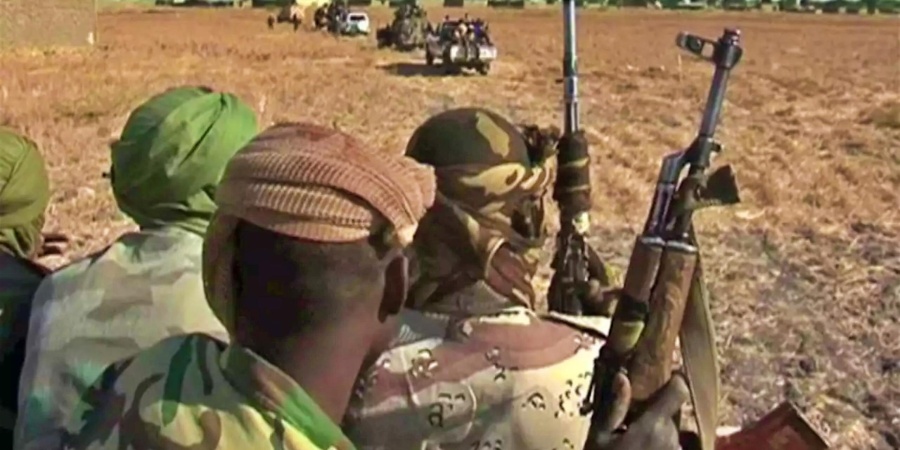
Across the vast stretch of the Sahel and wider West Africa, a dangerous reality is taking root. It is armed banditry that respects no borders, no flags, and no sovereignty.
What began as localized criminality in remote communities has metastasized into a transnational crisis, linking rural violence in northwestern Nigeria to insurgent networks spanning Mali, Niger, and Burkina Faso. These are not merely criminals on the fringes of society; they are symptoms of a deeper regional fragility, thriving in spaces where governance is virtually absent, where borders are porous, and where opportunity is scarce.
The phrase “bandits without borders ” captures both the mobility and the impunity of these groups. They move fluidly across frontiers, exploiting weak coordination among states in the region. A raid may be planned in one country, executed in another, and financed through networks that stretch even further afield. Livestock rustling, kidnapping for ransom, illegal mining, and arms trafficking have become interconnected enterprises. In effect, a shadow economy of violence now operates parallel to, and painfully, often in defiance of state authority.
At the heart of this crisis lies the collapse of rural security architecture. In many parts of the Sahel, the state has long been absent or ineffective. Communities have relied on traditional systems of authority, which are increasingly overwhelmed by heavily armed groups. Climate change has compounded the problem, shrinking arable land and intensifying competition between farmers and herders. These tensions, once manageable, now provide fertile ground for recruitment into bandit groups. A young man with no livelihood, no education, and no faith in government is easily drawn into a network that offers both income and identity.
Nigeria’s northwest offers a stark illustration. What started as cattle rustling evolved into mass abductions, village raids, and the establishment of forest enclaves where bandits operate with near-total autonomy. Yet, the problem does not stop at Nigeria’s borders. The same forests and corridors connect to wider Sahelian routes used by criminal gangs and organized crime syndicates.
Regional responses, while earnest, remain fragmented. Military operations are often reactive, pushing bandits from one area to another rather than dismantling their networks. If course, multinational joint task forces exist, but coordination is hampered by mistrust, limited intelligence sharing, and differing national priorities. Meanwhile, borders remain largely ungoverned, allowing fighters and weapons to flow freely.
There is also a troubling overreliance on force. While military action is necessary, it cannot be the sole strategy. Banditry in the Sahel is not just a security issue; it is essentially a governance crisis. Roads, schools, healthcare, and justice systems are as critical as guns and patrols. Without addressing the underlying conditions that sustain these groups, any tactical victory will, at best, be temporary.
Equally important is the need to rebuild trust between citizens and the state. In many affected communities, security forces are viewed with suspicion or even fear, often accused of heavy-handed tactics or neglect. This disconnect creates an intelligence vacuum, where communities are unwilling or unable to cooperate with authorities. Winning this trust requires accountability, professionalism, and consistent engagement, and not just half-hearted sporadic interventions during crises.
Technology and local knowledge must also play a greater role. Surveillance systems, data sharing, and early warning mechanisms can help track movements and prevent attacks. At the same time, community-based initiatives, such as vigilante groups and local peace committees, should be integrated into formal security frameworks, with proper oversight to prevent abuse.
The international dimension cannot be ignored. The Sahel has become a crossroads for global interests, from trafficking networks to extremist ideologies. External partners have a role to play, but their involvement must be aligned with local realities and priorities. Too often, foreign interventions focus narrowly on counterterrorism, overlooking the socio-economic drivers of instability.
Ultimately, the challenge of “bandits without borders” demands a response that is equally borderless in its thinking. West African states must move beyond rhetoric and build genuine regional mechanisms for security cooperation. Intelligence must flow as freely as the threats it seeks to counter. Policies must be harmonized, and operations must be coordinated.
This is not just about protecting territory; it is about safeguarding the future of millions who live in the Sahel’s fragile belt. If left unchecked, banditry will continue to erode state authority, displace communities, and undermine development. But with collective will, strategic investment, and a commitment to addressing root causes, the tide can be turned.
If bandits have no borders, neither should the resolve to defeat them.
•Magaji <magaji 778@gmail.com> writes from Abuja.