 ADAD
ADAD
Updating your news feed...
NEWS EXPRESS is Nigeria’s leading online newspaper. Published by Africa’s international award-winning journalist, Mr. Isaac Umunna, NEWS EXPRESS is Nigeria’s first truly professional online daily newspaper. It is published from Lagos, Nigeria’s economic and media hub, and has a provision for occasional special print editions. Thanks to our vast network of sources and dedicated team of professional journalists and contributors spread across Nigeria and overseas, NEWS EXPRESS has become synonymous with newsbreaks and exclusive stories from around the world.

























Loading banners
Loading banners...

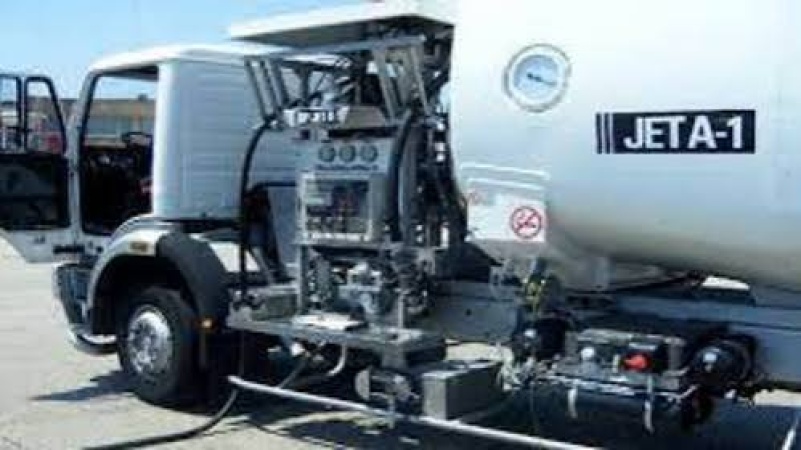
More Nigerian airlines have reduced their flight operations over the high cost of aviation fuel with Ibom Air being the latest to announce a cut.
The airline on Monday said it may reduce flight capacity to be able to continue to provide services to its customers and the nation as jet fuel crisis bites harder.
In a statement signed by the airline’s Group Manager, Marketing and Communication, Aniekan Essienette, it said the fuel price situation is an unprecedented crisis for Nigeria’s domestic operators, revealing that the cost of fueling one of its aircraft has than tripled between January and today.
“From an average of N2.1m per flight in January, as at today, the 26th of April, we are paying approximately N7.6m to fuel every flight. This is a more than 350% increase since the beginning of March, a space of just 7 weeks! And our aircraft are some of the most fuel efficient in the domestic market.
“At this point, domestic airlines are baffled at why the price of aviation fuel in Nigeria has ballooned to this level, way above the rest of the world, while the fuel marketers obtain 95% or more of their aviation fuel from Dangote Refinery. The situation is exacerbated by the fact that a combination of competitive pressures and patriotism have prevented a commensurate increase in our fares, meaning that we and our fellow domestic airlines have had to absorb the immense operating losses resulting from this situation.
“We chose to do this believing that the crisis would pass in a week or two, but it has persisted now for nearly two months, continuously increasing, with no reprieve in sight as at today. While we continue to do everything we can to maintain normal operations, it is clear to us that the current conditions are unsustainable,” the airline said.
The airline also called on the fuel marketers to seriously reconsider the pricing of aviation fuel to make the airline business model continue to work in Nigeria.
Recently, Air Peace also announced that it has reduced its Abuja to London flights to three times a week starting from July 1.
The airline said this is due to the current aviation fuel supply which is affecting flight operations nationwide and around the world.
In a statement, it said: “We wish to inform you that our Abuja to London service has been temporarily adjusted to three weekly flights until July 1.
“This measure is necessary to maintain the highest standards of safety and operational reliability during this period, with full operational frequency on our London service scheduled to resume from July 1.
“We recognise that this adjustment may impact your travel plans, and we deeply appreciate your patience and understanding.”
In the past few weeks , Nigerian airlines have raised the alarm over the astronomical cost of aviation fuel. Struggling to stay afloat amid a suffocating operating space, they called on the federal government to urgently cushion the heavy losses they suffered following a 300 per cent surge in Jet A1 prices imposed by oil marketers.
The spokesperson of the AON, Prof. Obiora Okonkwo, said in a recent television interview that fuel marketers are to be blamed for what they describe as deliberate price manipulation and artificial scarcity, accusations the marketers have denied.
He said the spike in the price of Jet A1 fuel cannot be justified and that just a month ago, airline operators were purchasing Jet A1 at below ₦1,000 per litre, with prices ranging between ₦950 and ₦970 but that today, that same litre is being sold at prices ranging from ₦2,500 to as high as ₦3,300, an increase of between 150 and 300 percent depending on the location. (The Sun)



