ADVERTISEMENT

ADVERTISEMENT

ADVERTISEMENT

ADVERTISEMENT


Loading banners
Loading banners...


NEWS EXPRESS is Nigeria’s leading online newspaper. Published by Africa’s international award-winning journalist, Mr. Isaac Umunna, NEWS EXPRESS is Nigeria’s first truly professional online daily newspaper. It is published from Lagos, Nigeria’s economic and media hub, and has a provision for occasional special print editions. Thanks to our vast network of sources and dedicated team of professional journalists and contributors spread across Nigeria and overseas, NEWS EXPRESS has become synonymous with newsbreaks and exclusive stories from around the world.
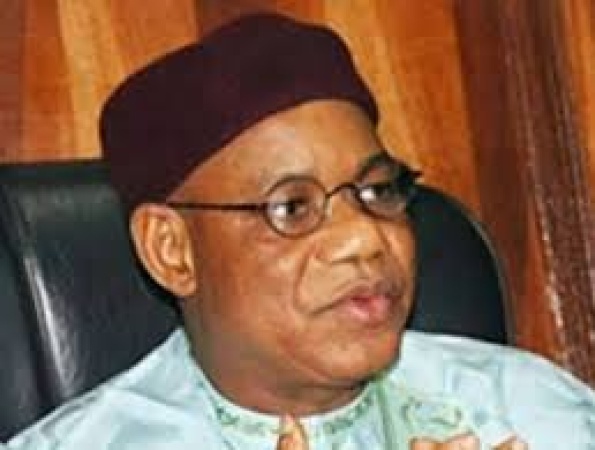
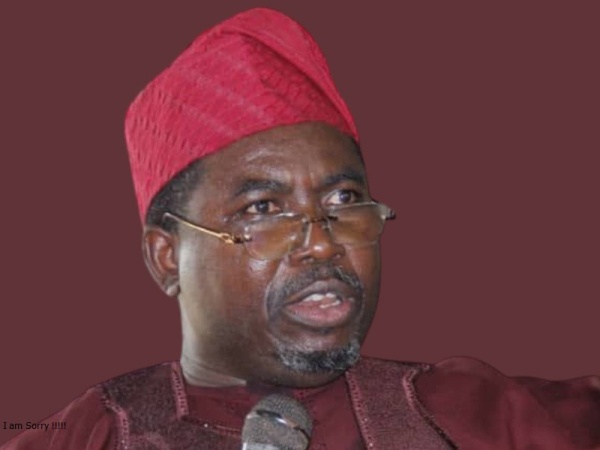
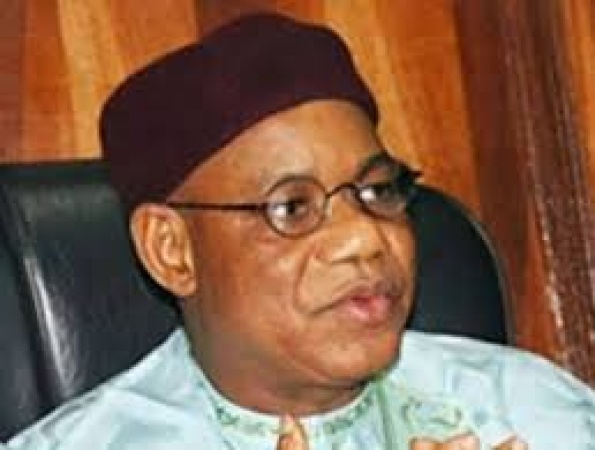
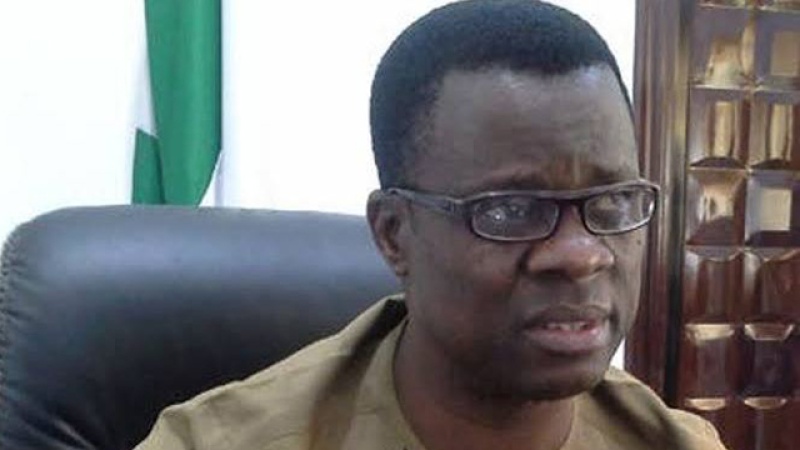
APC Chieftain, Professor Rufai Ahmed Alkali
Professor Rufai Ahmed Alkali is a key chieftain of the ruling All Progressives Congress (APC) from Gombe State. In this interview by Muideen Olaniyi, he speaks on the chances of President Bola Ahmed Tinubu in 2027, the zoning controversy, and the recent defection of Governor Abba Kabir Yusuf of Kano State, among other issues.
You were a political adviser to former President Goodluck Jonathan. You experienced what happened there. Do you see President Tinubu getting re-elected from the experience of the past? There are these insinuations that some of the people who said that they are in support of the president might actually be working against him, especially his government. Do you see the incumbent president getting re-elected in the midst of the people pretending that they are working for him? What are his chances?
There is no doubt that in all political processes, historically, not only in Nigeria, around the world, certainly even in the history of Nigeria, politics carries an element of uncertainty. That is normal, you know. So, it’s also normal for people to pontificate and build scenarios. Some are real, some are unreal. Some are built either for propaganda purposes. So, the issue here is that we have said we believe in democracy. If you believe in democracy, then there must be elections. And if you believe in elections, then it means that political parties have to present their candidates. So, at the moment, I believe the APC, from all indications, from all evidences, is fielding President Bola Ahmed Tinubu as its candidate for the 2027 elections. That is not in dispute. We will have to wait and see who are the other persons that are going to appear in other political parties. But for now, at least, we have the known case that is with us. So, when they put their act together, the person will come out and face the president. That’s all.
Now, I have done some background checks recently. In fact, I even presented a paper but it has not been widely circulated, and it was for a purpose. Now, let us go back a little to the past. Almost 19 years ago, when Asiwaju Bola Ahmed Tinubu was concluding his second term as governor of Lagos State, we looked at the terrain and realised that the Alliance for Democracy (AD) was basically a regional political party. Therefore, he felt he wanted to expand it and make it national. That was how the Alliance for Democracy and a number of other political parties were put together under his watch to transform into the Action Congress (AC). But during his days in the Action Congress, he himself, in that 2007, did not say he was going to come out to contest for elections. He looked for somebody. I believe it was Vice President Atiku Abubakar who was nominated, and he supported him. But late Umaru Musa Yar’adua of blessed memory won the election. As Nigeria was preparing for 2011, again, I believe, with the active involvement and support of the leadership of Tinubu, he re-strategised and reorganised the Action Congress. And he built another one, CAN, the Action Congress of Nigeria. Again, he did not say he was going to contest in 2011. He looked for Nuhu Ribadu, the current National Security Adviser. He nominated him, supported him, and he contested. Jonathan won the 2011 election. Again, as the 2015 election was approaching, since 2013, Asiwaju re-strategised. He did not contest for elections. He again nominated Muhammadu Buhari. With the alliance of the defunct Congress for Progressive Change (CPC), CAN, and a number of other organised parties, including a break-away faction of the PDP, they formed the APC. Again, he did not contest in 2015. He nominated Buhari, and Buhari won. When Buhari finished his first term, again, he did not say he would want to take up the second term. Again, he supported him for the second term. Now, if in a period of 20 years, it was in 2023 when Buhari concluded his term that Tinubu said he was going to step out and he stepped out. So, since the APC was very strong, he was able to establish his network, just like PDP did earlier on. It was much easier for the party to win the election in 2023. You will always hear stories about elections. They are normal.
So, what we are saying here is that re-electing President Bola Ahmed Tinubu in 2027 presents a moral burden to the North because of all those things that I have mentioned. On four consecutive occasions, he supported the people from the North. First, Atiku Abubakar, then Nuhu Ribadu, then Buhari’s first term, and then, Buhari’s second term. At least, this shows that we have a debt to pay. It is also consistent with the zoning thing, to stabilise the zoning arrangement. I think after Tinubu’s second term, it can come back to the North. And by that time, the North would have put its house in order and got ready with somebody who will now take charge fully and carry the country forward.
I don’t want to talk too much now. Time for talking will come. When Yar’Adua died on May 5th, 2010, a lot of people felt that, no, that term was the term of the North. Jonathan should not continue based on the zoning formula. But, you know, our voices were not heard. Nobody was listening to us at that time. We said, yes, if there is a zoning at that time, between the North and South, it’s okay. It means you have written laws that are virtually sacrosanct. So, there’s a law about zoning that has been accepted. But still, there’s also a constitutional guideline. And whenever the constitution collides with any law, whether written or unwritten, the constitution of Nigeria supersedes. So, he had the right to contest, to finish Yar’adua’s term. And he also had the right to contest for elections, which he was trying to be denied. So, I think we need this country. We need stability. Of course, as we are facing elections, there are so many issues that this government will make extra efforts to address because of the fears, whether they are legitimate or not, justified or not. Those issues and concerns are part of politicking.
What are those issues?
Well, maybe when we launch our movement, we’ll be able to say some of those things. But for now, the government is going to face some sort of reactions as we are facing the general elections. I believe we should do our best to stabilise the system.
Do you see him getting re-elected? What are his chances?
We are working for him. The truth of the matter is that at the moment now, like I said, the chances favour him. It’s not only the incumbency factor, the fact is the party itself is organised. Look at how ward, local government, state, and zonal congresses as well as its National Convention went smoothly. It hardly happens in big party like that. By now, you would have been hearing many people in courts even before the convention. So, he stabilised the party under the leadership of Professor Nentawe Yilwatda, who is an intellectual per excellence, with others who returned to their positions who also know the system very well. They should work together to make sure that the president wins this election. We should also add our voices.
You are about to launch a campaign supporting President Bola Tinubu’s re-election bid. What are the key pillars of this initiative, and how do you plan to mobilise support for the special project code-named: Tinubu 2 Terms – Forward Nigeria, 2027!?
We are still at the stage of consultations because we have people around the country. Like I mentioned, we have worked together under various tendencies. But all of us are now back to APC. But there are people who are not even in APC but want to support the president. But they know us and they believe in us. They trust that wherever we put our heads, we are going to take these steps with all seriousness and responsibility. So, we are taking this very seriously. And like I said, after we have concluded our consultations, we don’t want to leave anybody behind, we shall make a formal announcement and present our mandate.
On your political trajectory, you have had a notable shift from the Peoples Democratic Party (PDP) to the New Nigeria Peoples Party (NNPP) and now APC. What motivated these changes, and how do you see your current role in the APC contributing to Nigeria’s development?
First and foremost, you should know that most people go into politics for a purpose. In my own case, just very early in my life in the university system, I told myself and I got convinced that if I stay long enough in the university and I become a professor of political science and I refuse to be involved in active politics, I would have achieved my biggest objective of establishing an academic career. But beyond that, I also have a responsibility to my community and country. Then I realised that if I go home and find a few things that are not working and I begin to complain, my people will ask me, where were you all these years? You did not say anything until now when you have retired. Therefore, I feel that since the responsibilities of an academic and intellectual are three; to teach, to do research and publish books and journals, I can also engage in community service. Thereafter, I thought I should be involved at all levels. I have done teaching. I have done quite a lot of research, published some of my books, journals, and articles. So, I feel this is a better way of managing both my academic career and public life.
Now, when we joined politics, you know, as it were, you cannot be involved in politics outside of any political party. There must be a political party, a platform that you should be identified with. At the beginning, I had initial sympathy for the PDP and I was involved in PDP activities. And that was how I found myself in government in 2003. The then Governor Mohammed Danjuma Goje invited me to join the government. You may recall that I was also a commissioner under two military administrators between 1997 and 1999. That was a few years after the creation of Gombe State. So, by the time I went back in 2003, Gombe was not new to me and I was not new to Gombe. And the passion for Gombe State was there because even at our early days as students’ union leaders, we fought for the creation of Gombe State. Therefore, it was only logical when I was invited to participate. And I did my best. Of course, we did what we could to support, His Excellency, Governor Goje to ensure that we brought development programmes in the state. And we are very happy to say that during this period, many positive things happened in the state. And of course, along the line, in 2008, I was elected National Publicity Secretary of the PDP. And that was when I moved to Abuja.
But one pattern is that whenever I am given an assignment, I don’t shy away from it. I do it to the best of my ability. Of course, we did what we could to defend, protect, and build the party, the PDP. But you know that sometimes within big organisations, there will be frictions, elbowing, and pushing people aside. I may also recall that I served as the Political Adviser to President Goodluck Jonathan. Within a period of less than one year, I did my best to fight for him and the government. And up till now, I did not do anything that I regretted because I believe Jonathan needed to be elected at that time. The story now is what happened and how he conceded victory to President Muhammadu Buhari. So, after 2017, looking at the dynamics of politics, both at the national level and at the state level, I concluded that my service in the PDP was no longer required. So, I felt the best way was to opt out. And this was how myself, Professor Tunde Adeniran, Professor Jerry Gana, Shehu Gabam, and a number of other colleagues of ours decided to leave the PDP and I moved to the Social Democratic Party (SDP). After the 2019 election and looking at what happened in SDP, both at home and at the national level, I decided, again, that that was not my home. I needed to move. Of course, that was how, subsequently, the former governor of Kano State, Rabiu Musa Kwankwaso, invited me to join him and form a national movement. Subsequently, we merged to build the NNPP. And again, after the election of 2023, I looked at the whole situation, the circumstances, I felt that I had done my best and the best decision again was to move forward. But you notice a pattern that whenever I move out of a particular party, I don’t make noise. I don’t talk because I don’t want to enter into unnecessary altercations with people. But those people who awoke me and I left, they know why I left.
You as former NNPP National Chairman, Senator Suleiman Othman Hunkuyi, former National Organising Secretary of NNPP and Professor Ben Angwe, former National Legal Adviser of NNPP said you had been vindicated after the Governor of Kano State, Abba Yusuf, left the party for the ruling All Progressives Congress (APC). Why did you take that position?
It is a very long story and I have avoided this topic for a very long time. Even now, I try to restrain myself. What is important, what many Nigerians do not know is that first and foremost, I was invited by the former governor of Kano State. He wanted me to come and help him build a new national movement. Of course, he invited many others. First, we formed a team of about 30 members and we started expanding. After a while, we created a steering committee. Thereafter, we launched a national movement, and people like Senator Suleiman Hunkuyi, Professor Ben Angwe, Abdullah Bafa, and many other highly respected individuals worked together to build a movement. Then, in the year 2022, by the time February was coming to an end, we did not have any political party. But we had a national movement, and this movement was made up of people from various political parties. Some were PDP members, some were APC members, some were non-party cardholders, some were from other political parties, some were businessmen, intellectuals, diplomats, everybody was there.
Along the line, Senator Hunkuyi, Professor Ben Angwe, Buba Galadima were the people who went to the South East to meet Dr Boniface Okechukwu Aniebonam, and discussed the possibility of giving us his platform, the NNPP, which was there on the ground for many years. So, what is interesting about this arrangement was that the NNPP was a registered political party. It might have been very quiet, but it was there, in the statute book of the INEC and it has been participating in elections every year. But our movement was not a political party. So, it was a movement. And then, there was the other group also under the former governor of Kano State, Kwankwasiyya. So, we merged these three together to form and strengthen the base of the NNPP. So, if Dr Aniebonam was not a gentleman, he would not have agreed to merge with a non-political party, a group that by that time was not even registered. So, by the 1st of March, I was appointed as the National Organising Secretary to build the party from top down in the first half of March. From then, we started building the party from bottom up for election, particularly from ward level to national level. By the end of March, I was elected National Chairman. It was one of the most difficult periods to rebuild and structure a party. And Prof. Ben Angwe was our National Legal Adviser. He did extremely well. Senator Hunkuyi was initially the Deputy National Chairman. But after the election, he became the National Organising Secretary. It was a war to build that structure from the beginning. And our objective was to merge the three tendencies, the old NNPP, the National Movement, and the Kwankwasiyya to form one political party. And you know the standard rule is that once you merge into one political party, all other tendencies are supposed to be dissolved. There is no way you can have another tendency or association running parallel to the political party. It doesn’t happen.
What will happen?
If it happens, then it means that there will be friction, there will be conflict, there will be competition, there will be tension, there will be acrimony, especially if one of the leaders of this structure has his mind and mood in one of the groups. There is no way you can have another group within a political party. You can have some old support groups here and there, yes, but not as if it were the political party. In effect, there was this kind of tension and crisis and then the party could not function optimally.
Are you saying It is because of the Kwankwasiyya Movement?
It is part of it. It is good for anybody who is a political mobiliser. It is very good, but it is a home-based group. So, once you create a political party, you join a political party, that tendency cannot supersede, you know, the role of the political party. I don’t want to belabour or pursue this point beyond this. From the primaries to the campaign and the elections, I think there was a lot of pressure everywhere. That is the way I know party administrations. I have been involved in it. Like I told you, you are aware I was the National Publicity Secretary of PDP for four solid years. Of course, at that time, the PDP was a party to reckon with. And then I was also an adviser, where I played an important role.
Did you inform the leader of the Kwankwasiyya movement about this thinking?
Let’s not personalise it. If you notice, I have even avoided mentioning anybody’s name. What I’m telling you is only the facts. I don’t want to mention anything. So, it’s not an issue. So, what I’m saying is that I was also involved with the SDP. We had to revive it before I left. The point is that we left NNPP. But almost immediately, people were saying that ‘What are you going to do? At that time, I was thinking of leaving politics completely because I felt I have done my best. But people felt that that was wrong. There was no way. You have people in PDP. You have people in SDP. You have people in NNPP and now you just take them to the middle of the sea and abandon them. That is a betrayal of the highest order. Is it because you are looking for personal comfort? I said no. It is because we have done our best. But I think it was time now to step aside and leave other people to participate. They said no. You can’t do that. Therefore, there was pressure all over the place. Through consultations, discussions, we finally moved to the APC, alongside Senator Hunkuyi and many others whose names you hardly hear. Most of them are former governorship candidates under the NNPP. Some of them are former members of the House of Representatives under PDP. Some of them were senatorial and House of Representatives candidates. They are quality people, including members of The National Movement (TNM) group who also opted out. We left them on the ground. And I think we felt that what we left behind was not going to last. It was unfortunate. When we saw the trend and the direction, we concluded was that it would not last. Like I told you, there is no way you have a political party and you have another tendency that will supersede because the party is the one that is on the ballot not any other group. If there is any group that is strong enough, we should register it as a political party. If not, they should work under the party. Of course, after we left, the crisis persisted.
So, that’s why I think Governor Kabir Yusuf of Kano State read the writing on the wall. He saw the signs that two things were likely to happen. One was that the faction he is holding onto could not go far. And it did not go far. By now, it would have ended with no way out. He would be looking for a platform. And the second thing is that since there is already internal tension, conflict between him and his promoter, it means that the chance of being nominated for a second term, he could not be assured. That is an internal affair. I have no role. I have no part to play in this matter. It’s just my own thinking. But I think, reading around, it’s like a popular thinking. Therefore, we avoid unnecessary controversy in this matter since we have moved on. (Saturday Tribune)