Updating your news feed...
NEWS EXPRESS is Nigeria’s leading online newspaper. Published by Africa’s international award-winning journalist, Mr. Isaac Umunna, NEWS EXPRESS is Nigeria’s first truly professional online daily newspaper. It is published from Lagos, Nigeria’s economic and media hub, and has a provision for occasional special print editions. Thanks to our vast network of sources and dedicated team of professional journalists and contributors spread across Nigeria and overseas, NEWS EXPRESS has become synonymous with newsbreaks and exclusive stories from around the world.























Loading banners
Loading banners...

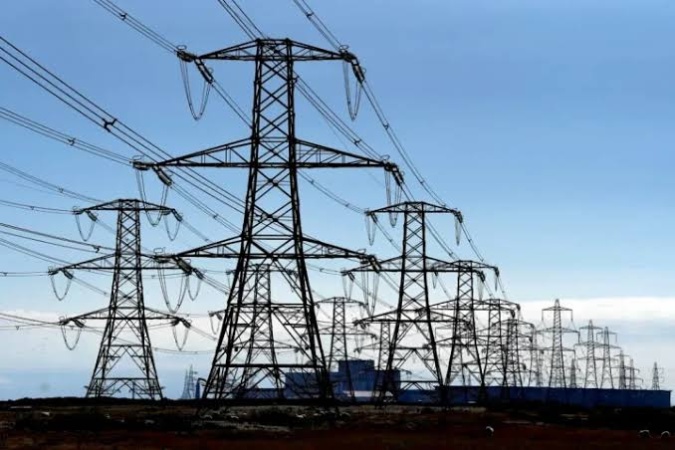
At a time like this, when the renewed energy price is having a far-reaching implication and scaling up transportation costs, increased food prices and escalating production and distribution expenses across the country, the implementation of the 2026 fiscal policy measures (FPM), which include tariff amendments on agro produce by the Federal Government, comes as a timely soothing balm to calm the nerves of many agitated Nigerians.
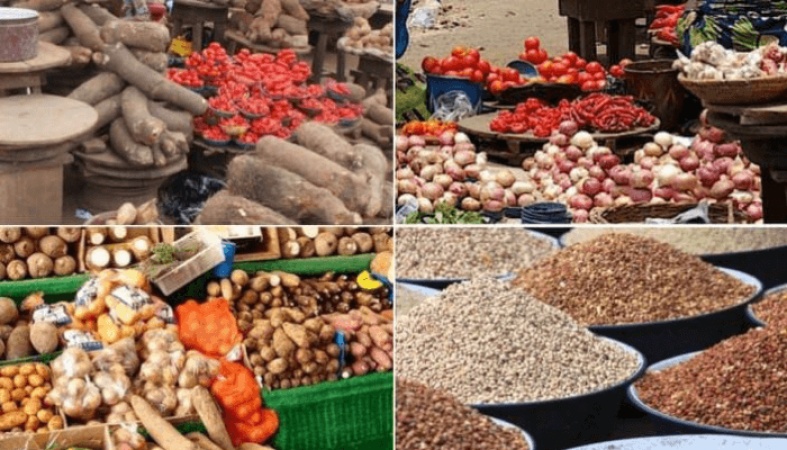
Recall that few days ago, the Federal Government announced reduced import tariffs on bulk rice to 47.5 per cent, down from 70 per cent, while broken rice was reduced to 30 per cent. Crude palm oil imports are now pegged at an effective rate of 28.75 per cent, while raw sugar tariffs range between 55 and 57.5 per cent, also lower than previous levels. Refined salt for human consumption has been adjusted to 55 per cent, among other agro commodities.
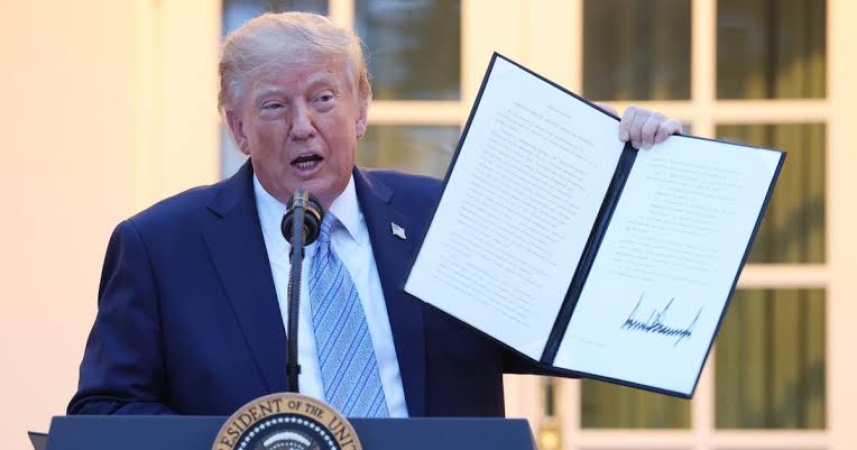
According to a circular signed by the former Minister of Finance and Coordinating Minister of the Economy, Wale Edun, few days before he left office, the import adjustment tax (IAT) on items like crude palm oil was set at a total effective rate of 28.75 per cent, down from previous high-tariff regimes, noting that the new measures supersede the 2023 FPM.
The policy includes a national list of 127 tariff lines with reduced import duty rates designed to “promote and stimulate growth in critical sectors of the economy.”
The government also granted a 90-day grace period for importers who had opened Form ‘M’ before April 1 to clear their goods at prevailing rates.
But while consumers are expressing joy that the policy will further ameliorate their sufferings as commodities prices will further crash, farmers are lamenting that it will further inflict severe hardship on them, weaken incentives to produce, and undermine the country’s broader food security objectives.
Following the government’s intervention months ago, prices of major staples such as rice, maize, cassava products, tomatoes, and vegetable oils declined. For millions of Nigerian consumers, it brought much-needed relief; it however, brought more pain for local farmers and agriculture value chain investors.
For many industry players, the scenario, where farmers sell produce at declining prices while production costs remain elevated, created widespread distress across agricultural ecosystems.
For instance, reports from rice producing states indicate that about 3,500 rice farmers are contemplating exiting rice cultivation after incurring estimated losses of over N93b, just as cassava farmers are facing a similar crisis.
With this tariff cut, there are already fears that the policy will worsen the plight of the farmers and further push them into debt.
The Chief Executive Officer of Produce Export Development Alliance (PEDA), formerly AFGEAN, Adetiloye Aiyeola, whodescribed the policy as an interesting development, described it as “both necessary and very risky at the same time.”
“On one hand, it is understandable why the government is doing this. To be honest, food prices have been under serious pressure and reducing import duties is a quick way to increase the supply in the market. So, in the short term, it can help bring down prices and give some relief to consumers, especially the ones in the high consumption urban areas.
“But on the other hand, it’s a serious concern for local producers. What this essentially does is that it introduces cheaper alternatives into the market and when that happens, local farmers who are already dealing with high production costs are now forced to compete with imports that may be or would definitely be cheaper. That puts pressure on their margins and in some ways they might even start closing down due to compounding losses.”
He noted that when farmers are not making money, they only think of quitting farming completely and that’s the area where caution comes from. “That’s where I think the long-term risk really is, because if this type of policy should stay long without supporting local production, it will solve the problem of price today, but it will now create another supply problem tomorrow and we could gradually become more dependent on imports instead of building our own capacity, our own industrial base.
“So, I would say that the policy is useful, but it has to be managed carefully. It cannot be left alone. If the tariffs are coming down, there should be parallel support for farmers like access to finance, better improve logistic subsidies so that they can actually compete.”
He noted that at the end of the day, the solution is not just importing cheaper products, the real solution is in trying to make local production more efficient and more competitive, adding that that’s what most economies are going towards right now. “It’s sad that we are where we are right now, but that’s just what it is.”
But contrary to Aiyeola’s stance, the Chief Executive Officer, Centre for the Promotion of Private Enterprise (CPPE), Dr Muda Yusuf, downplayed any negative impact on the farmers, noting that it’s not the same as the previous waiver that was given, as it is capable of safeguarding the capacity of local producers to continue producing.
Dr Yusuf said: “This new fiscal policy measure is not the same thing as the previous waiver that was given. The previous waiver given late 2024 to 2025 was zero duty, so there was no duty in place. That was why the price of maize and rice crashed massively because no duty was paid.
“But on this, this is not a waiver, this is a reduction on duty, I think in compliance with ECOWAS Common External Tariff (CET) and protocol that has been agreed. I think that is what led to this slight reduction, but even at 47.5 per cent for bulk rice, 30 per cent for broken rice, 28.75 per cent for crude palm oil, raw sugar between 55 and 57.5 per cent, and refined salt adjusted to 55 per cent, among others, it is still high if there is compliance.
“That means for every $1,000 import, you have to pay additional $400, that is what it means. As import duty, then you have some other charges you pay.So, by the time you land the rice, it’s not likely to be as cheap as what you currently have.”
Dr Yusuf however, said there is need for enforcement to achieve this, adding that smuggling must be stopped at all cost, as its one of the critical success factors for the policy to succeed. (The Guardian)