 ADAD
ADAD
Updating your news feed...
NEWS EXPRESS is Nigeria’s leading online newspaper. Published by Africa’s international award-winning journalist, Mr. Isaac Umunna, NEWS EXPRESS is Nigeria’s first truly professional online daily newspaper. It is published from Lagos, Nigeria’s economic and media hub, and has a provision for occasional special print editions. Thanks to our vast network of sources and dedicated team of professional journalists and contributors spread across Nigeria and overseas, NEWS EXPRESS has become synonymous with newsbreaks and exclusive stories from around the world.
.webp)












Loading banners
Loading banners...


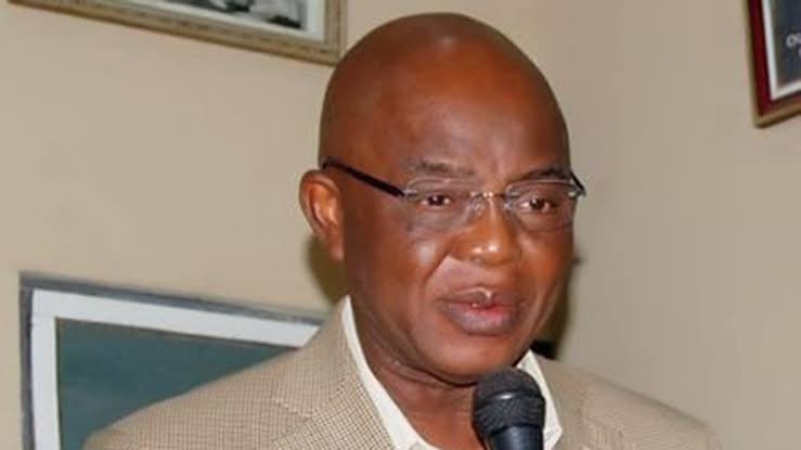
Human rights activist, Mr Hamza N Dantani
A legal practitioner and human rights activist, Mr Hamza N. Dantani, has petitioned the management of the University of Maiduguri Teaching Hospital (UMTH) over alleged medical negligence and systemic failures leading to the death of his father.
In the petition addressed to the Chief Medical Director of the hospital, Dantani alleged that a series of professional lapses and institutional shortcomings contributed to the death of his father, Alhaji Nuhu Dantani, on March 31.
He stated that the deceased, who was initially admitted at the hospital’s Kidney Centre, New VIP Extension, underwent a prostate-related surgery and was discharged with a catheter, with a follow-up appointment scheduled for March 16.
According to him, the patient’s condition deteriorated rapidly, prompting his return to the hospital on March 13, where he was admitted at the Emergency Unit.
Dantani alleged that for two days, the patient was left without a clear diagnosis or adequate medical intervention despite being in severe distress.
He further claimed that upon transfer to the Male VIP Medical Ward, there was an absence of attending physicians, while nursing staff only administered intravenous fluids without a coordinated treatment plan.
The petitioner said that following persistent efforts, the patient was later moved to Amenity Ward “B” under a consultant, who invited the Gastroenterology Unit for further evaluation.
He, however, alleged that the unit failed to respond for over 48 hours, adding that a member of the team reportedly admitted awareness of the referral but failed to act promptly.
Dantani also raised concerns over alleged mismanagement of a nasogastric tube, failure to conduct timely diagnostic tests, lack of oxygen supply during respiratory distress, and delayed detection of fluid in the chest.
He further cited the absence of functional mobile X-ray equipment and delays in critical diagnosis as factors that worsened the patient’s condition before his death.
Beyond the specific case, Dantani alleged broader systemic issues within the hospital, including poor professionalism, inadequate supervision, absenteeism among medical staff, weak inter-departmental coordination, and poor patient care standards.
He argued that the circumstances surrounding the death constituted a violation of the patient’s right to life as enshrined in the Constitution and a breach of medical ethics.
The petitioner called for an immediate, independent and transparent investigation into the incident, identification and sanction of any culpable personnel, and a comprehensive review of the hospital’s operational procedures.
He also urged the hospital to address gaps in emergency response, staff supervision, and availability of essential medical equipment.
Dantani warned that failure to act promptly could lead to escalation of the matter to relevant regulatory authorities, including the Federal Ministry of Health and the Medical and Dental Council of Nigeria.
Efforts to obtain a response from the management of UMTH were unsuccessful as of the time of filing this report. (Zagazola)
Reps query NAIC, Insurance firms over N1.12trn Anchor-Borrowers funding
The House of Representatives on Thursday commenced an investigative hearing into insurance coverage for the N1.12 trillion Anchor Borrowers’ Scheme.
Chairman of the House Committee on Nutrition and Food Security, Hon. Chike Okafor, said the committee was mandated to investigate the utilisation of the N1.12 trillion meant for the execution of the Anchor Borrowers’ Programme, which was allegedly diverted by Ministries, Departments and Agencies (MDAs), as well as the disbursement of the fund by Participating Financial Institutions (PFIs).
Speaking at the hearing, the representative of the Managing Director of the Nigerian Agricultural Insurance Corporation (NAIC), Dayo Babaranti, said the corporation only provided insurance cover to 207,514 farmers to the tune of N109 billion under the Anchor Borrowers’ Scheme.
He disclosed that the Central Bank of Nigeria (CBN), contrary to the scheme’s initial policy under which NAIC was appointed as the sole insurance provider for participants, contracted two other insurance firms, Veritas Kapital Insurance and Leadway Insurance.
However, Veritas Kapital Insurance and Leadway Insurance did not send representatives to the hearing.
Babaranti said the corporation ultimately provided only 12 per cent coverage for the scheme.
Giving a further breakdown of NAIC’s involvement, he said that for the Nigeria Incentive-Based Risk Sharing System for Agricultural Lending (NIRSAL) Plc’s agricultural financing ₦250 billion facility to support smallholder farmers across the country, NAIC provided cover to the tune of N8.254 billion.
According to him, the corporation also provided N715 million worth of cover for 80 hectares of ginger farms out of the N1.6 billion funding announced for the programme.
On the Bank of Industry (BoI) Agro and Food Processor Scheme, Babaranti told the committee that NAIC was not given any of the participants to provide insurance cover, contrary to the Anchor Borrowers’ policy.
Reacting to the presentation, Hon. Okafor announced that the panel would be inviting the NAIC leadership on a date to be announced, noting that the committee had received many complaints from participants, farmers, and commodity associations regarding the insurance cover provided by the corporation.
The lawmaker also explained that NAIC submitted its documents late on Wednesday, giving the committee limited time to study them.
He reiterated that the House would uncover all issues that hampered the successful implementation of federal government interventions aimed at improving food production in the country.
He disclosed that preliminary findings by the committee indicate that stakeholders, especially farmers and farmers’ and commodity associations, were not involved in designing the interventions, such as the Anchor Borrowers’ Scheme; hence, the unsatisfactory performance of the programme.
“The reason why we are here is because the programmes did not succeed 100 per cent. If they had succeeded 100 per cent, we would not be here,” Hon. Okafor said. (Nigerian Tribune)
Insecurity: Gbong Gwom Jos postpones ‘Nzem Berom’ cultural festival
The Gbong Gwom Jos, Mr Gyang Buba, has postponed the 2026 annual Nzem Berom cultural festival, initially slated for April 24.
Buba, who is the Chairman of Plateau Council of Chiefs and Emirs, disclosed this during a news conference on Thursday in Jos.
The paramount ruler basically cited security concerns as rationale for the postponement of the cultural festival.
He said that the decision followed a meeting of the Jos Joint Traditional Council, all Berom organisations and elders, where the security situation of Plateau and beyond was reviewed.
He decried that a good number of villages and districts largely occupied by Berom people were recently attacked and many persons killed.
“We are currently mourning.
“We have been in touch with the security agencies and when the security situation improves, we will fix a new date for the festival.
“So, we call on our people and the entire citizens of Plateau to remain calm, vigilant and avoid taking laws into their hands,”he advised.
The paramount ruler also called on residents of Plateau to support the security agencies in their bid towards stemming the tides of insecurity in the state.
The News Agency of Nigeria (NAN), reports that Nzem Berom cultural festival is an annual cultural celebration of the Berom people, usually organised to promote unity, preserve tradition and showcase their rich cultural heritage.
The festival is usually marked with pomp and pageantry, featuring colourful displays of traditional attire, music, dance and other cultural performances that reflect the identity and history of the people. (NAN)



